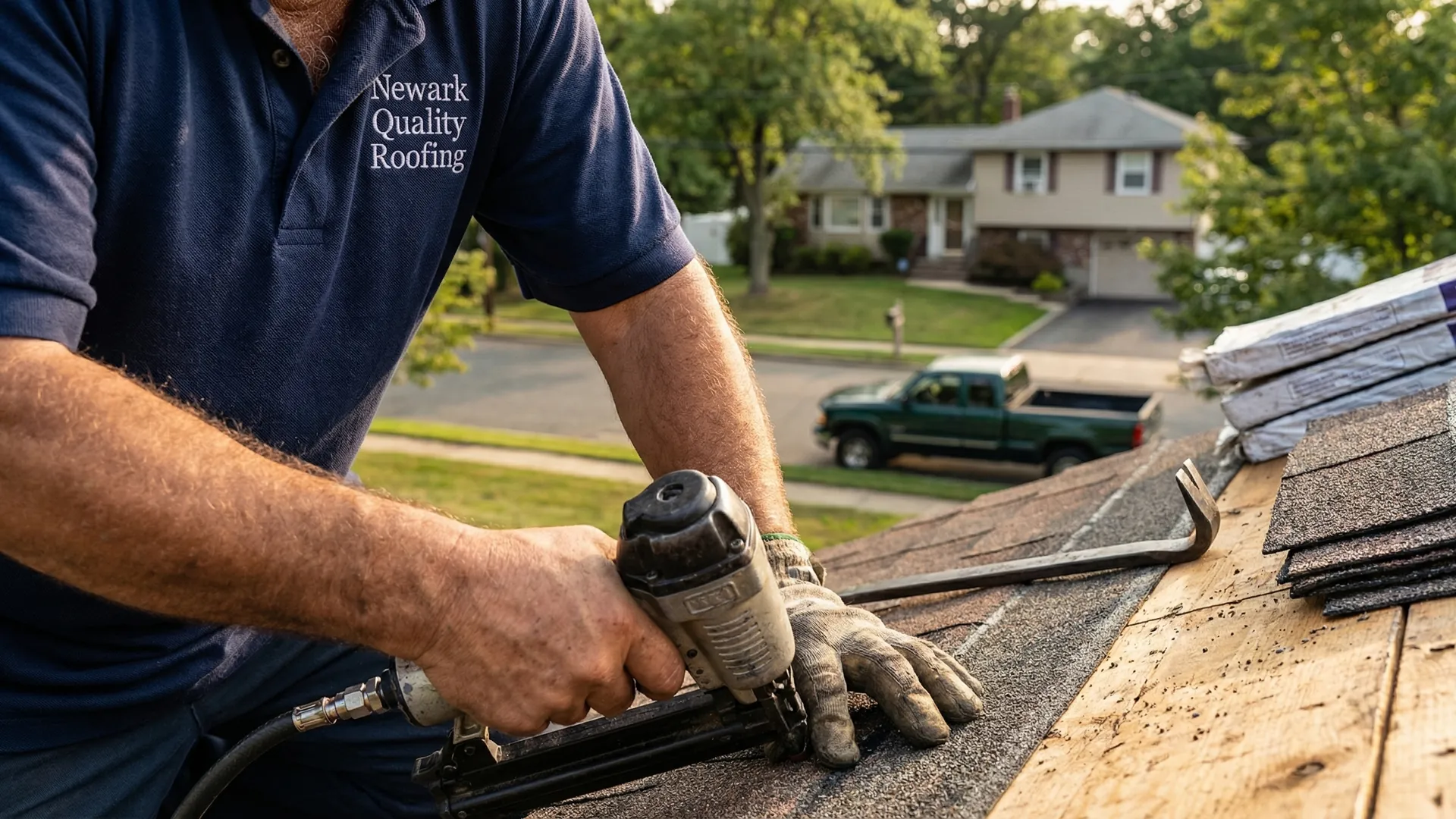
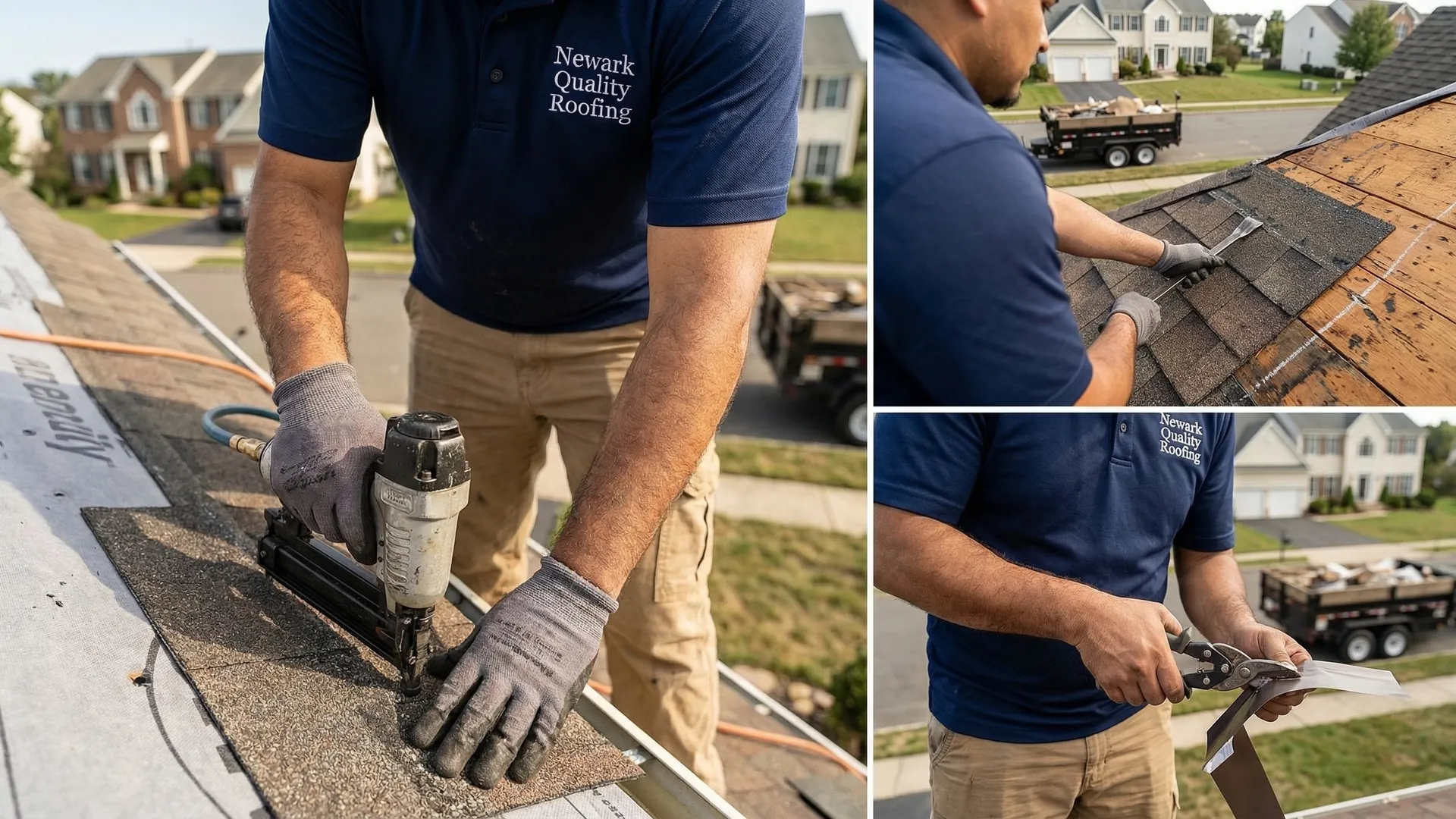
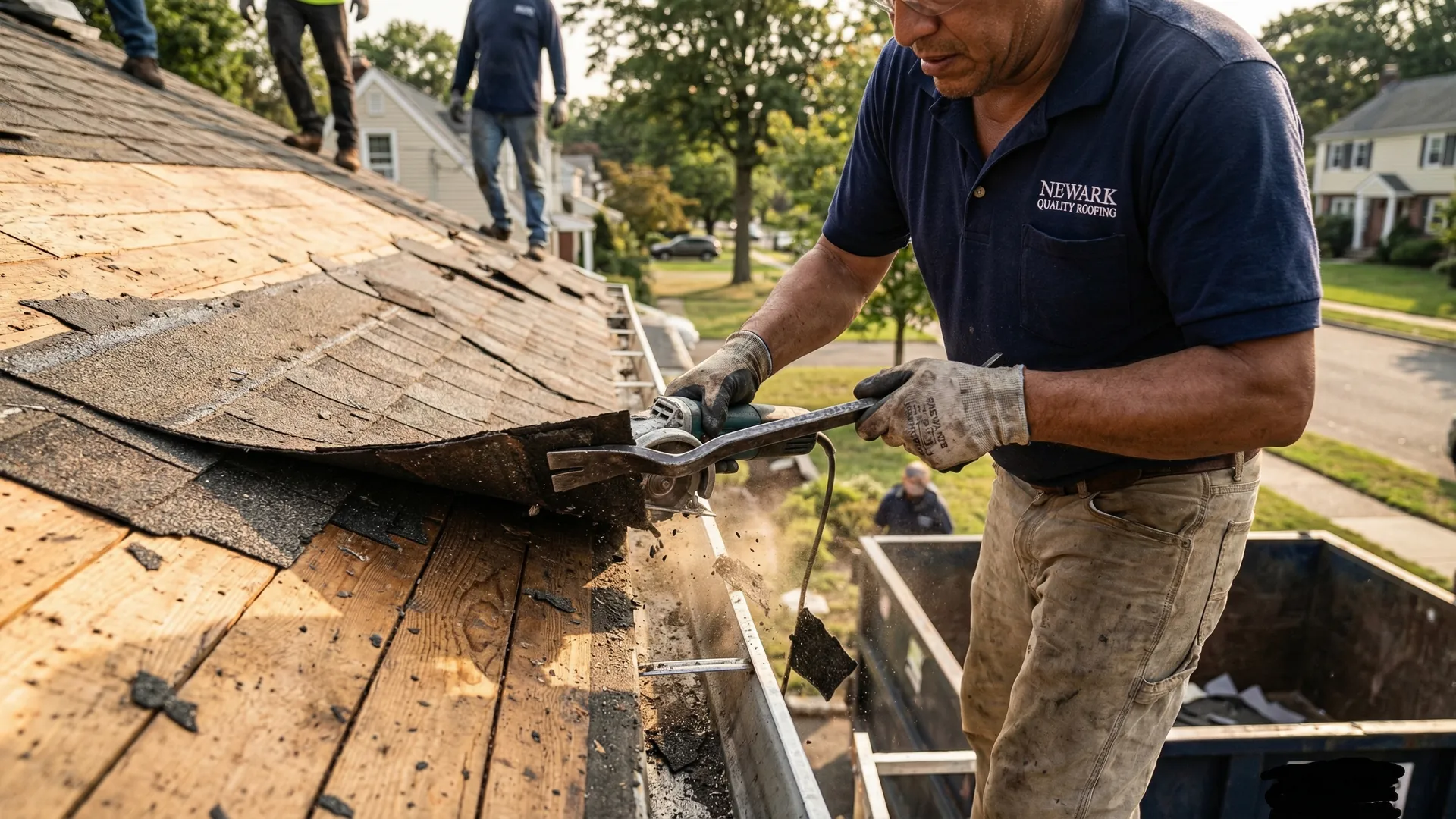
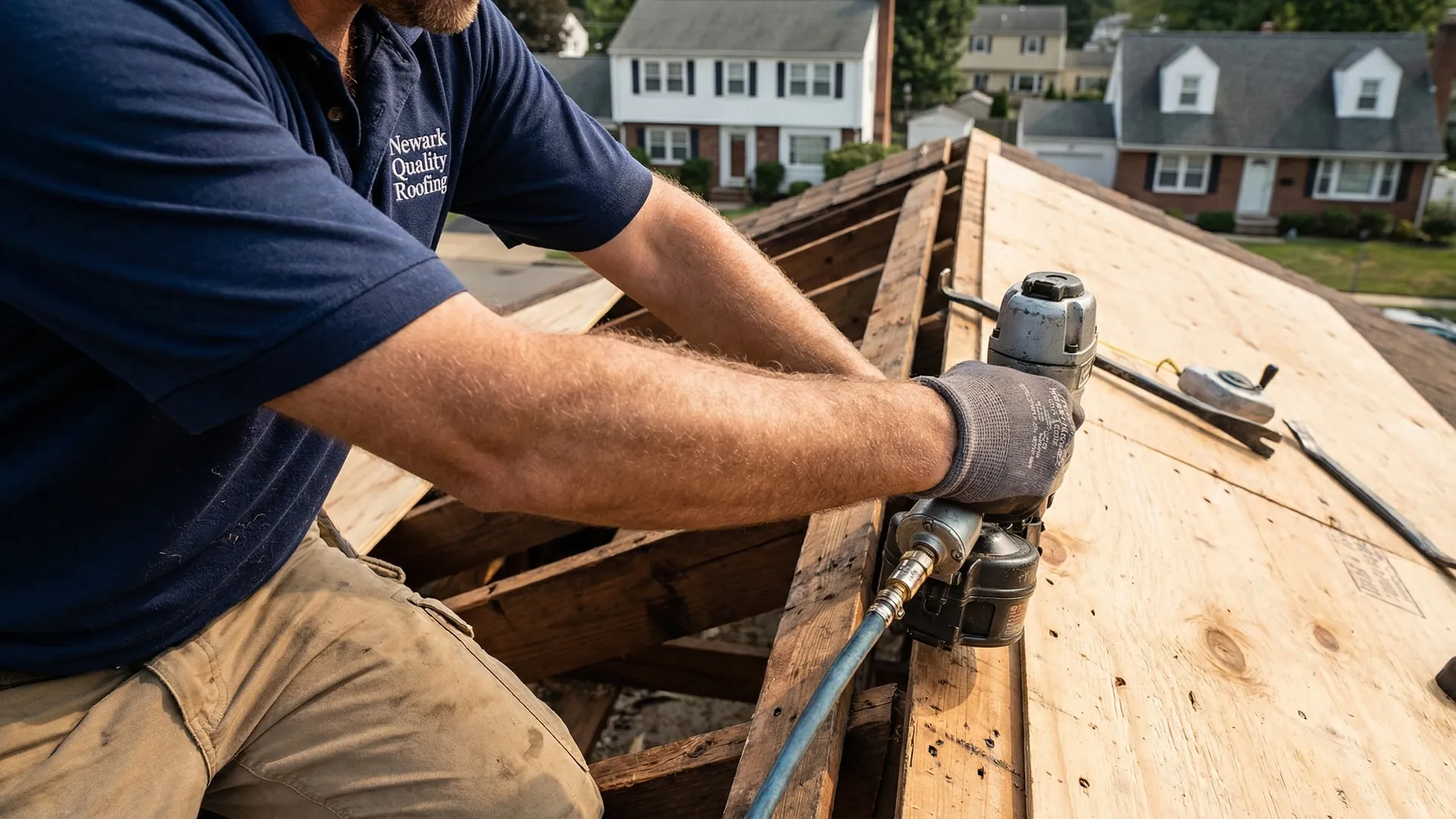
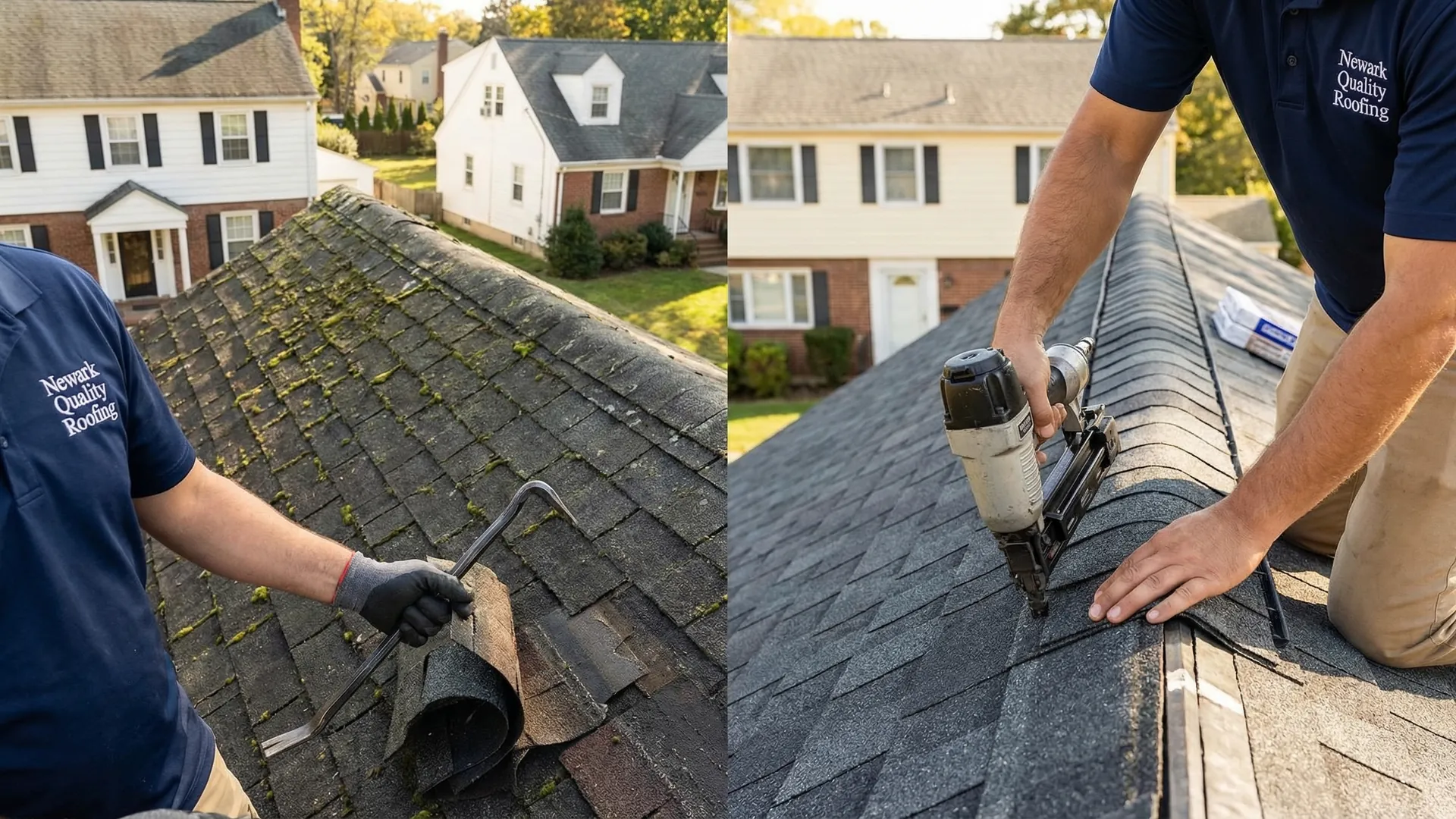
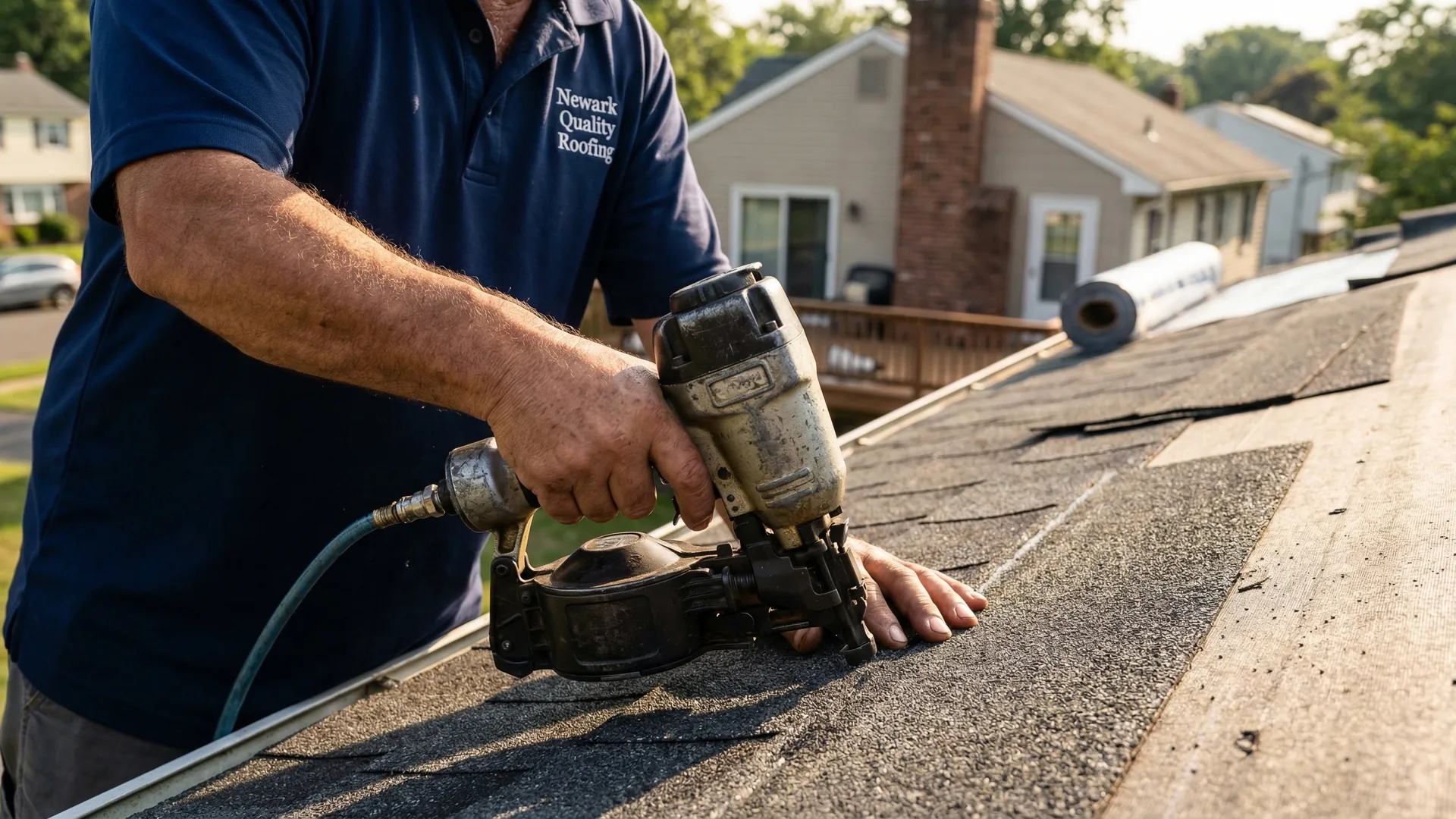
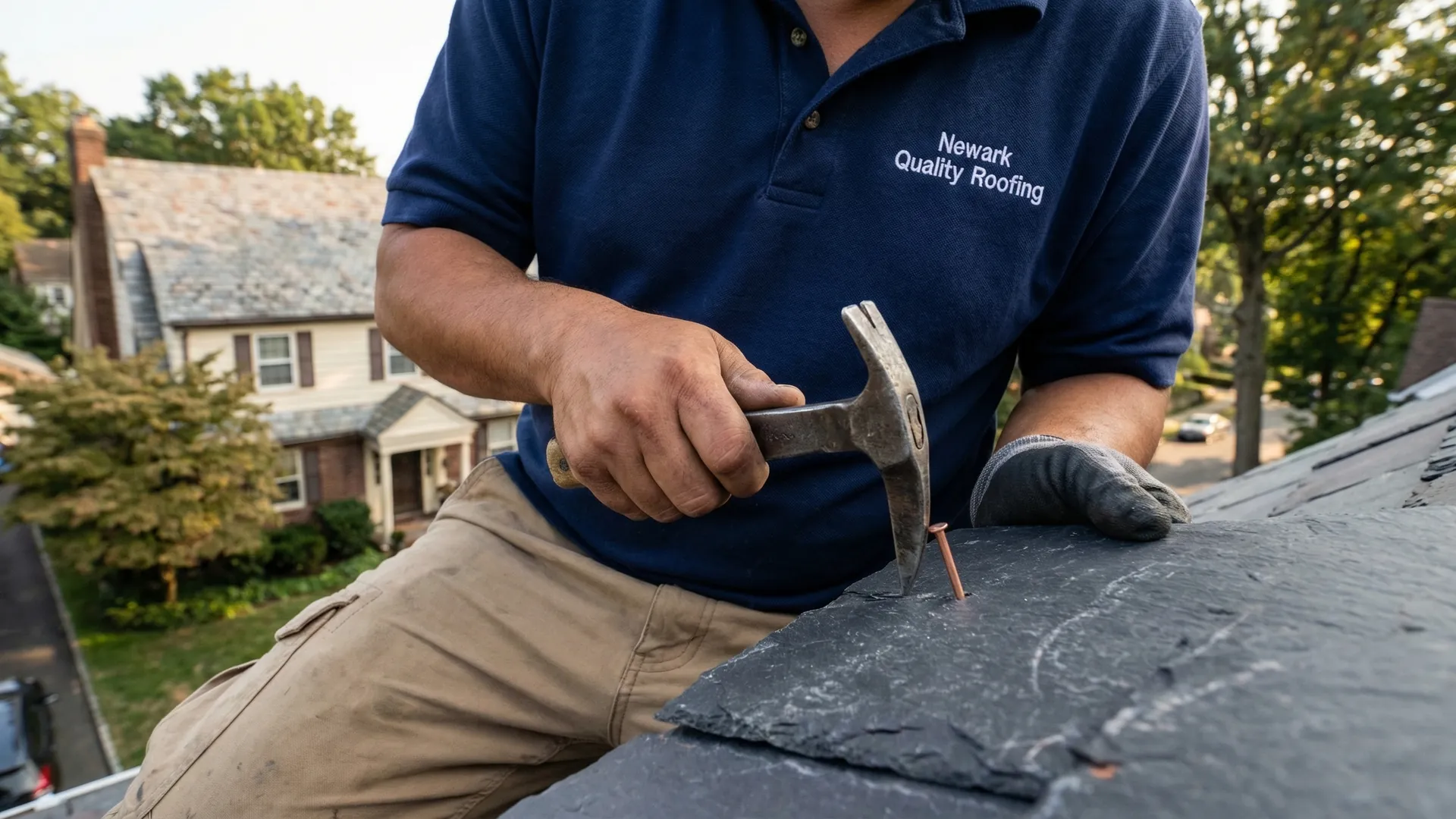
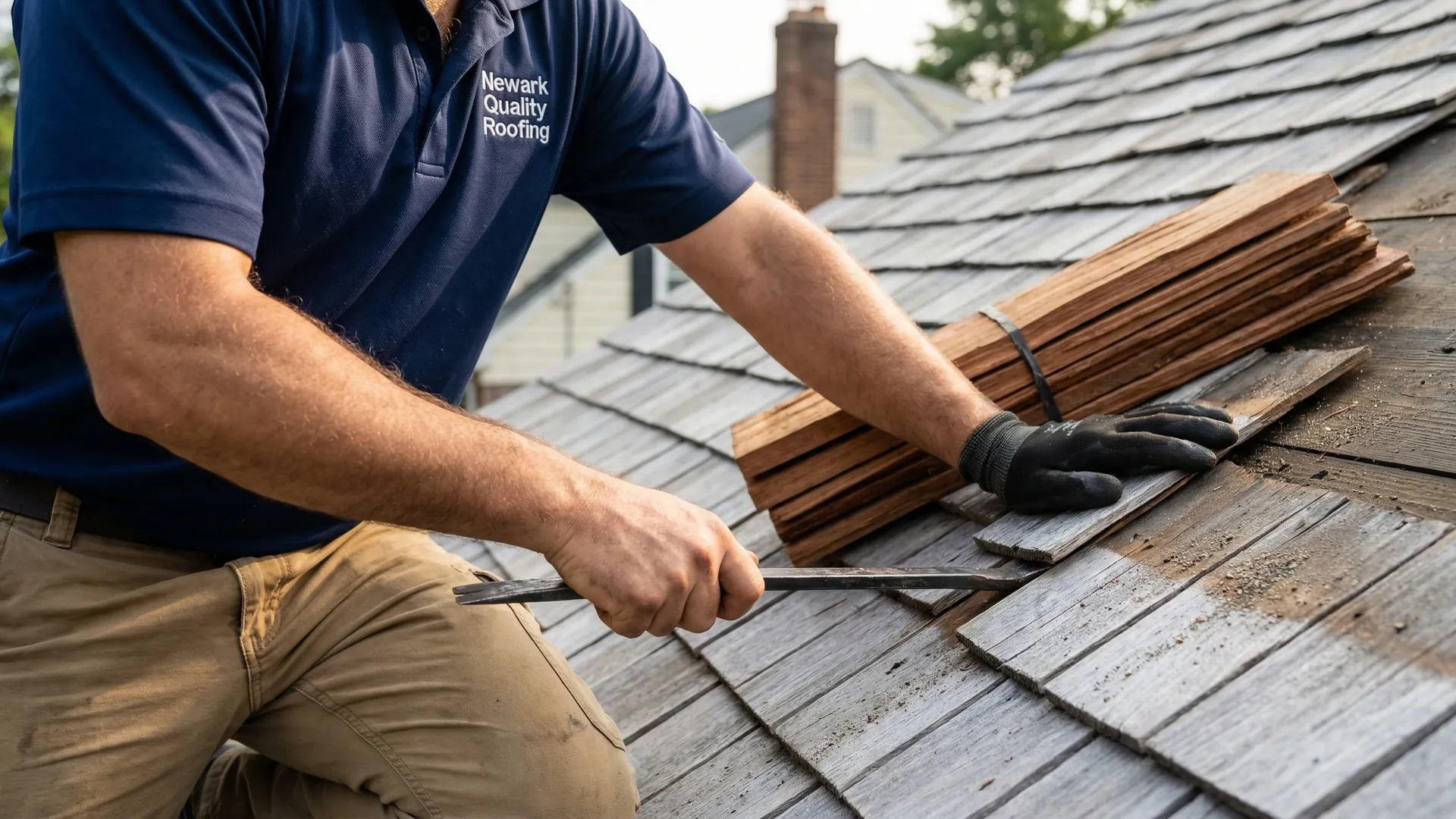
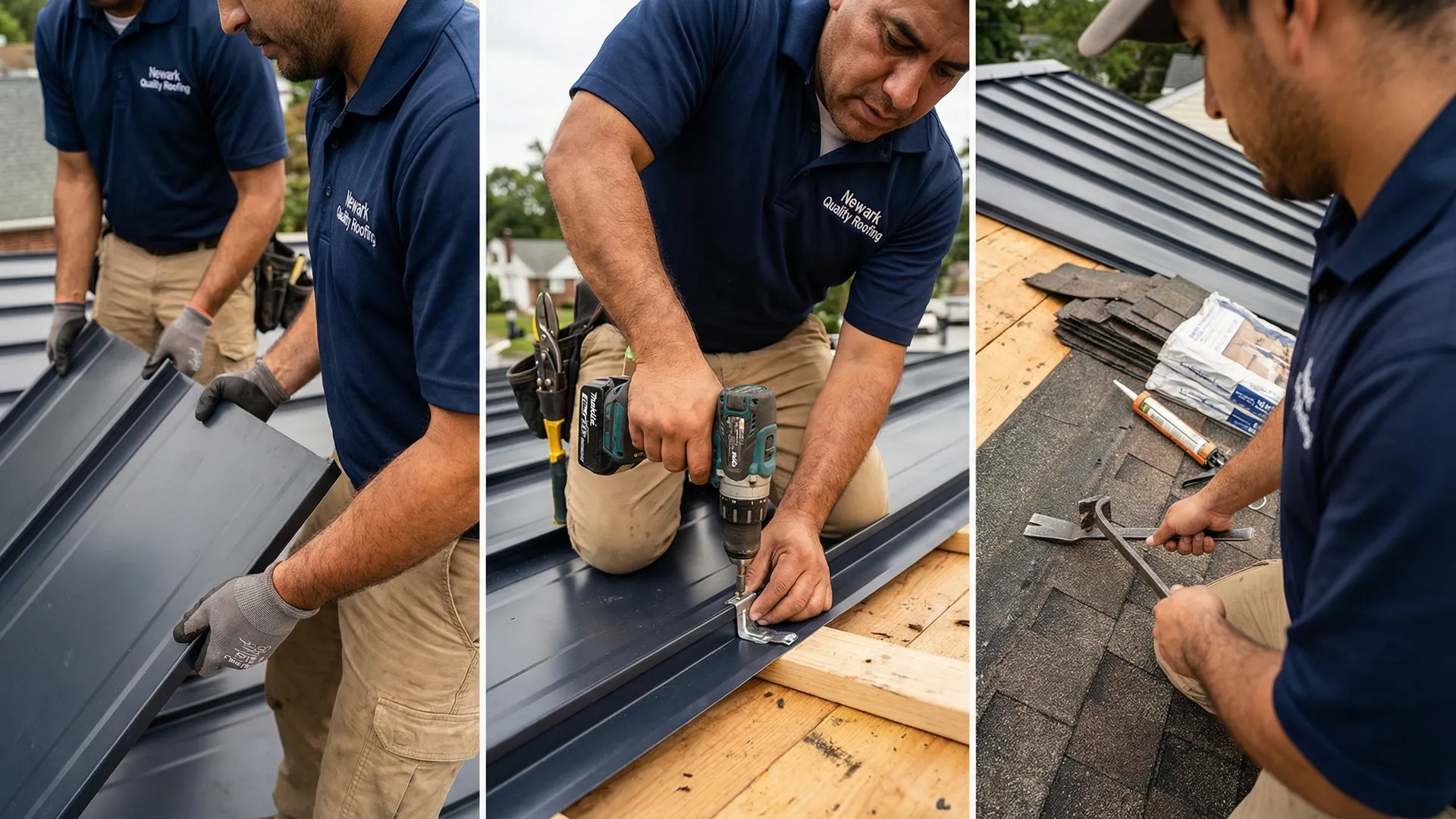
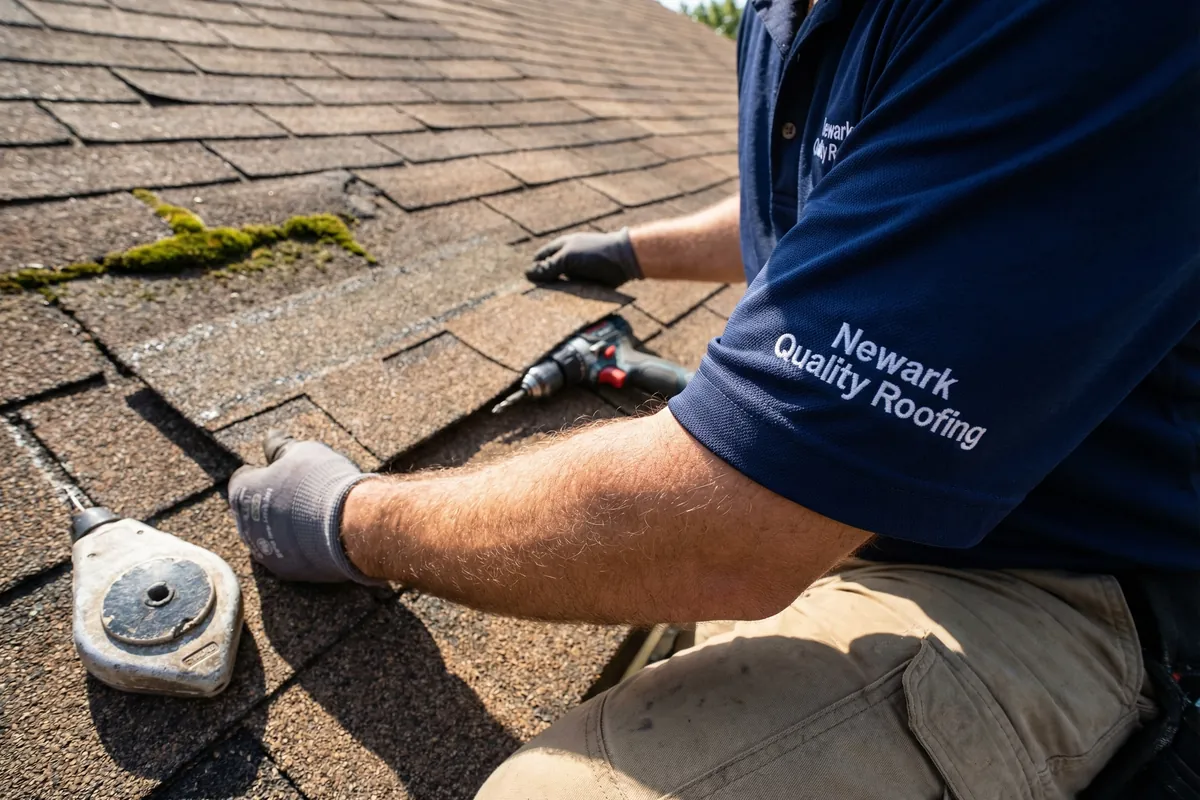
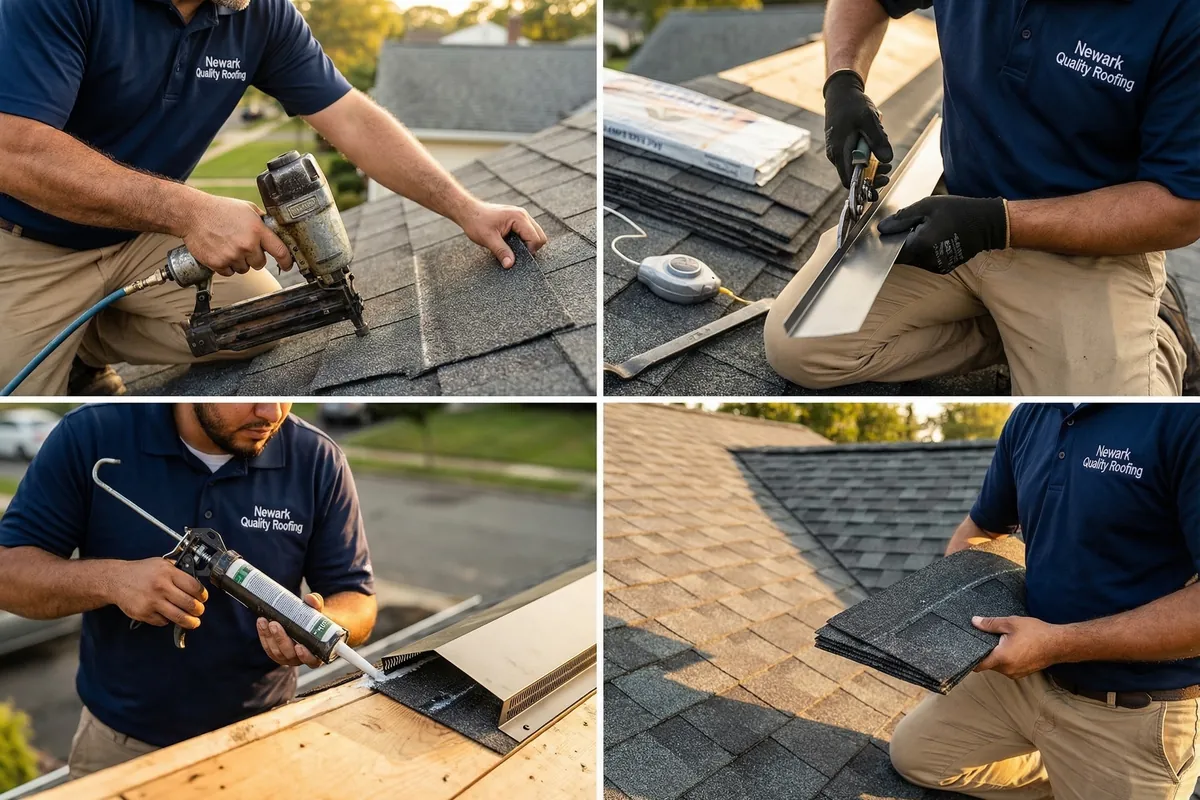
Roof Replacement Livingston, NJ from Newark Quality Roofing includes tearing off postwar split-levels, raised ranches, and colonials to the deck and rebuilding them as manufacturer-specified systems.
Roof replacement strips a roof down to the deck, repairs the sheathing, and installs a new underlayment-and-cover system in asphalt, metal, slate, or low-slope membrane. It rebuilds the entire weatherproof assembly for a roof past its service life rather than patching isolated damage.
Roof Replacement Available in Livingston, NJ
Livingston's housing argues for replacement on schedule. The township grew up postwar, so its split-levels, raised ranches, and colonials cluster around the same build decades and reach end-of-life together; architectural asphalt's roughly 30-year span, per the InterNACHI life-expectancy chart, means whole streets come due within a few seasons of each other. A township-wide replacement wave rewards owners who plan the tear-off before leaks force it at storm-season prices.
Transitions define Livingston roof geometry. Split-level and raised-ranch plans stack roof planes at different heights, and every wall-to-roof transition is a flashing condition the new system must solve better than the old one. Step flashing, counter-flashing, and kick-out diverters at those junctions decide whether the replacement reads as one waterproof assembly or a patchwork of slopes draining onto each other.
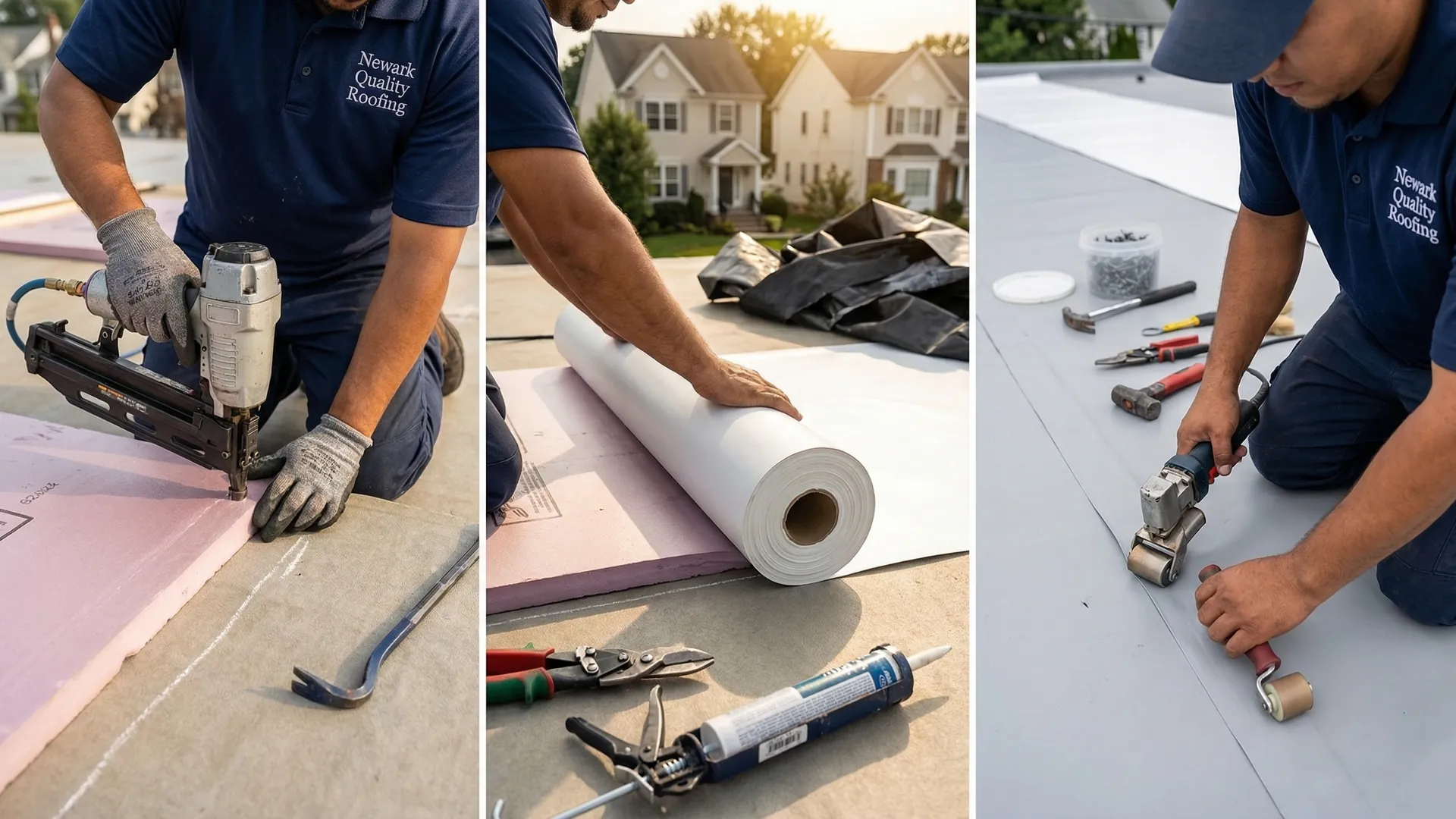
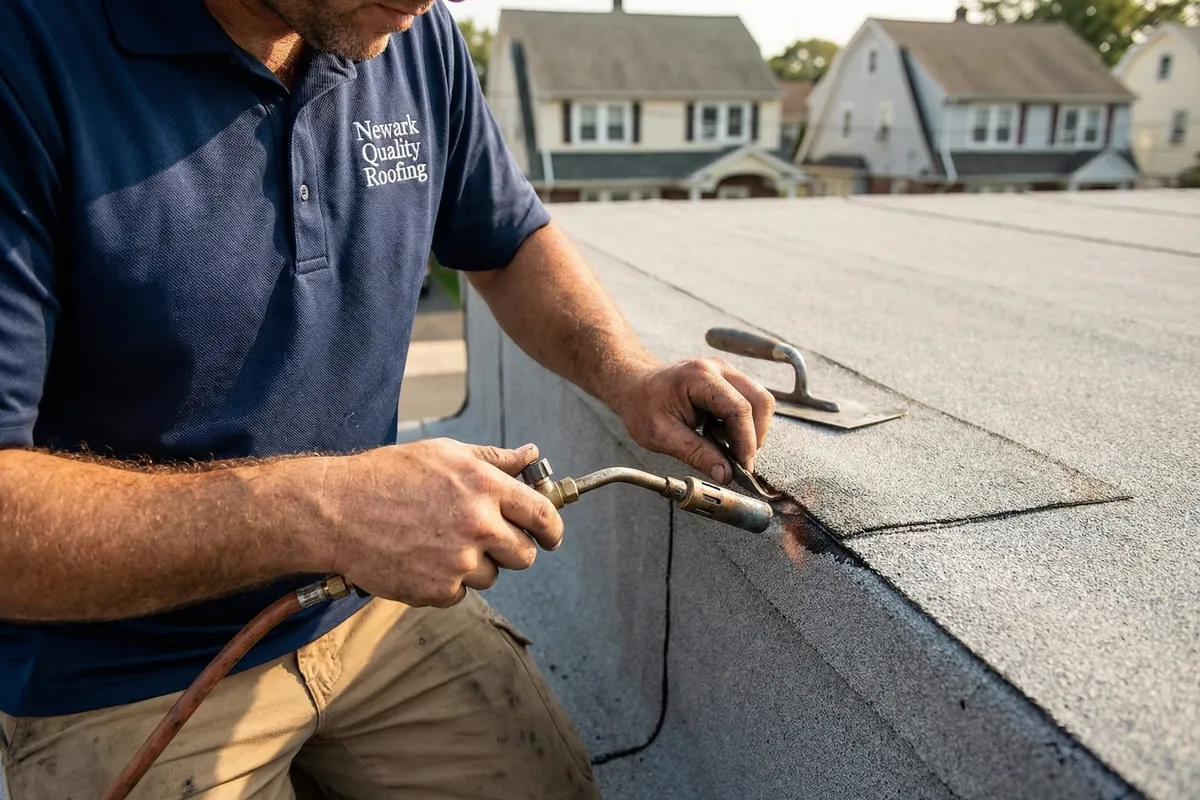
Route 10 and Eisenhower Parkway carry the commercial load. Retail and office decks along those corridors ride on low-slope membrane that ages on a different clock — EPDM at 15 to 25 years, TPO at 7 to 20, modified bitumen around 20, per InterNACHI — and replacement there is a drainage project first. Rebuilding at least one-quarter inch per foot of slope to drain, per NRCA and ARMA, with tapered insulation turns a ponding deck into one that empties between storms.
The replacement visit doubles as a building audit. With the covering off, the crew verifies sheathing integrity, attic ventilation balance, and bathroom and kitchen vent terminations that often dump moist air into the attic in postwar construction. Correcting those conditions while the roof is open costs a fraction of returning later, and it protects the new system's warranty from the moisture conditions manufacturers exclude.
Neighborhood context quietly shapes material selection. Livingston streets read as coherent postwar landscapes, and a replacement that respects the prevailing scale — architectural shingles with dimensional shadow lines, restrained metal accents where the architecture invites them — protects both the home's function and its place on the street. The estimate conversation includes that streetscape view alongside lifespan arithmetic, because the roof is the largest visible surface the township sees. Livingston owners often ask whether the township's mature trees should change the shingle specification, and the answer is yes at the margins: algae-resistant granules on shaded planes, attention to valley metal where debris concentrates, and gutter lines re-established to fall cleanly all extend the new system's clean, draining years. Those choices cost little inside a full replacement and are itemized as options in the estimate rather than buried in a single lump figure nobody could later reconstruct.
Common Roof Replacement Problems in Livingston, NJ
Addition transitions leak first and worst. Decades of Livingston additions married new roof planes to old walls, and those junctions concentrate step-flashing failures that a surface repair keeps chasing. Replacement rebuilds each transition with continuous step and counter-flashing woven into the new field, so the wall sheds onto the roof plane instead of behind it. Because those junctions sit above finished rooms in most Livingston plans, their failure is usually announced by interior paint damage long before the exterior looks wrong.
Attic moisture from below quietly ages Livingston decks, because postwar bath and kitchen vents frequently terminate in the attic and condense against cold sheathing all winter. The tear-off exposes the staining pattern, the crew reroutes those terminations through the new roof with proper vent caps, and ventilation is balanced to the NRCA and ARMA ratio of one square foot of net-free area per 150 square feet of attic floor.
Mature-canopy shade keeps north slopes damp across Livingston's treed lots, feeding algae streaks and moss that pry shingle edges and shorten covering life unevenly. Replacement lets the crew specify algae-resistant architectural shingles on shaded planes, restore clean valley metal, and re-establish the drainage lines the canopy debris had been defeating.
Shortened shingle life on sun-baked south slopes unbalances Livingston replacements, because the field rarely ages evenly: south and west planes go brittle while shaded north planes still look presentable. Replacement is scoped plane by plane from attic and surface evidence, and where one elevation is sound and the system allows, the estimate explains why full-system renewal usually out-prices a slope-only patch once mobilization and tie-ins are counted.
Get your free written estimate for roof replacement in Livingston.
Replacing a roof past its service life limits interior and structural water damage.
Our Process for Roof Replacement in Livingston, NJ
The estimate starts in the attic. A Newark Quality Roofing crew inspects Livingston sheathing from below before quoting, probes for softened decking around transitions and vents, and photographs existing flashing so the free written estimate carries a decking allowance grounded in evidence. The crew also checks whether the scope crosses the 25% ordinary-maintenance threshold that requires a permit under N.J.A.C. 5:23-2.7 through the township's building department. The estimate visit is the right place to raise it, because geometry and condition answers change once the old covering starts coming off and the day's staging is set.
Material choice follows the house's next thirty years. Architectural asphalt, slate, metal, and copper span roughly 30, 60 to 150, 40 to 80, and 70-plus years, per the InterNACHI chart, and the right answer weighs the colonial or split-level's remaining horizon, the street's prevailing materials, and low-slope sections that need membrane rather than shingles. Every covering installs to manufacturer specification so the system warranty survives inspection.
Staging protects a lived-in township home. Tear-off proceeds in sections the crew can dry-in the same day, landscaping and plantings get physical protection under the eaves, and the site is magnet-swept for fasteners at completion. Timestamped photographs of decking repairs, underlayment, and new transition flashing close the job, giving the Livingston owner a record that supports resale and insurance conversations years later.
Weather sequencing governs the township schedule. Tear-off sections are chosen against the forecast so no Livingston roof sits under temporary dry-in longer than the night requires, and material deliveries are staged to keep postwar driveways and plantings clear. The written schedule names start, dry-in, and completion milestones, and the foreman confirms each morning's section before the first shingle is lifted. The closeout conversation also covers what the new roof needs from the house below it: soffit intake kept clear when insulation is next added, bath vents verified as still terminating outside, and attic access noted for future trades. A replacement that educates its owner about those interfaces lasts longer than one that simply leaves, because most premature roof aging in Livingston begins as an attic condition nobody mentioned at the celebration of a finished job.
Roof Replacement Costs in Livingston, NJ
$10,000–$25,000
Typical NJ roof-replacement range per HomeAdvisor and Modernize; final cost depends on roof size, pitch, material, and access. Newark Quality Roofing provides a free written estimate.
Why Choose Newark Quality Roofing for Roof Replacement in Livingston, NJ
Specialized roof replacement experience in Livingston — we know the local building stock, codes, and common issues specific to Livingston homes and businesses.
A registered New Jersey Home Improvement Contractor, fully insured for roof replacement work throughout Essex County.
Transparent, written estimates for every roof replacement project — no hidden fees and no pressure to commit.
A local Livingston crew familiar with the area's permitting and property-access challenges.
The lower roof on our Livingston split-level drains onto the upper wall — how does replacement fix that junction?
That wall-to-roof junction is where split-level replacements are won or lost. The crew rebuilds it with step flashing woven shingle-by-shingle into the new field, counter-flashing let into the wall above, and a kick-out diverter at the base that throws water into the gutter instead of behind the siding. Because the tear-off exposes the old junction completely, rotted sheathing at the wall base is replaced in the same pass. It is the detail most layover jobs skip, and the one that ends the recurring stain on the ceiling below. The estimate visit is the right place to raise it, because geometry and condition answers change once the old covering starts coming off and the day's staging is set.
Can a Livingston replacement be split so we do the front slope this year and the rear next year?
It can be staged, but the economics argue for one mobilization. Splitting doubles setup, disposal runs, and flashing tie-ins, and the seam where next year's field meets this year's ages on two clocks. If budget forces staging, the crew sequences the worst slope first, details the tie-in line so the second phase weaves in cleanly, and documents both phases for warranty purposes. The free written estimate prices both the single-project and staged options so the trade-off is a number, not a guess. The estimate visit is the right place to raise it, because geometry and condition answers change once the old covering starts coming off and the day's staging is set.
Our Livingston colonial was built in the 1960s — should we expect plank decking, and does it need resheathing?
Many Livingston homes of that era carry board sheathing with gaps that modern shingle specifications tolerate only within limits. At tear-off the crew measures gap width and board condition; sound planks can stay, while wide-gap or deteriorated sections get plywood overlay or replacement so fasteners hold to manufacturer specification. That decking allowance is estimated from the attic inspection beforehand, so the resheathing line in the quote is a planned scope rather than a mid-job surprise. The estimate visit is the right place to raise it, because geometry and condition answers change once the old covering starts coming off and the day's staging is set.
Do Livingston's taller colonials cost more to replace than a ranch of the same footprint?
Usually, yes — height and pitch drive labor more than footprint does. A two-story colonial means longer ladder runs, more staging, steeper-slope safety rigging, and slower material movement than a single-story ranch, and its roof field is often more cut-up with dormers and transitions. The $10,000–$25,000 replacement band reflects exactly those variables: size, pitch, material, and access. Your written estimate itemizes them against your actual roof instead of a township average. The estimate visit is the right place to raise it, because geometry and condition answers change once the old covering starts coming off and the day's staging is set.
What happens to our Livingston attic vents and bathroom fans during the replacement?
Replacement is the right moment to correct them. Postwar Livingston homes often vent baths into the attic, loading the deck with moisture; the crew reroutes those ducts through the new covering with flashed vent caps and balances intake and exhaust to the one-per-150 standard. Existing static vents are either integrated or replaced with a continuous ridge system where geometry allows, and every penetration gets new flashing rather than reused collars. The result is a roof that dries from below while it sheds from above. The estimate visit is the right place to raise it, because geometry and condition answers change once the old covering starts coming off and the day's staging is set.
Will the Livingston crew find the cause of the slow leak we have been ignoring for two years?
Yes, and they will show it to you. Slow leaks declare themselves at tear-off as stained, softened sheathing and corroded fastener patterns around the failed detail, and the crew photographs that evidence before replacing the section. Two winters of minor intrusion usually mean a contained deck repair inside the decking allowance rather than structural reframing, but the point of the tear-off is certainty: the new system goes down over inspected, documented wood instead of hope.
Roof Replacement in Livingston, NJ — Extended Guide, Questions, Photo Record, and Field Notes
This is the complete record behind the Livingston replacement page: how a roof replacement in Livingston is actually run for the township’s postwar split-levels, its 1960s colonials with plank decking, and the ranches and taller colonials in between. A Livingston roofer reads this township’s roofs the way the office does — covering by covering, deck by deck — because a replacement is a sequence, not an event: the old roof comes off, the sheathing is read and corrected, and the new system goes down to manufacturer specification over sound wood. The record below is kept in the order the work happens: the replacement sections first, then the questions Livingston homeowners ask before they sign, the service log, the photo record, the service-area card, the references a homeowner can check, and the field notes the estimates are written from. Where a roof can still be honestly repaired, the record says so — roof repairs are this office’s daily work in Livingston too, and a replacement is only written when the covering’s age, the deck’s condition, and the repair history say the repairs have run out. Every Livingston file closes against the free written estimate it produced.
Roof Replacement Livingston NJ — The Complete Replacement Guide
The guide is the office’s own sequence for a Livingston replacement, written the way the crew leaders run it. Roof replacement Livingston NJ jobs differ street by street — a split-level off Route 10 with a low roof draining onto an upper wall is a different job from a two-story colonial with dormers — but the order never changes: tear-off first, deck second, materials named, system installed, penetrations flashed, ventilation balanced. Each section below carries the detail a homeowner needs to compare one roofing company Livingston NJ proposal against another, because the differences between bids live in exactly these details: what comes off, what stays, what the deck allowance covers, and which materials are named rather than assumed.
Roof Replacement in Livingston Starts With the Tear-Off
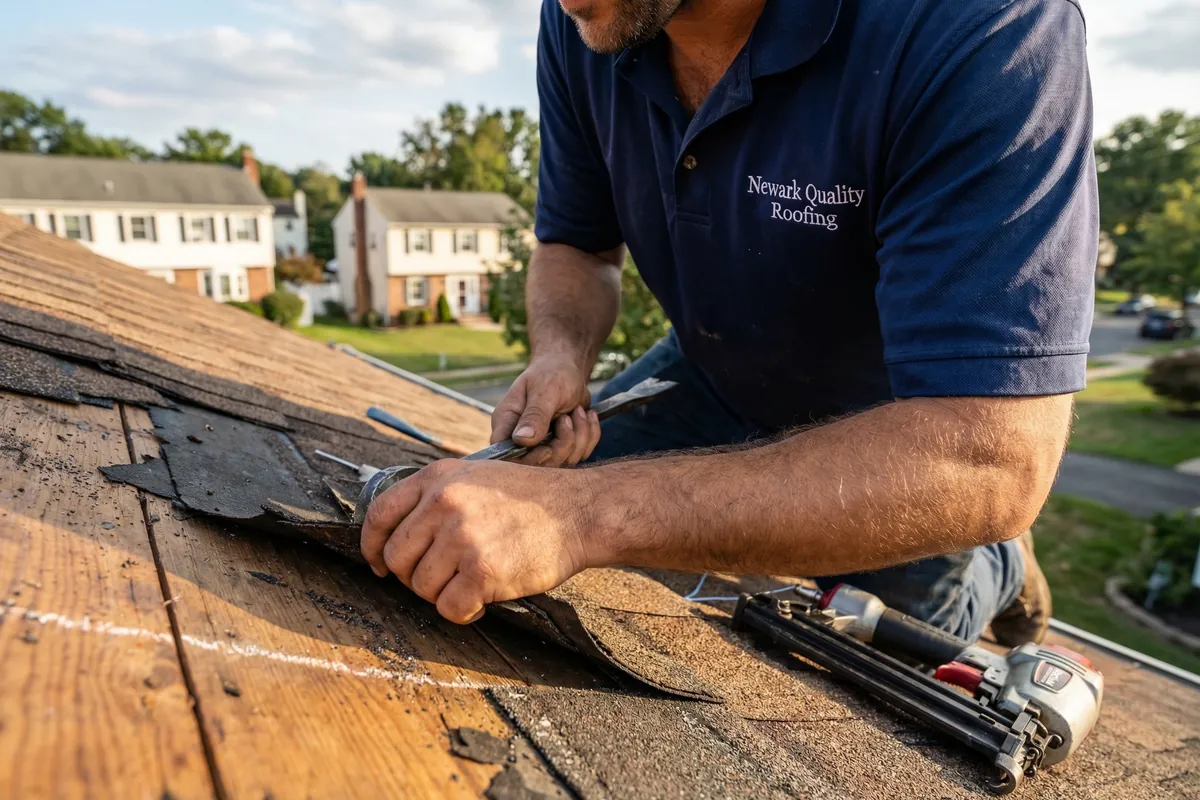
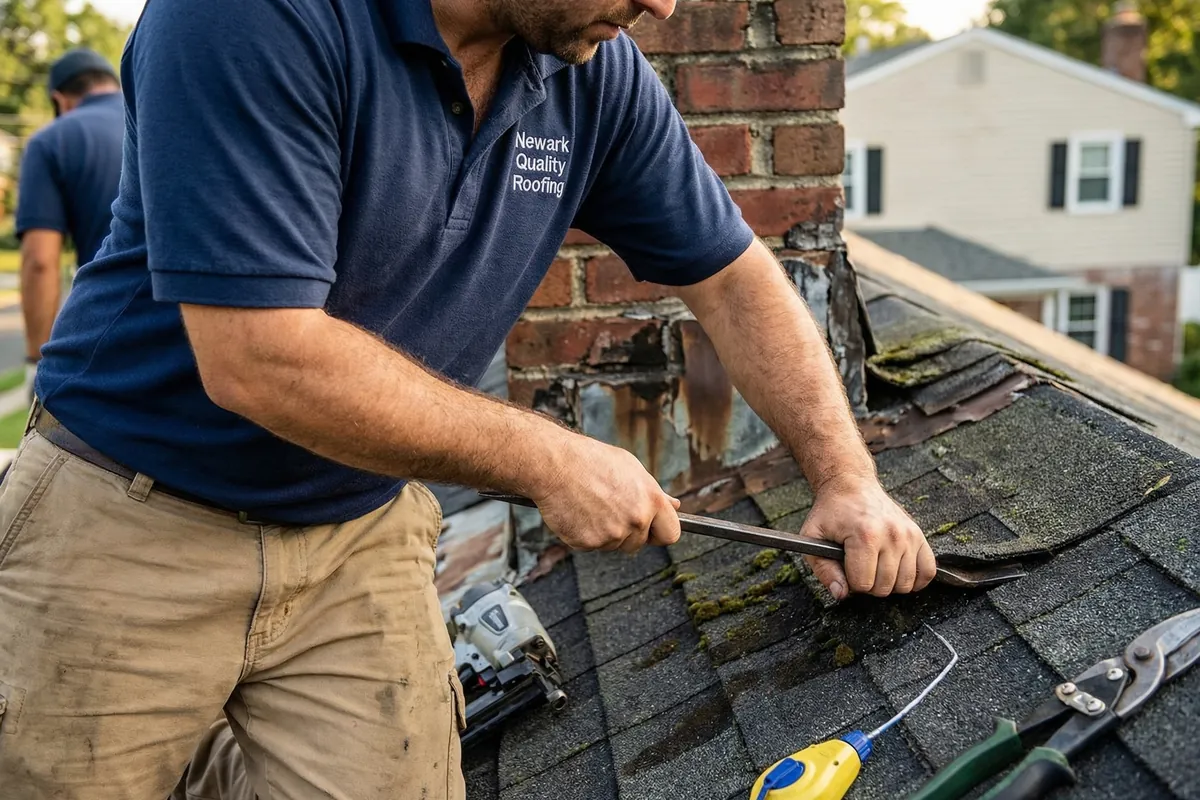
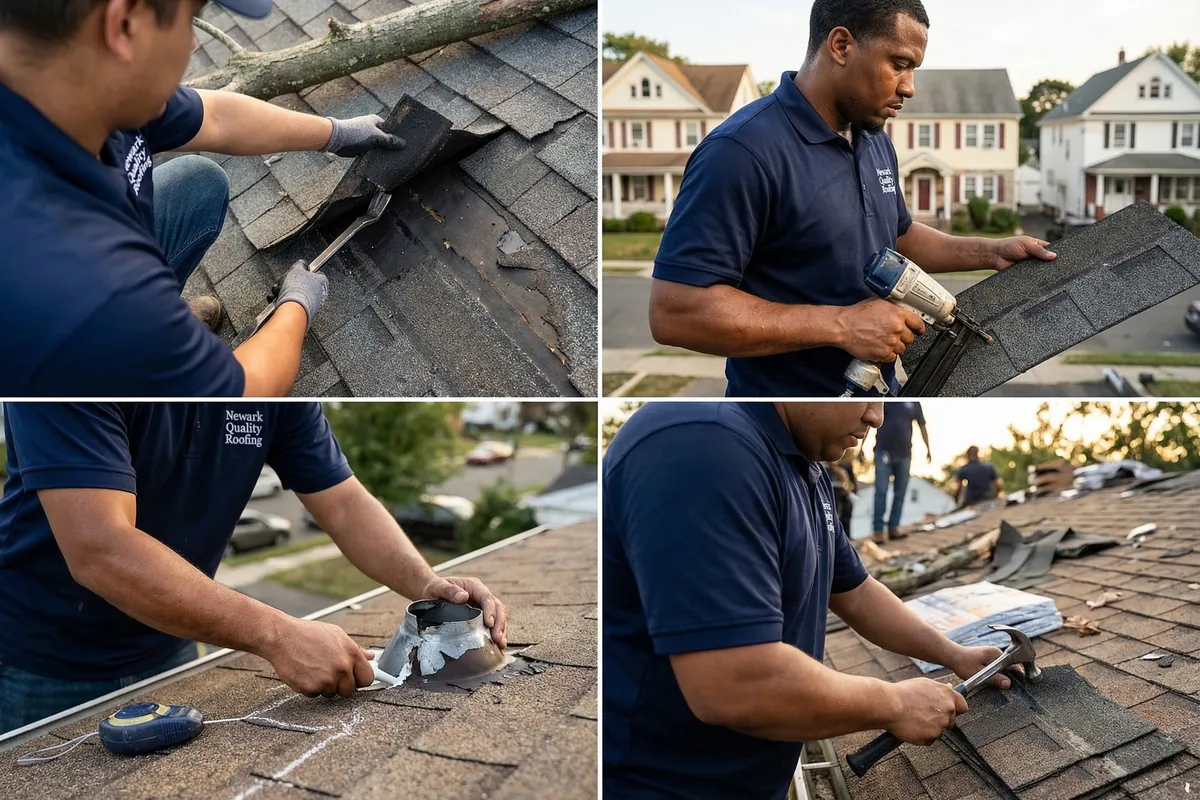
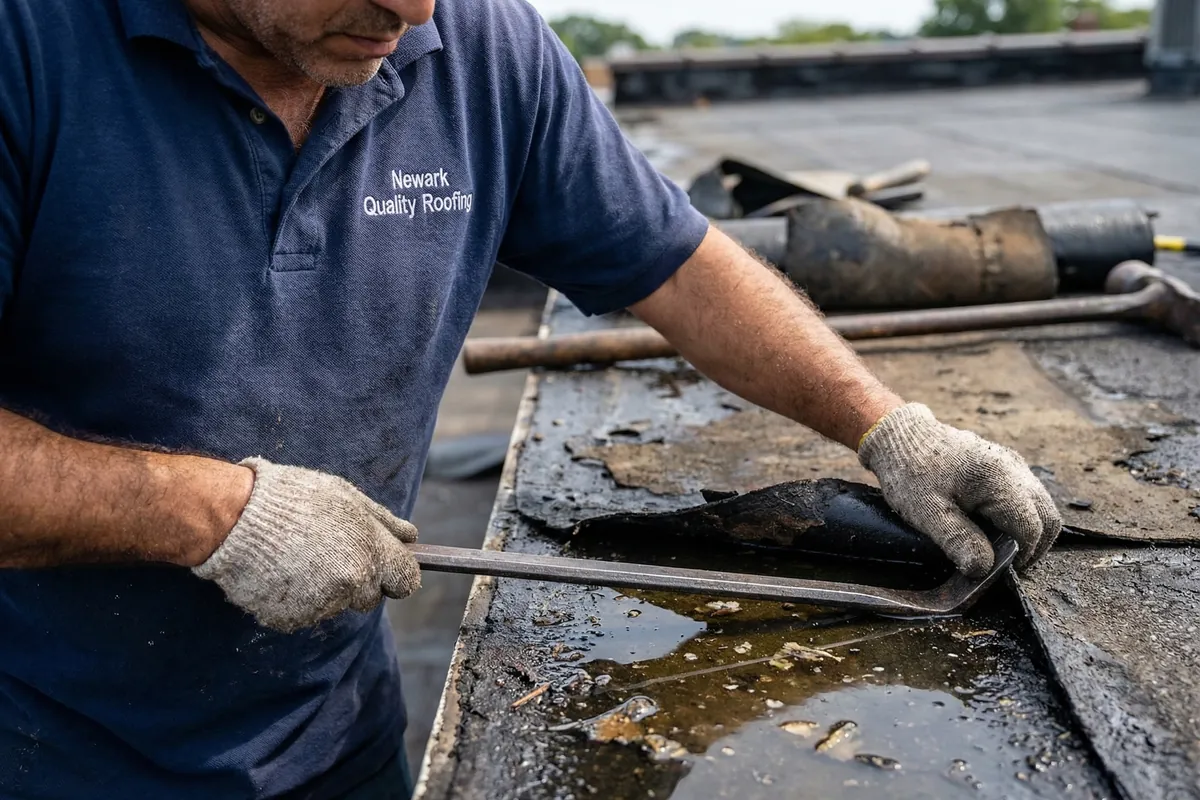
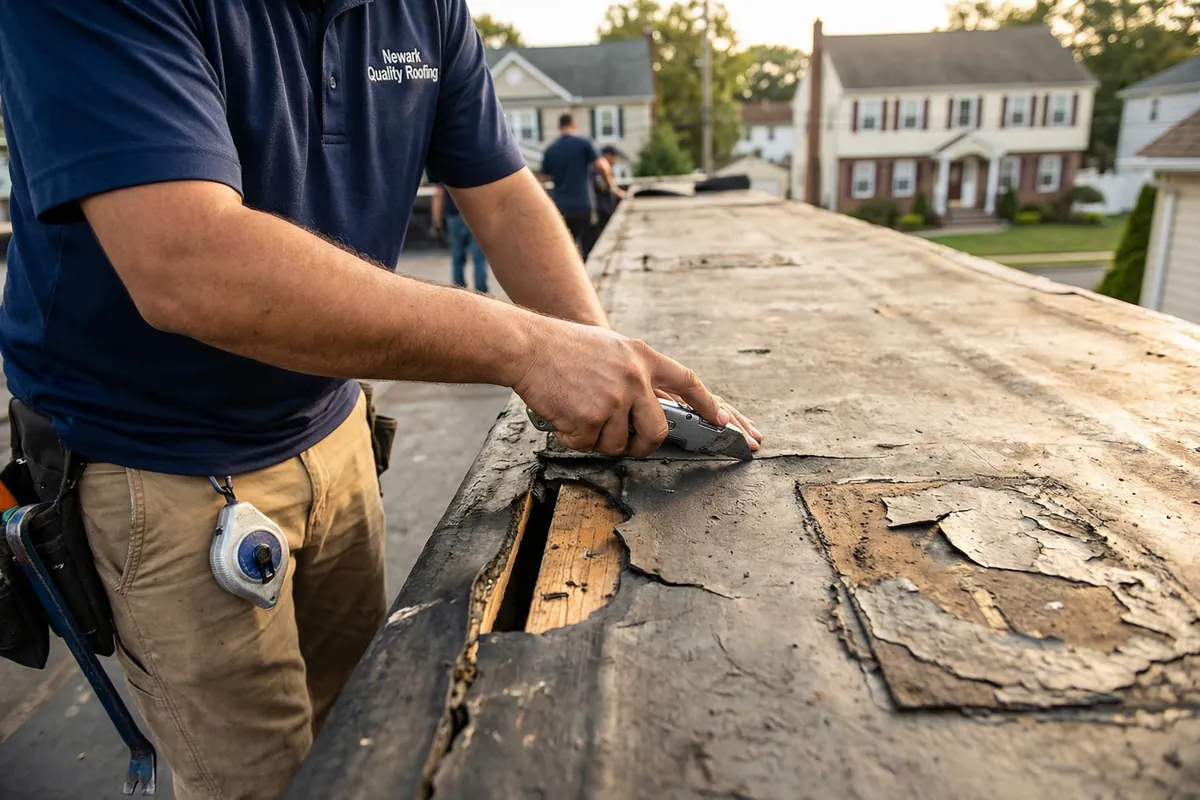
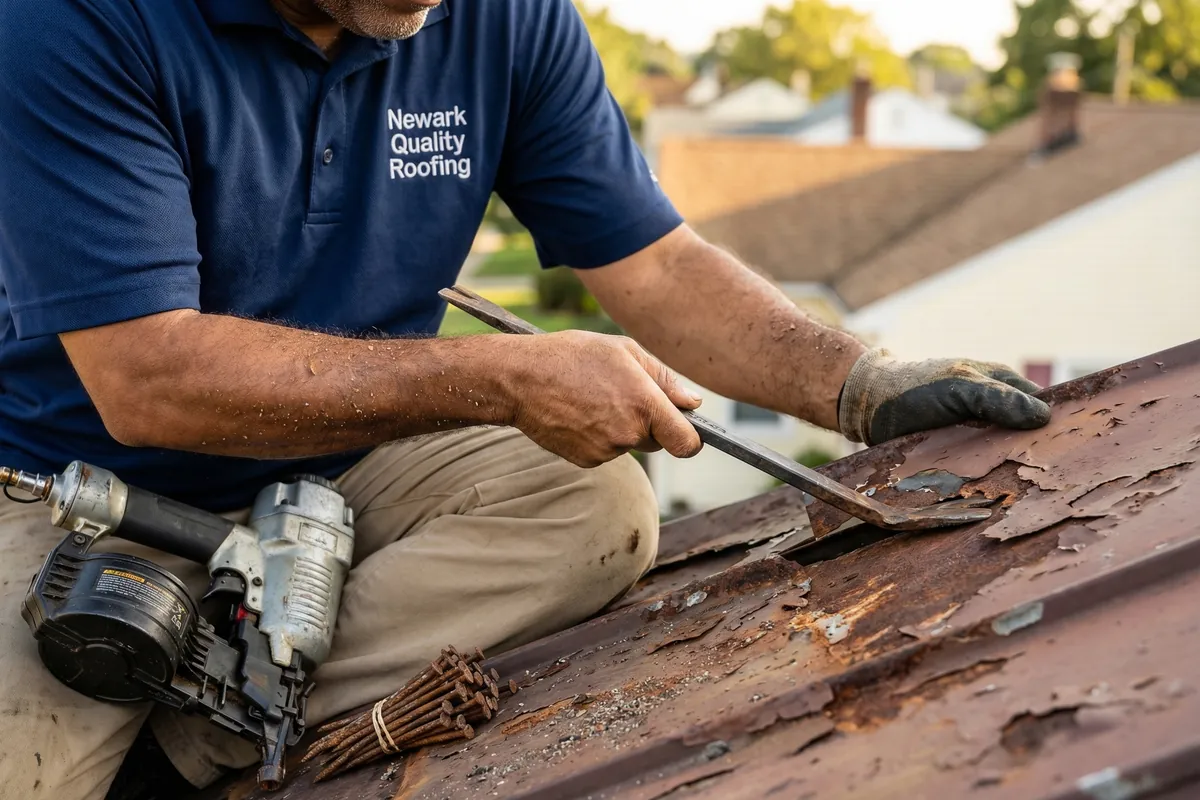
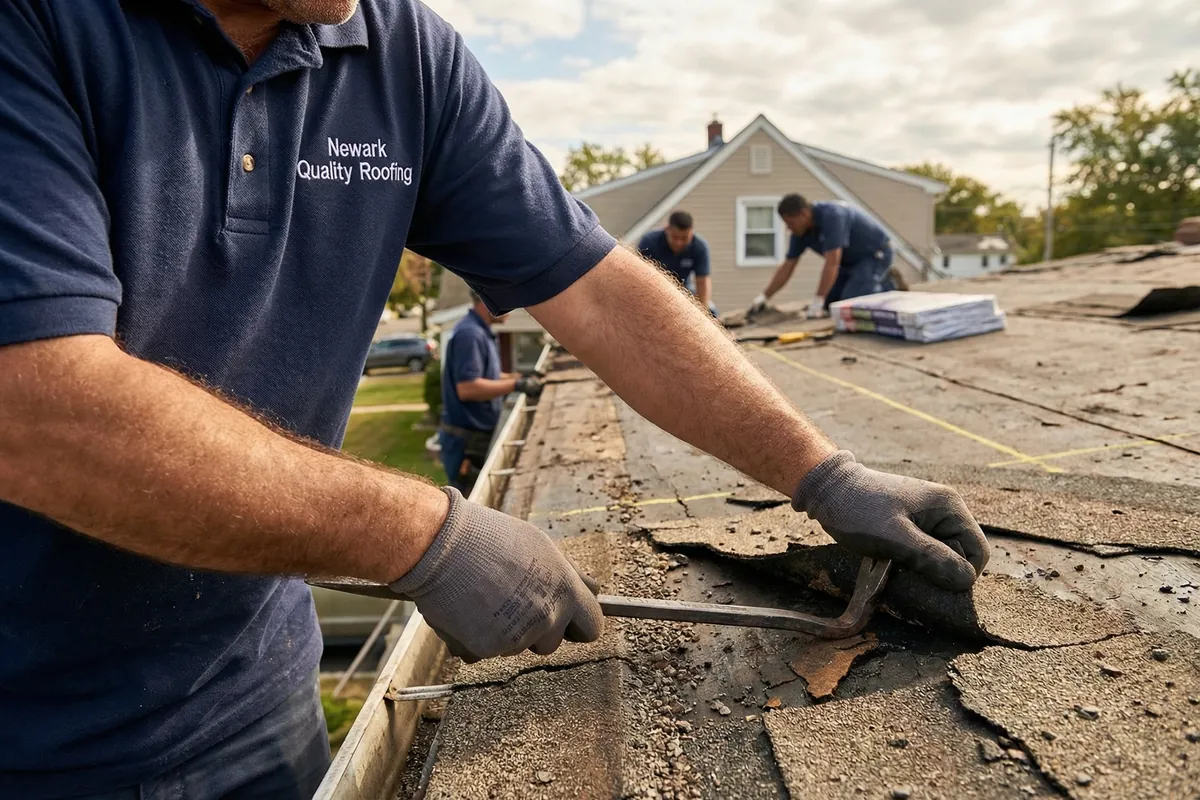
Every full roof replacement Livingston NJ file opens the same way: the tear-off. The crew strips the old covering down to the deck — shingles, underlayment, flashing, and the old vent boots — because a replacement written over an unexamined deck is a guess, and Livingston’s housing stock punishes guesses. Postwar split-levels hide junction rot where the lower roof meets the upper wall; 1960s colonials hide plank decking with gaps modern shingle specifications only tolerate within limits. A roofer who will replace the covering without reading the wood has priced a roof replacement Livingston NJ homeowners will pay for twice. The tear-off is also the leak investigation: two winters of a slow stain declare themselves as softened, discolored sheathing around the failed detail, and the crew photographs that evidence before a single new course goes down.
Livingston Roof Deck Repair and Resheathing
Deck work is where a Livingston replacement is won. Sound planks can stay; wide-gap or deteriorated sections get plywood overlay or replacement so fasteners hold to manufacturer specification, and rotted sheathing at wall bases and eaves is cut out and replaced in the same pass. The decking allowance is estimated from the attic inspection before the job is priced, so the resheathing line in a replacement Livingston NJ estimate is a planned scope rather than a mid-job surprise. When Livingston crews replace deck boards on a colonial, the new sheathing is fastened to the pattern the shingle specification requires — the detail that decides whether the new roof’s wind warranty means anything on the first nor’easter.
Plank Decking on 1960s Livingston Colonials
Board sheathing is the Livingston deck story: many homes of that era carry planks with gaps that widen as the wood dries. At tear-off the crew measures gap width and board condition roof by roof, because a replacement Livingston NJ crew that skips the measurement is guessing at the fastener bed for the next thirty years of shingles.
Route 10 Livingston Decks Rebuilt to Drain
The published record for this page names the Route 10 decks specifically: low-slope sections on Livingston’s split-levels and additions are rebuilt to drain during replacement, with the ponding map drawn at tear-off and the deck corrected before the new covering — flat sections that held water get slope, not just new material.
Architectural Shingles and the Livingston Materials List
Materials are named in every Livingston estimate, because a replacement is only as honest as its materials list. The standard field on a Livingston replacement is architectural shingles — dimensional asphalt shingles with the weight and profile the township’s colonials and split-levels wear — and architectural shingles are specified by line, not by nickname: GAF Timberline architectural shingles as the benchmark line, Owens Corning architectural shingles as the alternate, each with its matched underlayment, starter, hip, and ridge components. Architectural shingles over plank decking that has been corrected, architectural shingles over new plywood where the boards failed — the covering is the visible third of the job; the specification under the architectural shingles is the rest. When a Livingston homeowner compares two bids, the architectural shingles line is where the bids either name the system or hide it.
Architectural Shingles, Underlayment, and Ice Shield
Under the architectural shingles goes the assembly that keeps them honest: synthetic underlayment across the field, ice and water shield at every eave, valley, and penetration, drip edge at the perimeter, and new flashing at every junction. Architectural shingles shed water by geometry; the underlayment assembly is what forgives the one wind-driven storm that gets under them. On Livingston jobs the office specifies architectural shingles with their full component system — the shingle warranty and the system warranty are different documents, and only the named components earn the second one. Architectural shingles are the covering this township’s roofs are rebuilt with, job after job — and the architectural shingles line in the estimate names the exact product and its component system, not a category.
GAF Timberline and Owens Corning Lines in Livingston
The two architectural shingles lines the office prices most in Livingston are GAF Timberline and Owens Corning’s dimensional lines; both publish their specifications and warranties where a homeowner can read them (the references section below links both manufacturers). A Livingston roofer who will not name the shingle line in writing is asking to be paid for architectural shingles and to deliver whatever was on the truck.
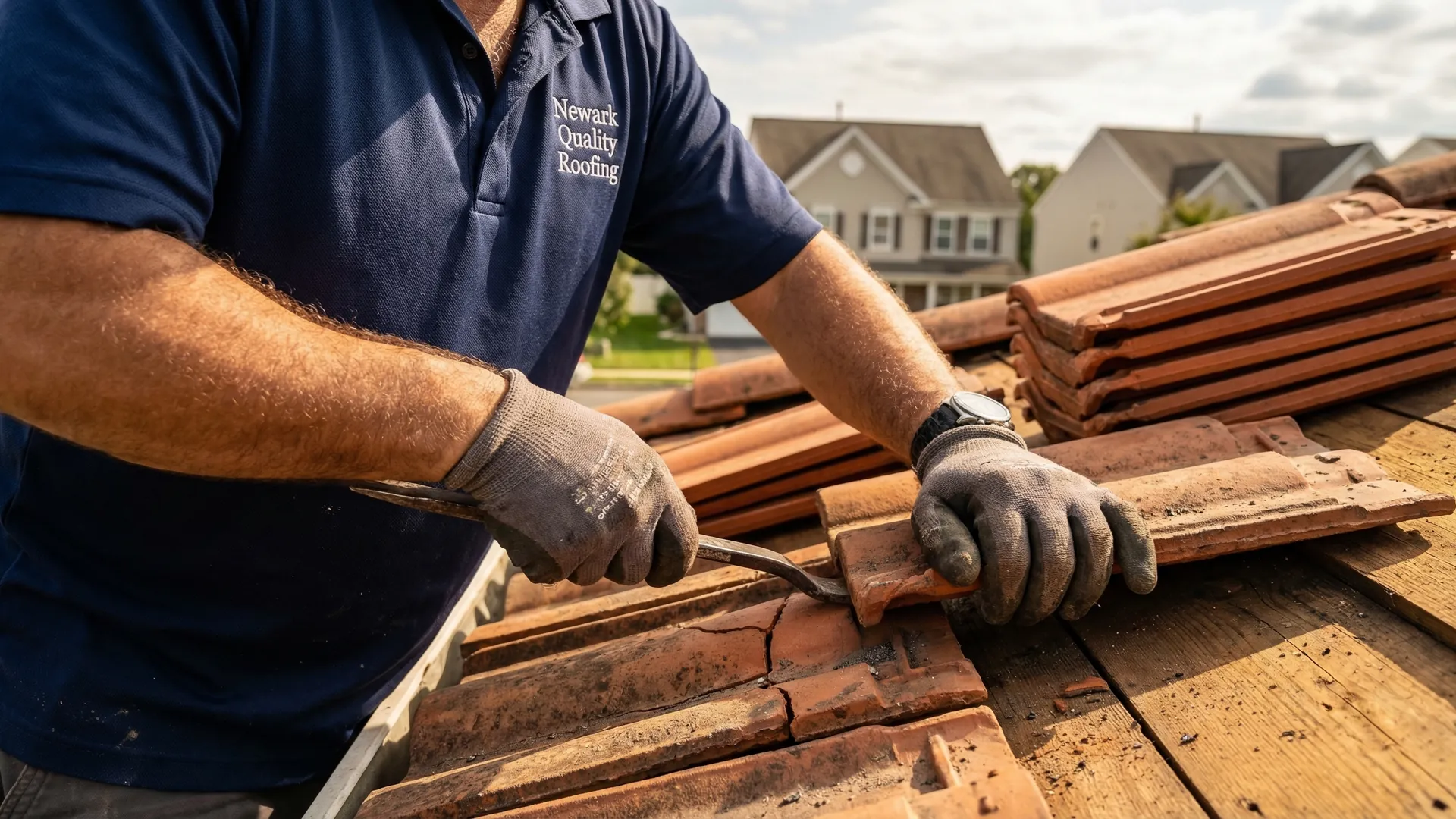
Slate, Cedar, Metal, and Flat Roof Replacements in Livingston
Architectural shingles are the standard, not the whole list: Livingston replacements also run in natural slate matched in kind, cedar shake at its original exposure, standing-seam metal, and low-slope membrane for the flat sections — each priced off its own geometry, each there because the crew will replace like with like where the house was built for it.
Livingston NJ Roof Replacement Cost and the Written Estimate
The question every Livingston homeowner asks first is what a replacement costs, and the honest answer is the one this page already publishes: the $10,000–$25,000 replacement band reflects size, pitch, material, and access. Height and pitch drive labor more than footprint does — a two-story Livingston colonial means longer ladder runs, more staging, steeper-slope safety rigging, and slower material movement than a single-story ranch of the same footprint. The deck is the second variable: a Livingston roof replacement estimate that carries no decking allowance has not looked in the attic. This is why the office writes the estimate after the inspection and prices both the single-project and staged options when a homeowner asks — a roof replacement Livingston NJ family can plan around is a number with its variables itemized, not a township average.
Roof Replacement Cost Livingston NJ
Read a Livingston estimate the way the office writes it: covering and components named by line, decking allowance stated, disposal runs counted, flashing details listed, staging noted where the budget forces it. Splitting a replacement across two seasons doubles setup, disposal runs, and flashing tie-ins, and the seam where next year’s field meets this year’s ages on two clocks — the written estimate prices both paths so the trade-off is arithmetic. Roof replacement cost Livingston NJ homeowners actually pay lands inside the published band when the roof is ordinary, and the estimate says exactly which variable — pitch, height, deck, material — moves a given house within it. One roof replacement NJ estimate should read like another when both are honest: the variables named, the band explained, the deck allowance stated.
What Moves a Livingston Replacement Price
Four variables, in the order they move the number: the roof’s size and pitch, the stories and access, the deck’s condition at tear-off, and the covering chosen — architectural shingles at the standard line, slate and metal above it, membrane priced off the drainage map.
The Free Written Estimate in Livingston
The estimate visit is where geometry and condition answers become numbers: the crew measures the field, reads the attic for deck and ventilation, photographs the evidence, and writes the scope a homeowner can hold a roofer to. Every roof replacement Livingston NJ file in this record closed against that written estimate — no verbal allowances, no mid-job surprises that the attic would have predicted.
Roof Repairs in Livingston — When Replacement Can Wait
Not every Livingston roof that leaks needs replacing, and a roofing company Livingston NJ homeowners can trust says so in writing. Roof repair Livingston NJ work is this office’s daily trade: a failed pipe boot, a lifted course after a storm, a junction that needs re-flashing. Six roof repair Livingston NJ calls in ten end with the covering intact and the detail rebuilt — the repair holds because the field around it is sound. But roof repairs have a arithmetic of their own: when the covering is at the end of its service life, roof repair Livingston NJ money buys months, not years, and the honest roofer shows the homeowner the count — how many roof repairs the file already holds, how much deck the last leak softened, what the next repair would cost against the replacement it delays. Roof repair Livingston NJ judgment is the whole reason this page publishes its replacement record: the same crew that replaces roofs in Livingston is the crew that will talk a homeowner out of one.
Roof Repair Livingston NJ vs. Full Replacement
The office’s rule is printed in every file: replace when the covering’s age, the deck’s condition, and the repair history agree. One leak on a twelve-year-old roof is a repair; the third leak on a twenty-two-year-old roof is a replacement conversation. Roof repairs that chase a failing field — a patch here, a coating there — cost more across three winters than the replacement they postpone, and the deck pays the difference in rot. When a Livingston homeowner asks whether roof repair NJ crews would simply patch it, the answer is that a patch is a product with a service life, and the file should say which one the house is buying.
Emergency Roof Repairs in Livingston
Storm damage does not wait for the estimate cycle: emergency roof repairs in Livingston start with drying the house in — tarping, temporary flashing, and a photographed record for the insurance file — and the permanent scope is written after the deck is read. Crews replace the failed detail permanently only on a read deck — the temporary dry-in is not the repair. Emergency roof repair NJ files in this office carry the same deck evidence as planned replacements.
Storm Damage Roof Replacement in Livingston
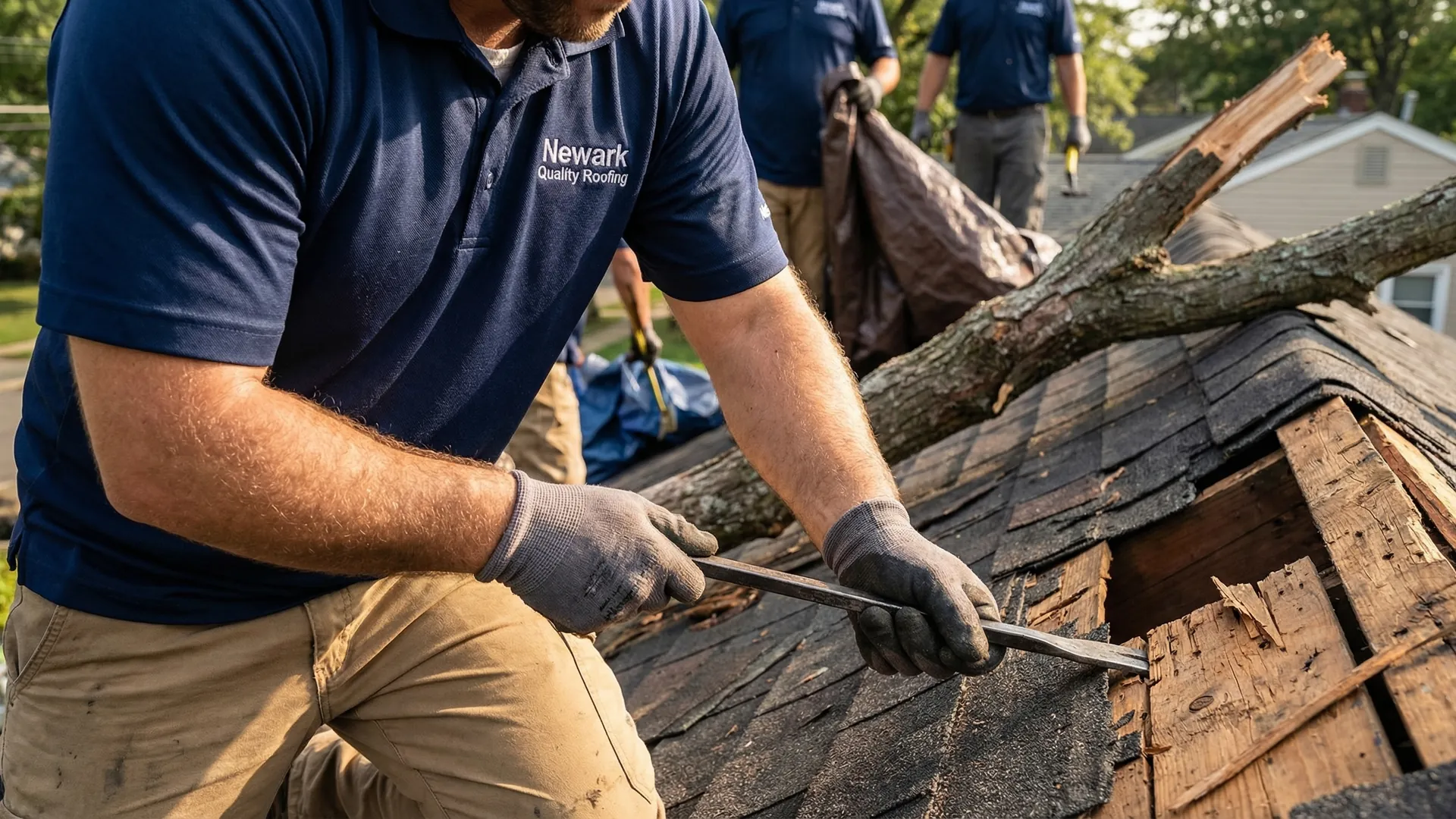
When the storm takes the covering past repair — lifted fields, creased shingles across whole slopes, a deck struck by a limb — the file becomes a storm damage roof replacement, documented for the carrier from the first photograph. The replacement Livingston NJ insurers approve is the one whose damage record was written before the tear-off began.
Replacing the Roof on Livingston Split-Levels and Colonials
Livingston’s housing stock is the job: postwar split-levels whose lower roofs drain onto upper walls, 1960s colonials on plank decking, ranches whose low pitches punish lazy drainage, and taller colonials whose cut-up fields — dormers, transitions, chimneys — multiply the flashing details. Replacing a roof in Livingston is therefore detailing work before it is covering work. The split-level junction is rebuilt with step flashing woven shingle-by-shingle into the new field, counter-flashing let into the wall above, and a kick-out diverter at the base that throws water into the gutter instead of behind the siding. A replacement Livingston NJ crew that treats the junction as a caulk line has not understood the house. The same discipline runs up the colonial: every dormer cheek, every chimney, every valley gets new metal, woven or let in — never reused collars, never surface sealant where flashing belongs.
Flashing, Valleys, and Chimney Work in Livingston Replacements
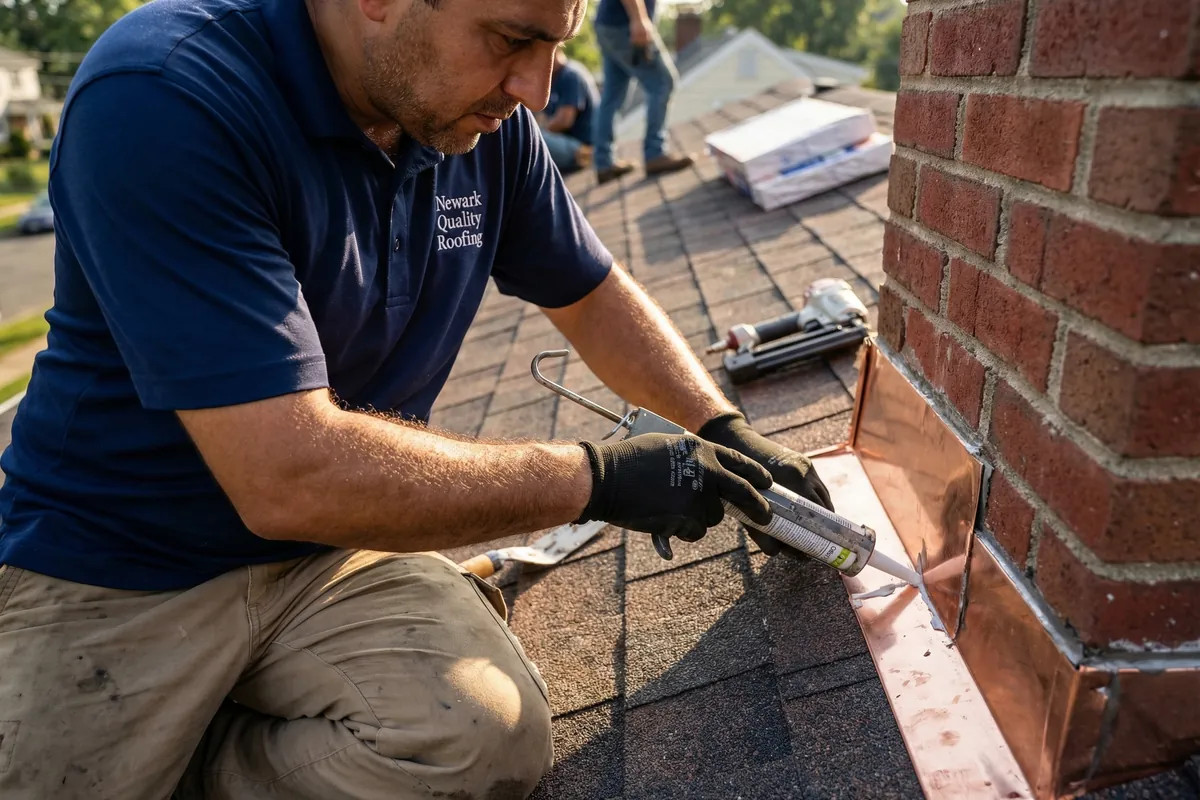
Penetrations and junctions are where replacements leak when they leak at all, so the Livingston specification replaces all of it: step and counter-flashing at walls, chimney flashing fabricated in copper or galvanized stock with the counter-flashing let into the mortar joint, pipe boots new at every vent, valley metal under the woven courses. Crews replace flashing the way they replace shingles — as a system with a service life, not a detail to be inherited from the last roof. A Livingston homeowner reading an estimate should find the flashing lines itemized; their absence is the loudest line in a cheap bid.
Attic Ventilation Corrected During a Livingston Replacement
Replacement is the right moment to correct what the attic has been doing wrong: postwar Livingston homes often vent bathroom fans into the attic, loading the deck with moisture. The crew reroutes those ducts through the new covering with flashed vent caps and balances intake and exhaust to the one-per-150 standard, integrating or replacing static vents with a continuous ridge system where the geometry allows.
Gutters, Gutter Guards, and Siding Tie-Ins in Livingston
A replacement ends at the edges: gutters re-hung to the corrected drip edge, gutter guard where the lot’s tree cover demands it, and siding tie-ins at the junctions the new flashing now protects. The Livingston file photographs the edges with the same care as the field — the water a new roof sheds has to be collected by something.
Livingston Roof Replacement Permits and Registration
A Livingston replacement is filed the way New Jersey requires: the contractor registration is current, the permit is pulled where the Uniform Construction Code requires one, and the permit record closes in the same file as the photographs. Livingston Township’s own permits page (linked in the references below) publishes the township side of the process, and a homeowner can verify a home improvement contractor’s registration with NJ Consumer Affairs before signing anything — the office expects to be checked. The same registration discipline covers every roof repair Livingston NJ call the office runs. A roofer who proposes skipping the permit on a Livingston job is proposing that the homeowner own the violation.
Verifying a Livingston Roofer’s Registration
The checks take minutes: the NJ Consumer Affairs registry for the contractor’s registration, the township for the permit history, and the manufacturers for the installer’s standing on the shingle line being installed. Every replacement Livingston NJ file in this record passes all three, in writing, before the tear-off is scheduled.
New Roof Installs in Livingston — Day by Day
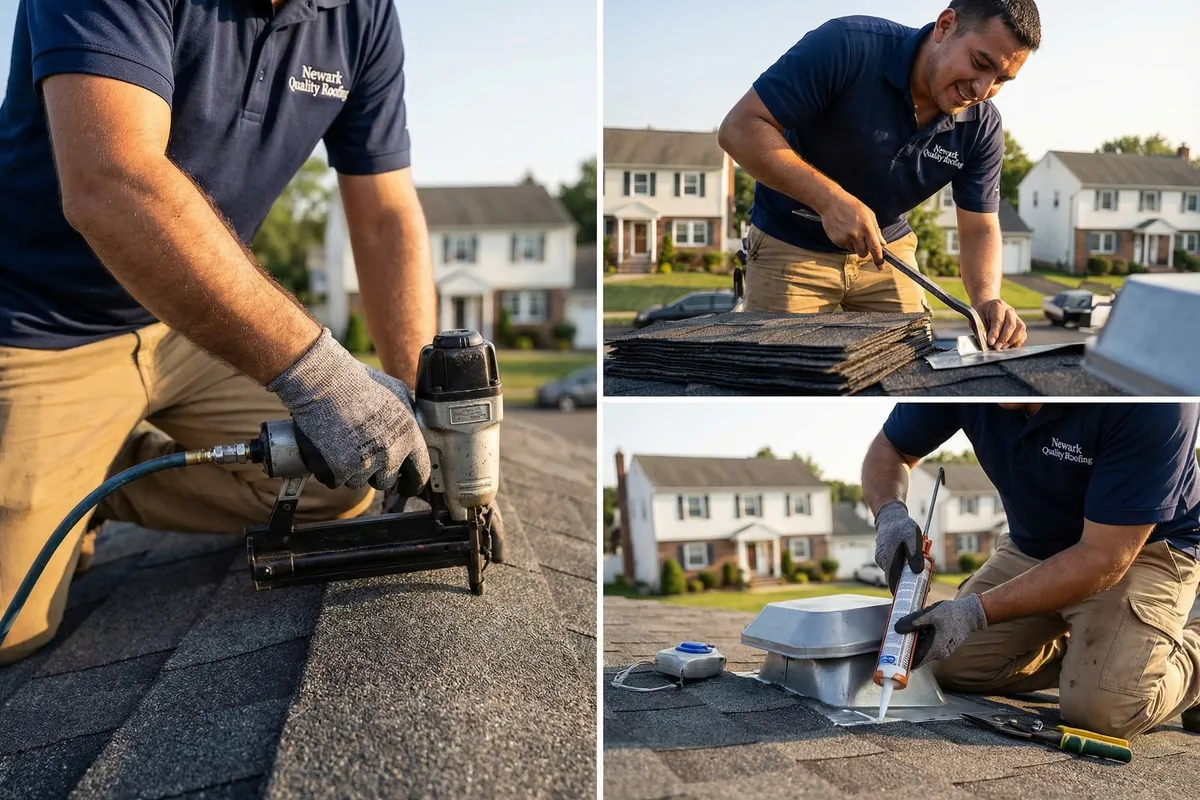
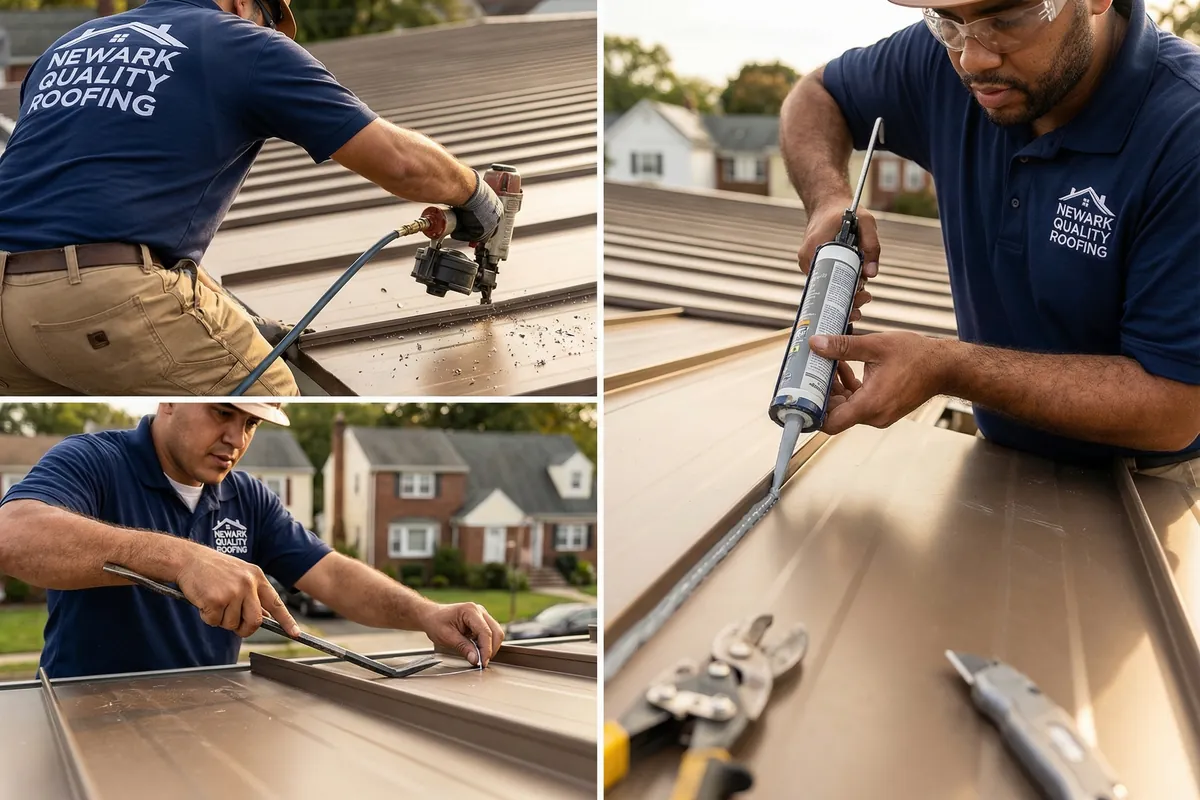
A Livingston replacement runs on a published sequence the homeowner can follow from the driveway: day one is tear-off and deck correction, with the house dried in the same day; the underlayment assembly and flashing follow; the field goes down slope by slope; penetrations, ridge, and edges close the system; and the final pass is magnetic — nails, debris, and the photographic record walked with the homeowner. A new roof Livingston NJ families watch being built should never leave the house open overnight, and the file’s daily photographs are the proof of the sequence, not a courtesy.
How Long a Livingston Replacement Takes
An ordinary Livingston colonial or split-level replacement is a matter of days, not weeks — the variables are the same four that move the price: size, pitch, deck condition, and the flashing count. Weather holds are called by the crew leader, not the calendar, and a dried-in roof waits out a storm better than a hurried one.
Livingston Roof Replacement Warranties and the Job File
Two warranties ride on every Livingston replacement and they are different documents: the manufacturer’s warranty on the named materials — architectural shingles carry theirs by line — and the office’s workmanship warranty on the installation. Both live in the job file with the photographs, the permit record, and the materials list, because a warranty a homeowner cannot produce is a rumor. When a Livingston roof is staged across seasons, both phases are documented for warranty purposes, so the seam between them is a record, not an argument.
What the Livingston Job File Contains
The estimate, the attic and tear-off photographs, the deck measurements, the materials list by line, the permit, and the daily record — the file is the roof’s biography, and it transfers with the house. Sellers in Livingston have closed on the strength of a complete replacement file more than once.
Roof Replacement Company Livingston NJ
One heading above is the whole variation on purpose: it is what a homeowner types when the decision is made and the search is for the company, not the concept. What a roof replacement company Livingston NJ homeowners are actually hiring is a sequence and a file — the tear-off discipline, the deck standard, the named materials, the flashing rules, the written estimate — and this record exists so the company can be read before it is called. The office is Newark Quality Roofing, an NJ-registered contractor whose Livingston replacement files fill the sections above and below this one. It is the standard a roof replacement NJ homeowners can hold any bidder to, line by line.
IKO, CertainTeed, and Atlas Lines Priced for Livingston Roofs
Beyond the two benchmark lines, the office prices IKO and CertainTeed architectural shingles and Atlas shingles for Livingston roofs where a homeowner’s specification or a prior roof’s match calls for them — every line named in the estimate with its warranty document, never substituted on the truck. The materials named are the materials installed; the job file keeps the wrapper labels with the photographs.
Livingston Roof Replacement Questions, Asked and Answered
These are the questions the Livingston page already answers in its own FAQ, set out here as headings so they can be found the way homeowners ask them. A roofer’s answers are the product being bought before the product — read them for the deck standard, the flashing rules, and the cost variables, because a Livingston replacement is exactly those answers executed on a roof. Whether the honest answer is repair or replace, it is written the same way: from the deck outward.
What Is Roof Replacement?
Roof replacement strips a roof down to the deck, repairs the sheathing, and installs a new underlayment-and-cover system in asphalt, metal, slate, or low-slope membrane. It rebuilds the entire weatherproof assembly for a roof past its service life rather than patching isolated damage.
The lower roof on our Livingston split-level drains onto the upper wall — how does replacement fix that junction?
That wall-to-roof junction is where split-level replacements are won or lost. The crew rebuilds it with step flashing woven shingle-by-shingle into the new field, counter-flashing let into the wall above, and a kick-out diverter at the base that throws water into the gutter instead of behind the siding. Because the tear-off exposes the old junction completely, rotted sheathing at the wall base is replaced in the same pass. It is the detail most layover jobs skip, and the one that ends the recurring stain on the ceiling below.
Can a Livingston replacement be split so we do the front slope this year and the rear next year?
It can be staged, but the economics argue for one mobilization. Splitting doubles setup, disposal runs, and flashing tie-ins, and the seam where next year’s field meets this year’s ages on two clocks. If budget forces staging, the crew sequences the worst slope first, details the tie-in line so the second phase weaves in cleanly, and documents both phases for warranty purposes. The free written estimate prices both the single-project and staged options so the trade-off is a number, not a guess.
Our Livingston colonial was built in the 1960s — should we expect plank decking, and does it need resheathing?
Many Livingston homes of that era carry board sheathing with gaps that modern shingle specifications tolerate only within limits. At tear-off the crew measures gap width and board condition; sound planks can stay, while wide-gap or deteriorated sections get plywood overlay or replacement so fasteners hold to manufacturer specification. That decking allowance is estimated from the attic inspection beforehand, so the resheathing line in the quote is a planned scope rather than a mid-job surprise.
Do Livingston’s taller colonials cost more to replace than a ranch of the same footprint?
Usually, yes — height and pitch drive labor more than footprint does. A two-story colonial means longer ladder runs, more staging, steeper-slope safety rigging, and slower material movement than a single-story ranch, and its roof field is often more cut-up with dormers and transitions. The $10,000–$25,000 replacement band reflects exactly those variables: size, pitch, material, and access. Your written estimate itemizes them against your actual roof instead of a township average.
What happens to our Livingston attic vents and bathroom fans during the replacement?
Replacement is the right moment to correct them. Postwar Livingston homes often vent baths into the attic, loading the deck with moisture; the crew reroutes those ducts through the new covering with flashed vent caps and balances intake and exhaust to the one-per-150 standard. Existing static vents are either integrated or replaced with a continuous ridge system where geometry allows, and every penetration gets new flashing rather than reused collars. The result is a roof that dries from below while it sheds from above.
Will the Livingston crew find the cause of the slow leak we have been ignoring for two years?
Yes, and they will show it to you. Slow leaks declare themselves at tear-off as stained, softened sheathing and corroded fastener patterns around the failed detail, and the crew photographs that evidence before replacing the section. Two winters of minor intrusion usually mean a contained deck repair inside the decking allowance rather than structural reframing, but the point of the tear-off is certainty: the new system goes down over inspected, documented wood instead of hope.
What does a roof replacement cost in Livingston, NJ?
The page’s own published band is $10,000–$25,000 for a Livingston replacement, and the variables that move a house inside it are size, pitch, material, and access — with the deck’s condition at tear-off as the fifth, settled by the attic inspection before the estimate is written. A Livingston roofer who quotes a single number without those five readings is quoting a different house. The free written estimate itemizes your roof against the band, names the covering line, and states the decking allowance, so the cost of a roof replacement in Livingston is a document you can compare — not a figure you have to trust.
The service log is the office’s running record for Livingston — the entries below are the township’s recurring replacement patterns as the crews meet them, kept because the next Livingston estimate is written from the last one. A roofer who works a township repeatedly learns its roofs as a set: the split-level junction, the plank deck, the Route 10 low slope, the colonial’s cut-up field. This is that set, written down.
Livingston, split-level off the Route 10 corridor: lower roof draining onto the upper wall, the junction flashing failed behind the siding. Full replacement — junction rebuilt with step flashing woven into the new field, counter-flashing let into the wall, kick-out diverter at the base, rotted sheathing at the wall base replaced in the same pass. The Livingston homeowner had priced two roof repairs against this replacement; the file shows why the replacement won.
Livingston, 1960s colonial: plank decking throughout, gaps beyond the shingle specification’s tolerance on the rear slope. Crews replace the failed boards and overlay the wide-gap sections in plywood, then architectural shingles over the corrected deck, ridge ventilation added where the original static vents had short-circuited. The decking allowance in the Livingston estimate covered the overlay as planned — no mid-job change order.
Livingston, ranch with a low-slope rear addition: the addition’s deck ponded at the drain line. Replacement rebuilt the low section to drain — the Route 10 pattern, as this page’s record names it — membrane on the flat, architectural shingles on the main field, the transition flashed as one system. Livingston files with additions are two roofs wearing one address, and the estimate priced them that way.
Livingston, taller colonial, cut-up field: four dormers, two chimneys, three valleys. Replacement ran a day longer than the township’s plain fields — height, pitch, and the flashing count, the published variables, in that order. Every dormer cheek re-flashed, both chimneys re-flashed with counter-flashing let into the mortar, valley metal renewed. The Livingston homeowner’s file carries eleven junction photographs.
Livingston, postwar house venting two bathroom fans into the attic: deck moisture at the bays below the fan ducts. Replacement rerouted both ducts through the new covering with flashed caps, balanced intake and exhaust to the one-per-150 standard, and replaced the moisture-softened sheathing inside the decking allowance. Livingston attics of that era hide this exact fault; the tear-off is when it gets found and fixed.
Livingston, storm-lifted field on a twenty-year-old covering: the third repair estimate on the same roof became the replacement file. The homeowner had asked whether to repair a fourth time or replace; the file answered. Creased and lifted shingles across both slopes, granule loss in every valley — roof repairs would have bought a season. The replacement Livingston NJ insurers documented from the first photograph closed with a new architectural shingle system, and the homeowner’s three prior repair invoices sit in the front of the file as the arithmetic that decided it.
Livingston Roof Replacement Photo Record
Every Livingston file keeps its photographs: the tear-off evidence, the corrected deck, the named materials on the roof, and the finished field. The photo record below is the office’s standing Livingston gallery — the same photographs the estimates and warranties are written against — because a roof replacement Livingston NJ homeowners are asked to trust should be one they can look at.
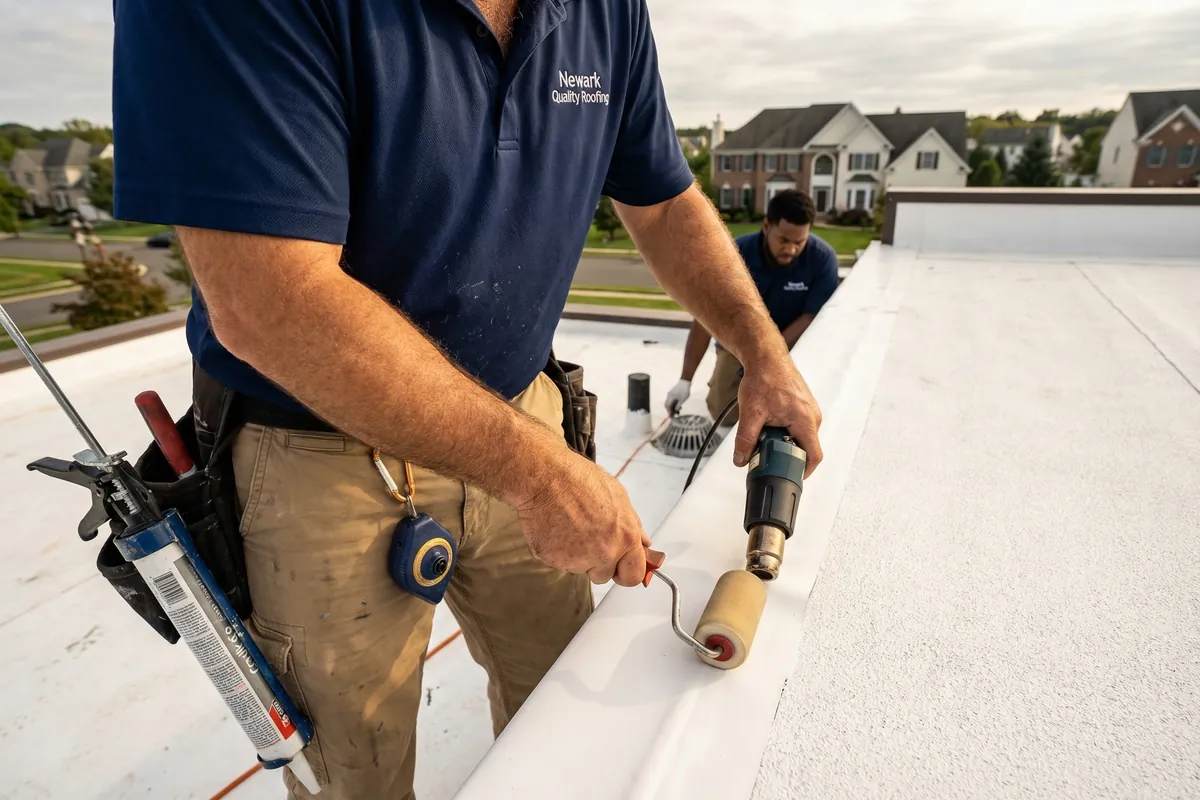
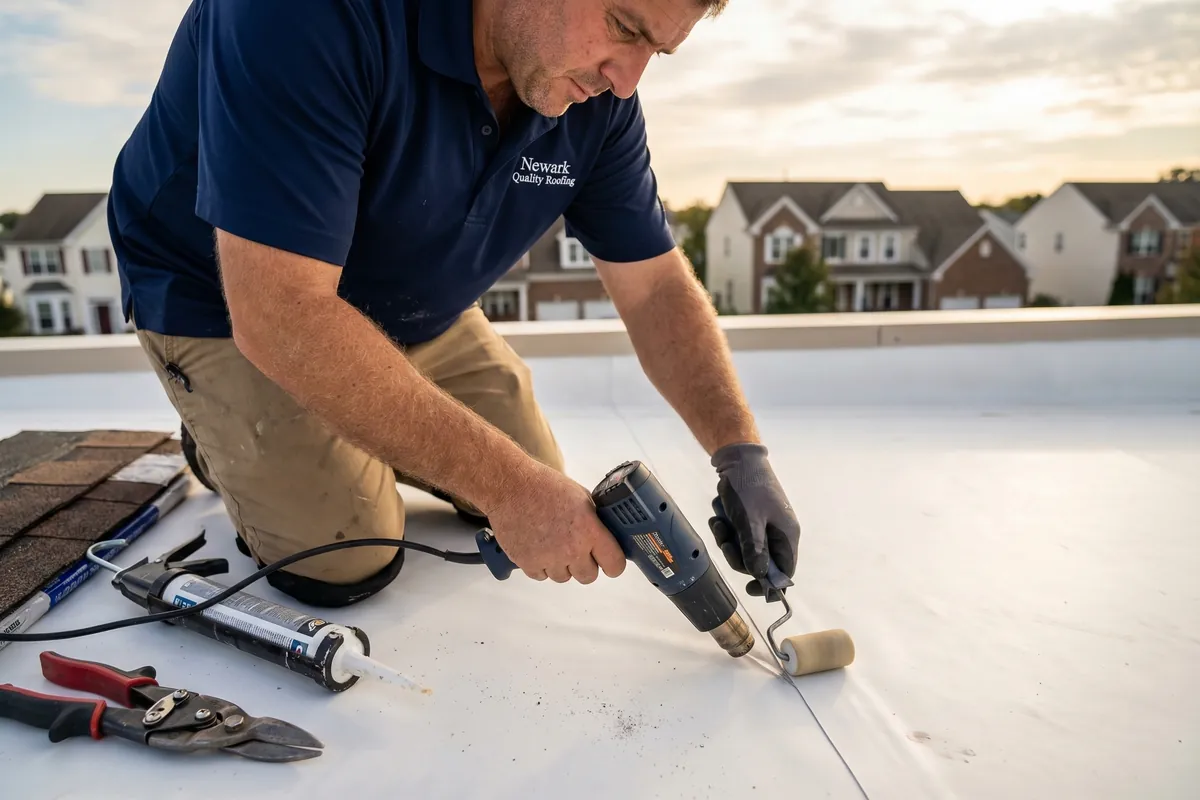
Livingston, NJ — the township this replacement record covers.A full replacement at tear-off, Livingston.Tear-off complete — the deck is read before anything is covered.Deck correction: failed sheathing replaced inside the allowance.An aging covering at replacement age, Livingston.Architectural shingles going down over the corrected deck.Slate replaced in kind on a Livingston colonial.Cedar shake at its original exposure.Standing-seam metal, panel lengths formed to the roof.Tile replacement, Livingston.A flat section rebuilt to drain, Livingston.Storm damage that priced as a replacement, not a repair.Before: the aged field at first inspection.After: the new field over the corrected deck.Before: residential shingles at the end of their service life.After: the residential field renewed.Leak evidence at tear-off — photographed before replacement.After: the failed detail replaced and re-flashed.Before: storm damage documented for the file.After: the storm file closed with a new system.Before: ponding on the low-slope section.After: the low slope rebuilt to drain.Before: the membrane at replacement age.After: the new membrane system.Before: metal at the end of its finish life.After: metal renewed.Before: the built-up section read at tear-off.After: the built-up section renewed as one system.
Newark Quality Roofing — The Livingston Service-Area Card
Newark Quality Roofing — the business holding the Livingston replacement files above. Its own record for this page lives at this Livingston roof replacement record.
Business locality: Newark, NJ, US — serving Livingston and the surrounding Essex County townships from that base.
The card below is the record’s identification, kept in the office’s own words: the business that holds the Livingston files in this record is Newark Quality Roofing, an NJ-registered roofing contractor whose office locality is Newark, in Essex County, New Jersey, and whose crews replace roofs across Livingston and the surrounding Essex County townships from that base. Livingston is the service area this page covers; Newark is where the business sits, and the card does not confuse the two — a homeowner checking the registration will find the same name, the same locality, and the same published line. The county line is underlined in the card the way the office underlines it in the paper file:
Essex County, New Jersey — the county this record’s roofs stand in.
Roof Replacement Services Livingston NJ
One heading above is again the whole variation, set as the references heading on purpose: these are the public records behind the services this record describes. Check the contractor before the contract — the State of New Jersey portal (www.nj.gov) is the front door to the state’s records, NJ Consumer Affairs (www.njconsumeraffairs.gov) keeps the home improvement contractor registry where this office’s registration can be verified, and Livingston Township publishes its permits process on the township site (www.livingstonnj.org). The materials named in this record publish their own documentation: GAF (www.gaf.com) for the Timberline architectural shingles line and its system warranties, and Owens Corning (www.owenscorning.com) for its dimensional shingle lines — the same documents the job file keeps with the wrapper labels. The roofer who wrote this record expects all of it to be checked before the tear-off is scheduled.
Newark Quality Roofing on YouTube, LinkedIn, and Facebook
The office also publishes where homeowners look first — replacement photographs, tear-off records, and the same Livingston files this record keeps, on the platforms below.
Field notes — materials, assemblies, and Livingston conditions
How the Livingston Field Notes Are Kept
The field notes are the short form of the Livingston record: the terms the estimators, crew leaders, and inspectors actually use, written as the sentences they belong in. A tear-off note records what the deck showed; a materials note names the assembly; a conditions note says what the township’s weather does to each. Read together they are the vocabulary of a Livingston replacement — the same words that appear in the written estimates, the permit files, and the warranty documents, used the way the crews use them on the roof. The operative word throughout is replace: replace the flashing, replace the boots, replace the failed boards — never inherit them.
Assembly note: a Livingston replacement is built from the deck up — plywood or corrected plank decking, synthetic underlayment across the field, ice and water shield at the eaves, valleys, and penetrations, drip edge at every perimeter, and the covering over all of it. The assembly is the roof; the architectural shingles a homeowner sees are its last course, and the warranty the system earns is written against the whole stack, not the shingles alone. Flashing is fabricated and let in at every wall, chimney, and valley, pipe boots are replaced at every vent, and no collar from the old roof is inherited — Livingston crews replace the metal with the covering because both were installed to age together.
Materials note: the Livingston field runs in asphalt shingles by default — architectural shingles from the GAF Timberline line or Owens Corning’s dimensional lines — with natural slate matched in kind on the houses built for it, cedar shake at its original exposure, standing-seam metal roofing systems where the specification calls for them, and copper reserved for the flashing and accent work where its service life justifies it. Flat roof sections take EPDM or a low-slope membrane detailed off the drainage map, and a roof coating belongs to the maintenance conversation, never as a substitute quoted against a replacement the deck has already voted for.
Ventilation note: a Livingston roof that cannot dry from below rots from below. Intake at the soffits, exhaust at a continuous ridge vent, balanced to the one-per-150 standard — and the bathroom fans and attic vents corrected during replacement rather than vented into the attic space, where their moisture loads the decking all winter. The ventilation line in a Livingston estimate is not an upgrade; it is the difference between a deck that serves the new covering’s full life and one that softens under it, and the field notes record the balance for every house, ranch and colonial alike.
Conditions note: Essex County weather writes the inspection calendar — nor’easters that drive rain under lifted courses, freeze-thaw cycles that work at every flashing joint, summer heat that ages an exposed south slope years ahead of its twin. Livingston replacements are specified for North Jersey conditions: ice shield where the winters demand it, fastener patterns to the wind specification, and tear-off scheduling that never leaves a house open against a forecast. Insurance claims after a storm run on the same evidence discipline — the tear-off photographs, the deck record, the materials list — because a claim is a file before it is a phone call.
Edges note: the roof ends at its edges, and the Livingston file photographs them like the field — gutters re-hung to the corrected drip edge and pitched to drain, gutter guard under the heavy tree cover, skylight curbs re-flashed where the units stay, and siding tie-ins sealed at the junctions the new flashing protects. A replacement that sheds water perfectly into a sagging gutter has moved the problem, not solved it; the edges note closes every Livingston job, and the homeowner walks it with the crew leader before the file is signed.
Schedule Roof Replacement in Livingston, NJ
Get your free roof replacement estimate in Livingston today — no obligation, no pressure. Newark Quality Roofing serves homeowners and businesses across Essex County, New Jersey.