Roof Repair in Millburn, NJ — Extended Guide, Photo Record, and Field Notes
This is the complete record behind the Millburn page: the repair work the crews run out of the Newark office for a township of two rooflines — the slate, copper, and tile estates of Short Hills, with their Tudor and Arts-and-Crafts detailing under the reservation canopy, and the low-slope decks of the downtown Millburn village on the Rahway River. Millburn roofs fail at their details — the flashing joint, the valley, the fastener, the seam — and the record below covers the work in the order the office keeps it: the questions Millburn owners ask first, the repair sections, the service log by neighborhood, the photographs each job leaves behind, and the field notes the estimates are written from.
Roof Repair in Millburn NJ: The Questions Owners Ask Before They Ask for a Price
These are the page’s own frequently asked questions, set out in full — the same six questions the Millburn FAQ answers, each with its answer written as the office gives it. They are the questions a Short Hills estate owner or a downtown property manager actually asks before anyone talks about price, and the answers are the ones the inspection is built to defend.
Do I need a permit from Millburn for a roof repair?
For most Millburn homes, no. A repair or replacement of the roof covering on a detached one- or two-family home counts as ordinary maintenance under N.J.A.C. 5:23-2.7 and requires no construction permit, no inspection, and no notice, per the NJ Uniform Construction Code. The line moves on commercial, multi-family, or attached buildings — including the downtown village storefronts and the Mall at Short Hills — where repairing more than 25% of the total roof area in a 12-month period requires a permit filed with the Township of Millburn Building Department.
Does a roof repair in a Millburn historic district need a Certificate of Appropriateness?
Most Millburn and Short Hills homes need no Historic Preservation Commission review, but a designated landmark or a property inside the Wyoming or Short Hills Park historic district requires a Certificate of Appropriateness before permit-triggering roof work. The Certificate is the Commission’s exterior-design approval, separate from the building permit, under the Township of Millburn Historic Preservation ordinance. National Register listing alone places no restriction on a private owner, per the National Park Service, so a neighboring landmark imposes no roofing gate on your home.
How do you repair a slate, copper, or tile estate roof in Short Hills?
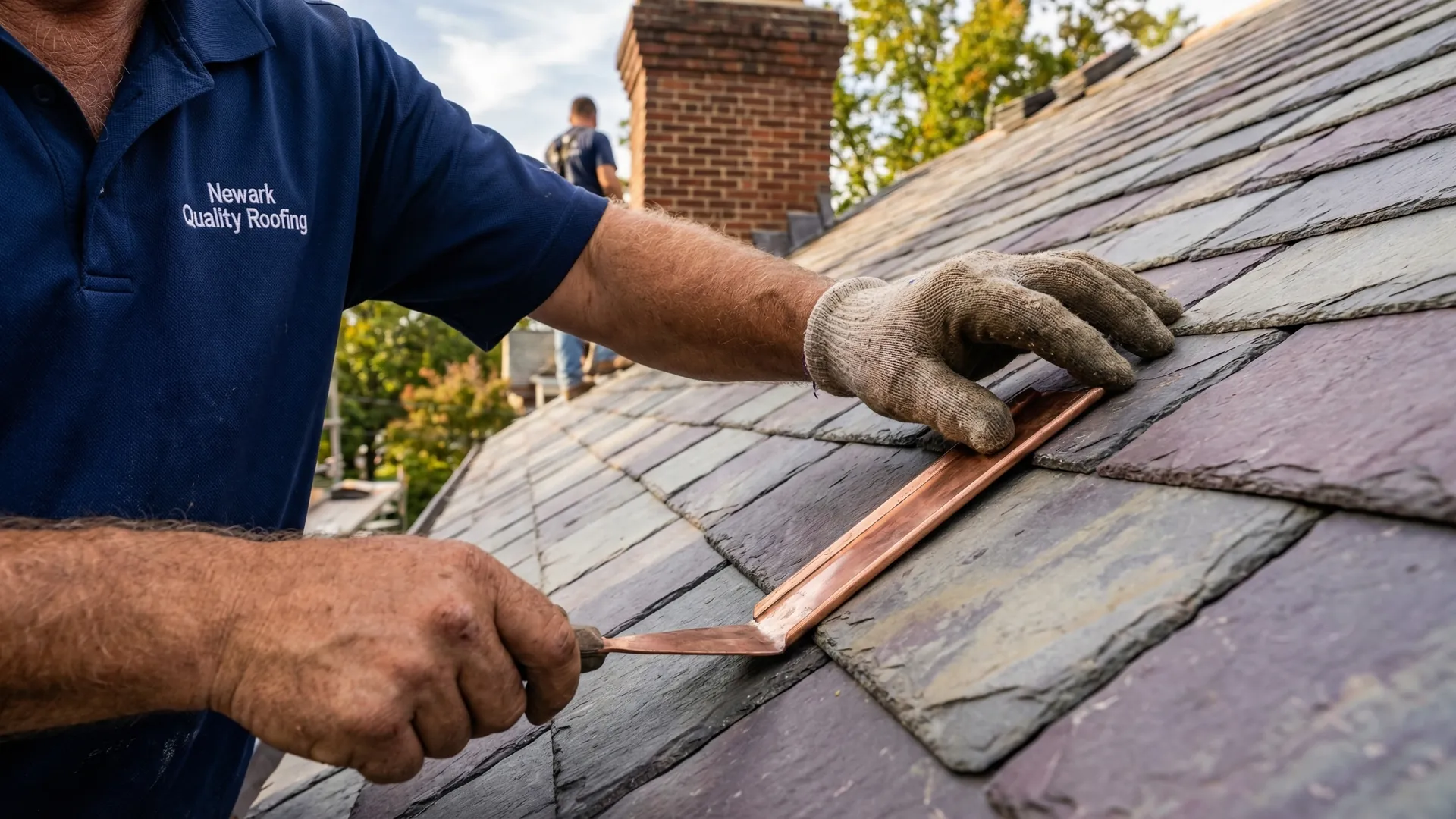
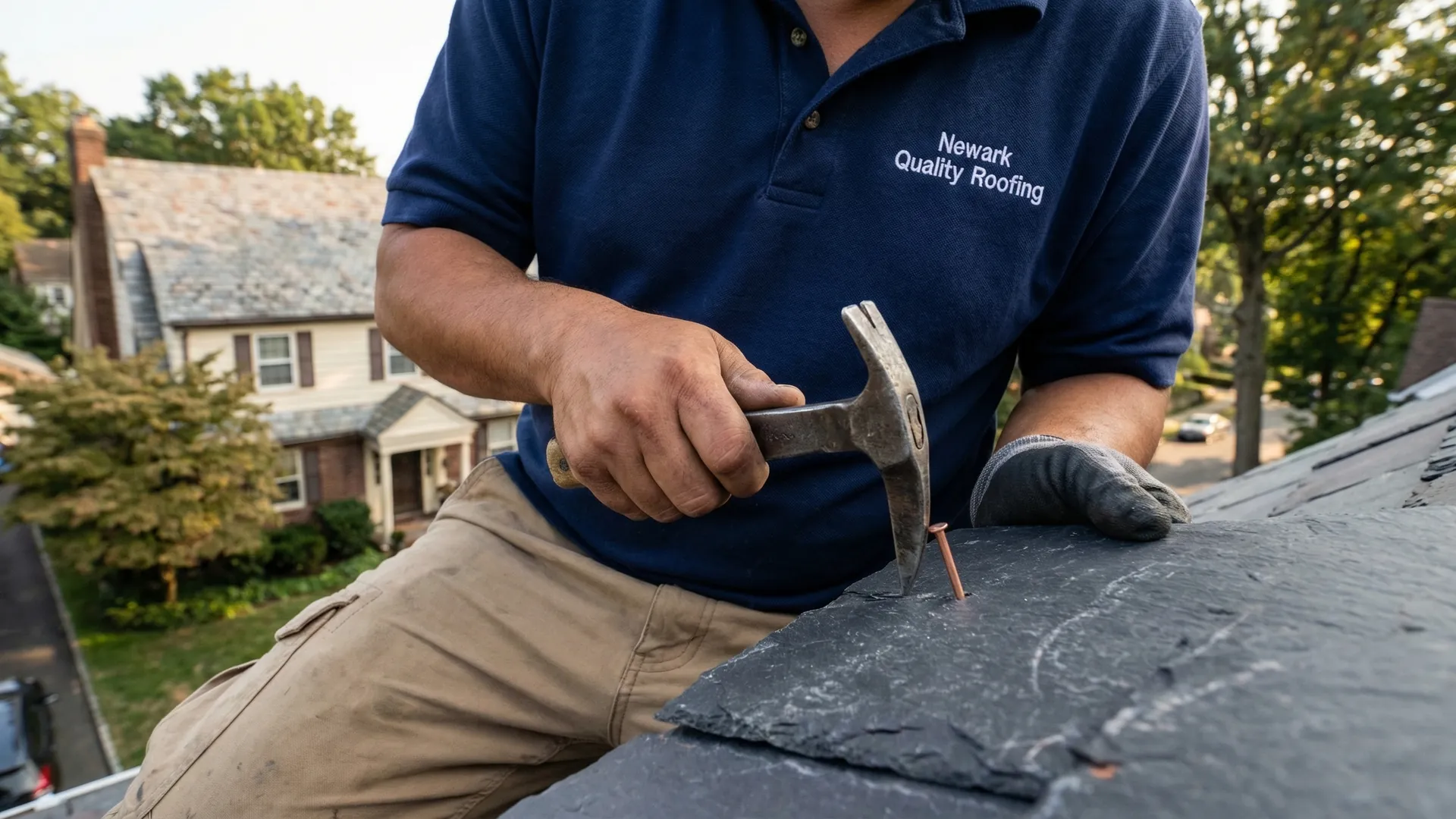
By repairing the details, not the field. A slate, copper, or tile repair traces the leak to corroded fasteners or degraded valley and chimney flashing rather than the tile itself — slate lasts 60 to 150 years, copper 70 years or more, and clay and concrete tile a century or more, per the InterNACHI life-expectancy chart. Broken slate is swapped tile by tile with non-ferrous copper or stainless slater’s nails, copper valleys and step flashing are fabricated to match, and the covering is matched in kind. A full slope is replaced only once a fifth or more of the slate is broken, cracked, missing, or sliding.
Why does my downtown Millburn commercial roof keep leaking at the same seam?
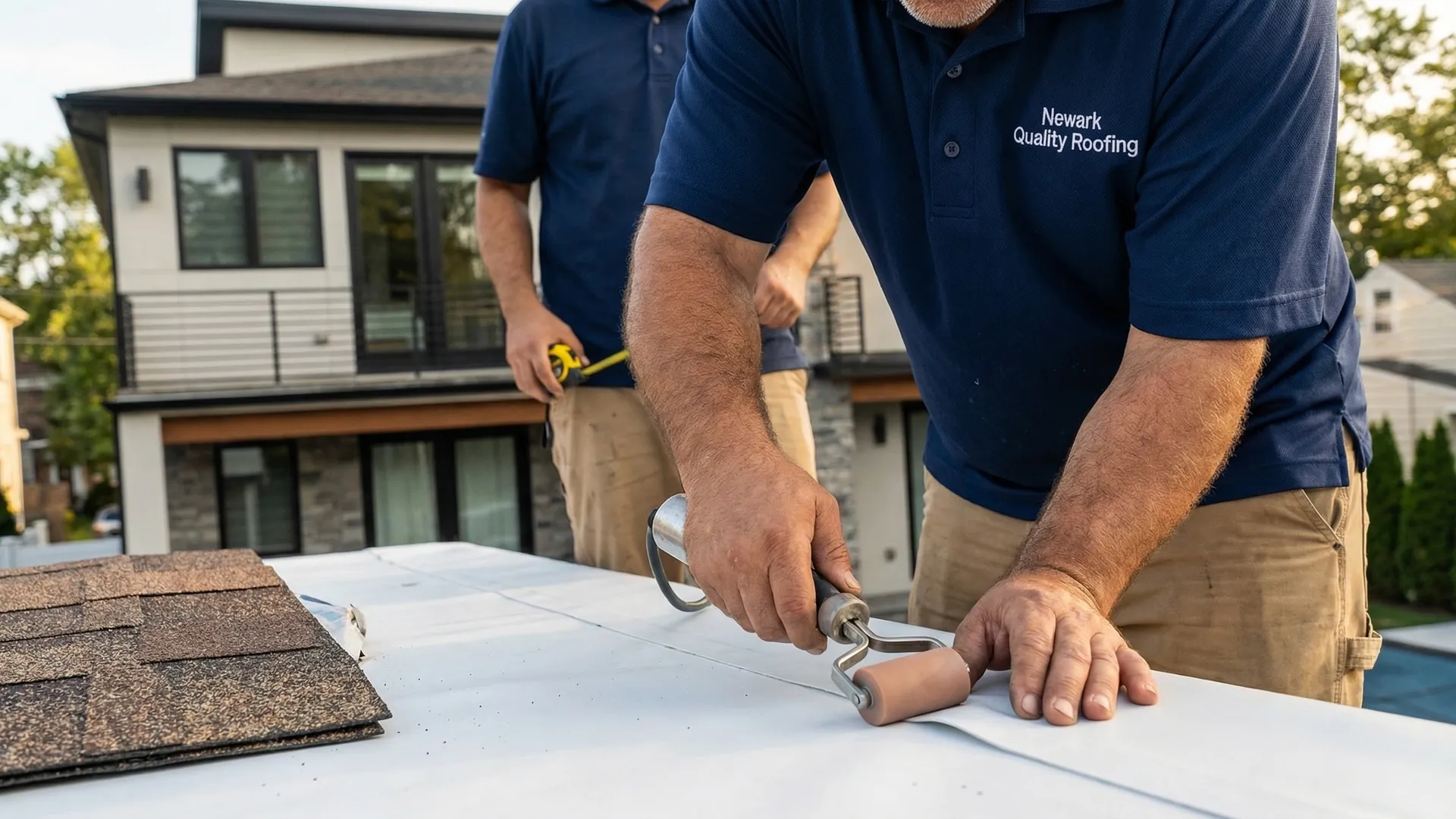
Because the seam is usually the symptom. A recurring leak on a downtown low-slope roof traces to a failed membrane seam, a cracked rooftop-equipment penetration, or ponding water breaking down the seam adhesive — ponding held more than 48 hours counts as a defect, and a low-slope roof needs at least a quarter inch per foot of slope to drain, per NRCA and ARMA guidance. The downtown village sits on the Rahway River and has flash-flooded in Floyd, Irene, and Ida, so a lasting repair maps the standing water, reseals the failed seam, and rebuilds the parapet, scupper, and downspout flashing.
Should I repair my Millburn roof or replace it?
Repair when the damage stays localized — under roughly a quarter to a third of the roof area — and replace when the damage passes that share or one repair approaches half the cost of replacement. Those area and cost thresholds are the contractor-consensus rules the estimate is written against, and repair favors a covering still within its service life. On a slate, copper, or tile estate roof the covering outlasts its fasteners and flashing, so the repair restores those details rather than the field.
How much does roof repair cost in Millburn, NJ?
Roof-leak repair in New Jersey runs $400 to $1,000, and a flashing reseal or a small flashing section runs $200 to $500, per HomeAdvisor and Modernize cost data. A natural slate, copper, or tile roof on a Short Hills estate costs more than asphalt, with slate installed at roughly $10 to $30 per square foot, per New Jersey roofing guides. Final cost depends on roof size, pitch, material, and access — and Newark Quality Roofing provides a free written estimate.
Flashing Repair in Millburn NJ at Chimneys, Valleys, and Dormers
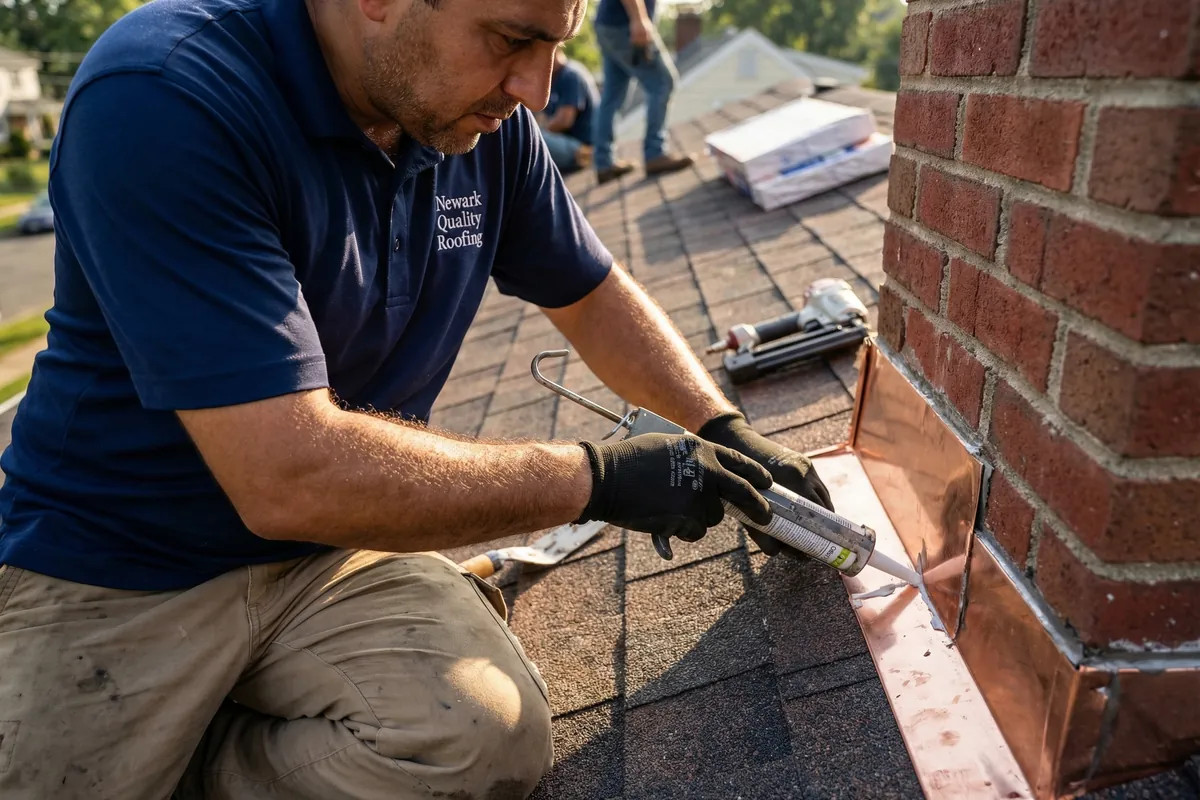
Flashing is where Millburn roofs actually fail. The chimney flashing on a Wyoming colonial, the valley metal under a Short Hills dormer, the step flashing woven into a Tudor wall line — each is a metal joint asked to move with the house and shed water for decades, and each eventually corrodes, lifts, or loses its sealant lap. A flashing repair rebuilds the joint in order: failed metal out, new copper or non-ferrous stock fabricated to match, laps woven course by course, counter-flashing cut back into sound masonry. The roofing industry estimates that roughly 90 to 95 percent of roof leaks originate at flashing, an industry estimate attributed to the NRCA — which is why the Millburn inspection starts there.
Slate, Copper, and Tile Roof Repair in Short Hills, Millburn NJ
Short Hills carries Millburn’s oldest roofs: natural slate fields, copper valleys, clay tile, and cedar shakes on the estate lots below the South Mountain Reservation and around the Cora Hartshorn Arboretum. Their repairs are surgical. A branch dropped from the oak and maple canopy fractures slate and dents copper; leaf load packs the valleys and gutters and backs water under the covering. The repair swaps the broken tile, renews the valley metal in kind, and clears the blocked valley before the next nor’easter — matching the covering is the job, because these materials are measured in generations.
Gutter Repairs in Millburn NJ and the Roof Repair Experts Who Read the Eave Line
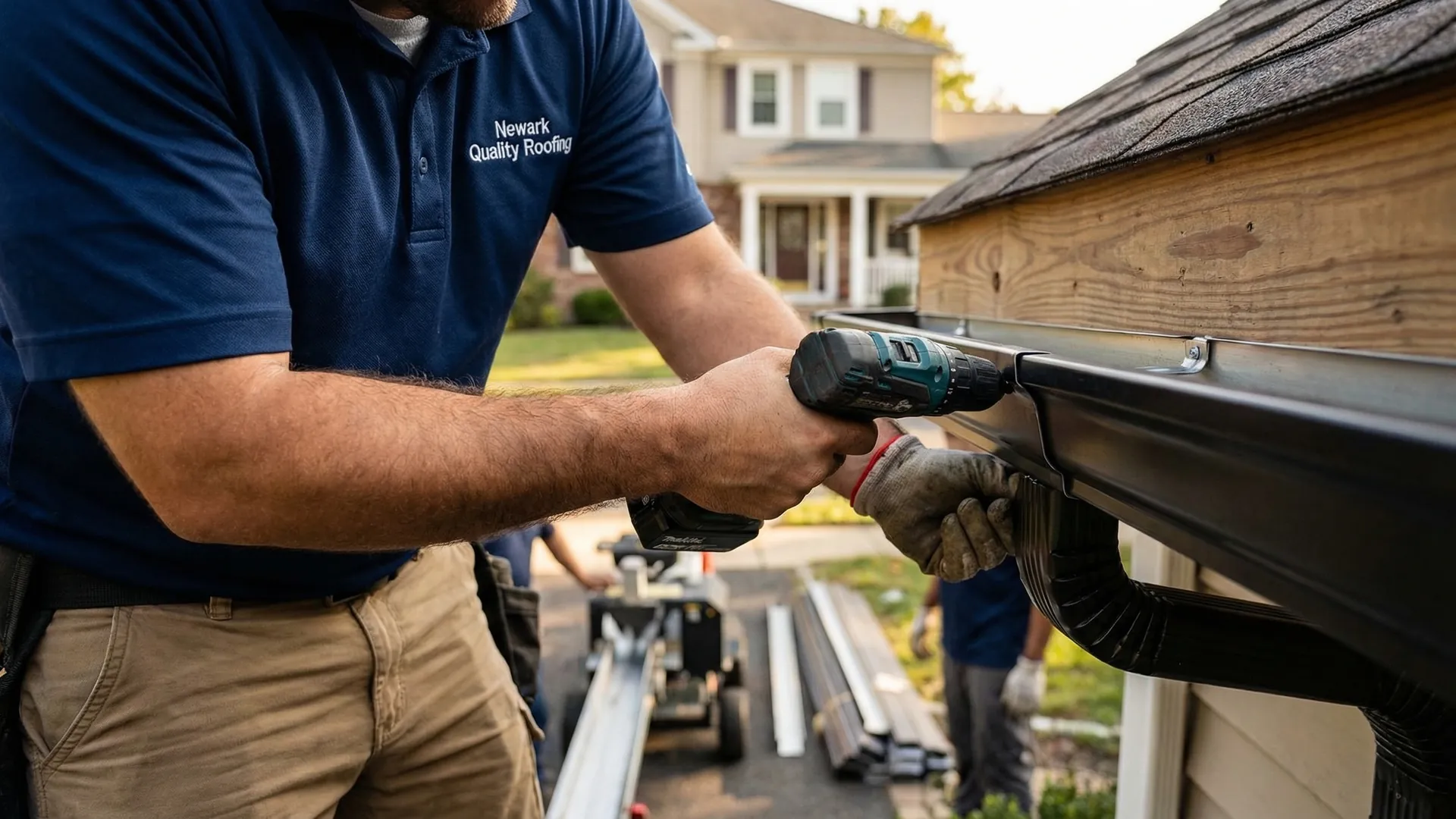
Homeowners searching for roof repair experts usually start with a stain — and in Millburn that stain is as often a gutter failure as a roof failure. Gutter repairs come first at the eave: a run dammed by reservation canopy debris overflows, washes the fascia, rots the carpentry behind it, and drives water at the eave flashing. The roof repair experts on the crew re-pitch the run, renew the rotted fascia, and read the shingles, slate, and siding above the eave before closing — because gutter repairs that ignore the eave detail are how the same stain returns next season, and roof repair experts are paid to close a leak once.
The service log is the working shape of a Millburn season — one entry per job file: the neighborhood, the failure found, and what the repair closed. Millburn NJ work runs from the Newark office, and every entry below closes against the written estimate it produced.
Log, Short Hills: a slate estate with three slipped tiles and a corroded copper valley below the reservation canopy — tiles replaced on copper nails, valley renewed in kind, chimney flashing cut back into sound mortar.
Log, Wyoming: a colonial whose ceiling stain traced two rooms to a cracked vent boot — boot replaced, flashing collar renewed, and the moisture path photographed end to end.
Log, Downtown Millburn: a parapet storefront deck on its second seam failure — pond mapped, seam rebuilt with a manufacturer-compatible system, scupper and downspout flashing renewed before the next river storm.
Log, Glenwood: a Tudor with water behind the wall line at a dormer cheek — courses opened in order, step flashing rebuilt, wall line closed back and photographed at every layer.
Log, Short Hills Park: a branch through a tile field near the arboretum — same-day dry-in, deck probed for radiating fractures, permanent repair matched to the existing tile and filed for the insurer.
Log, Hartshorn: a ranch whose eave leak was its gutter — run re-pitched, fascia carpentry renewed, and the first shingle course above the eave checked before closing.
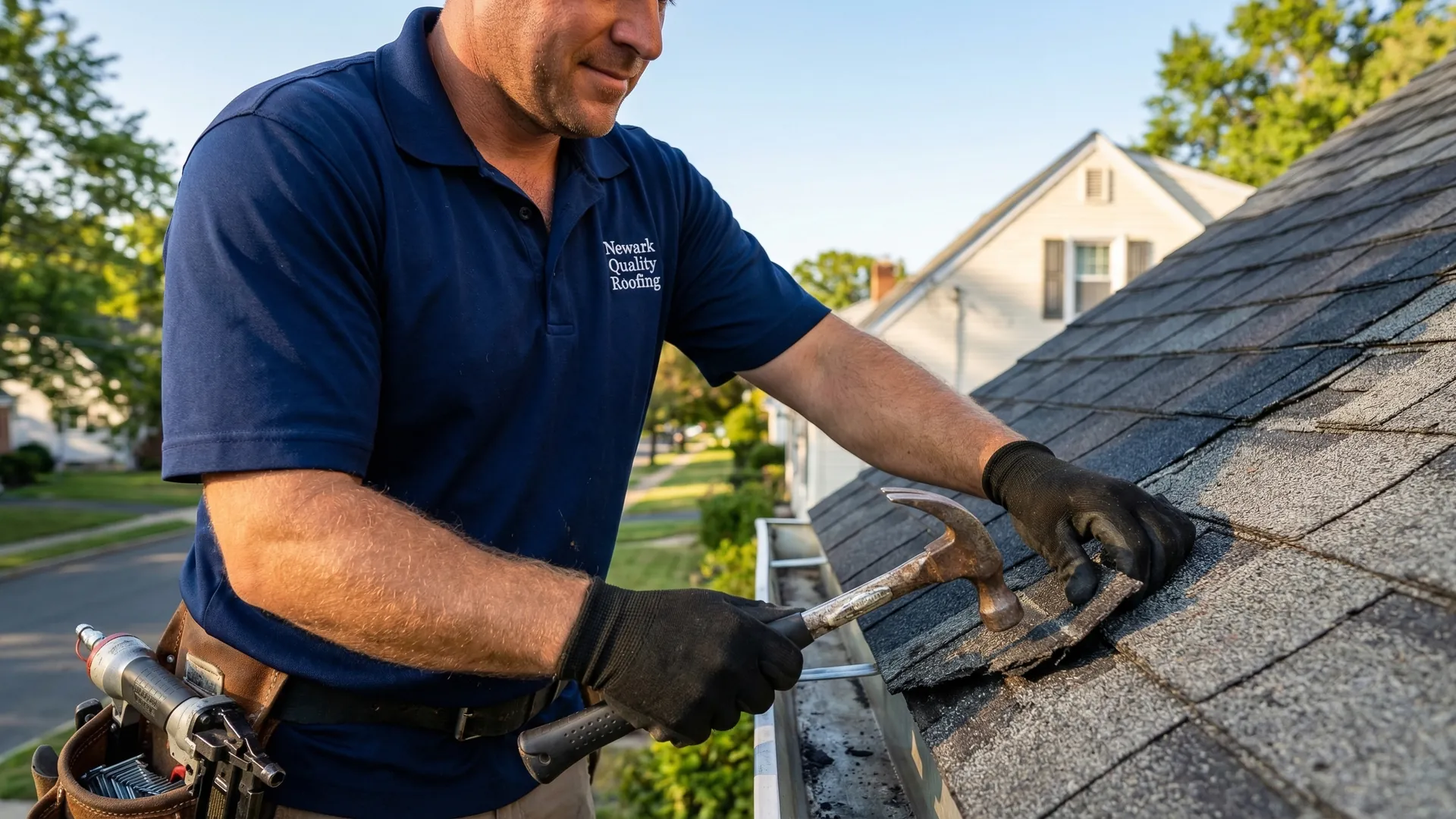
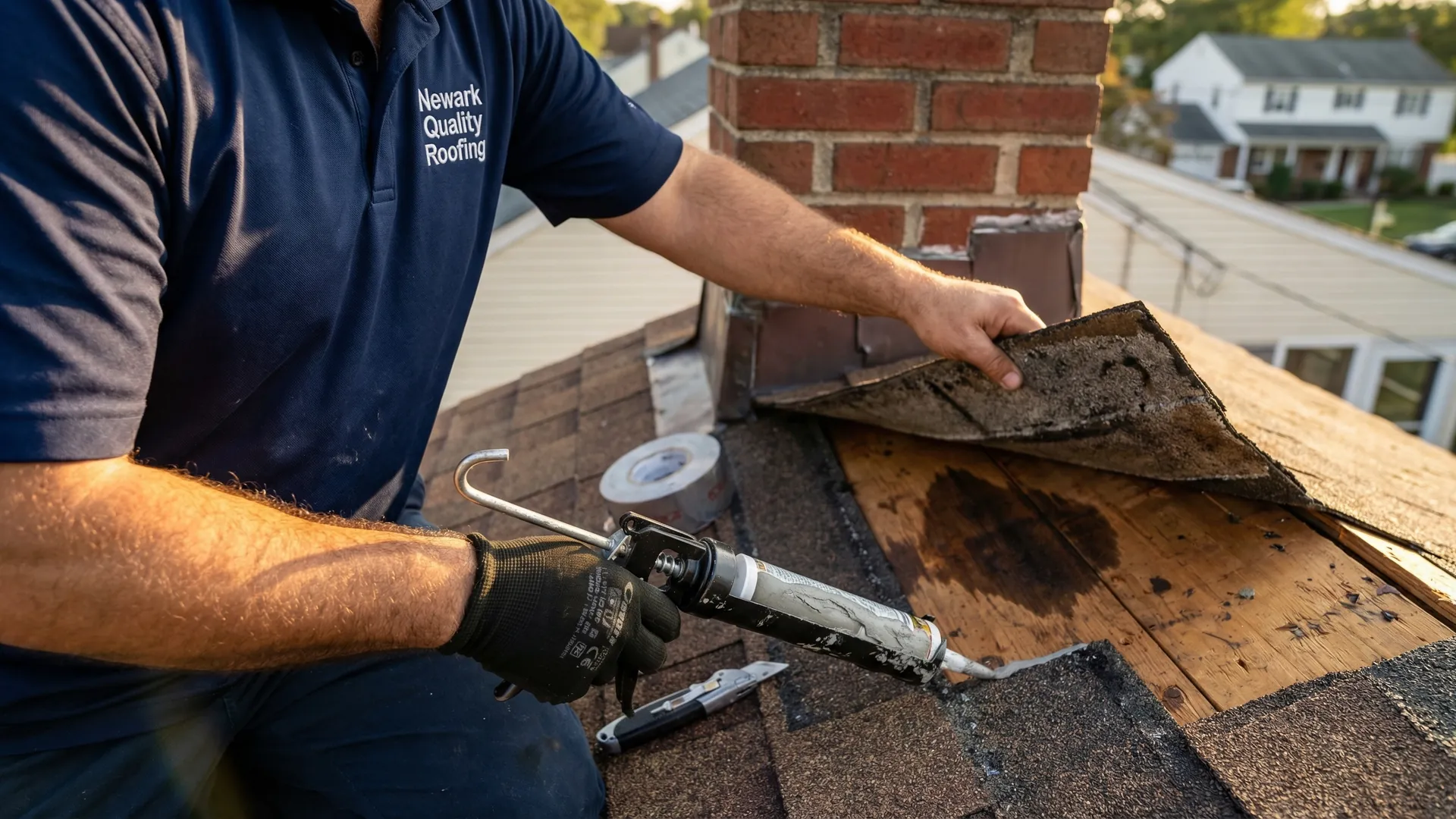
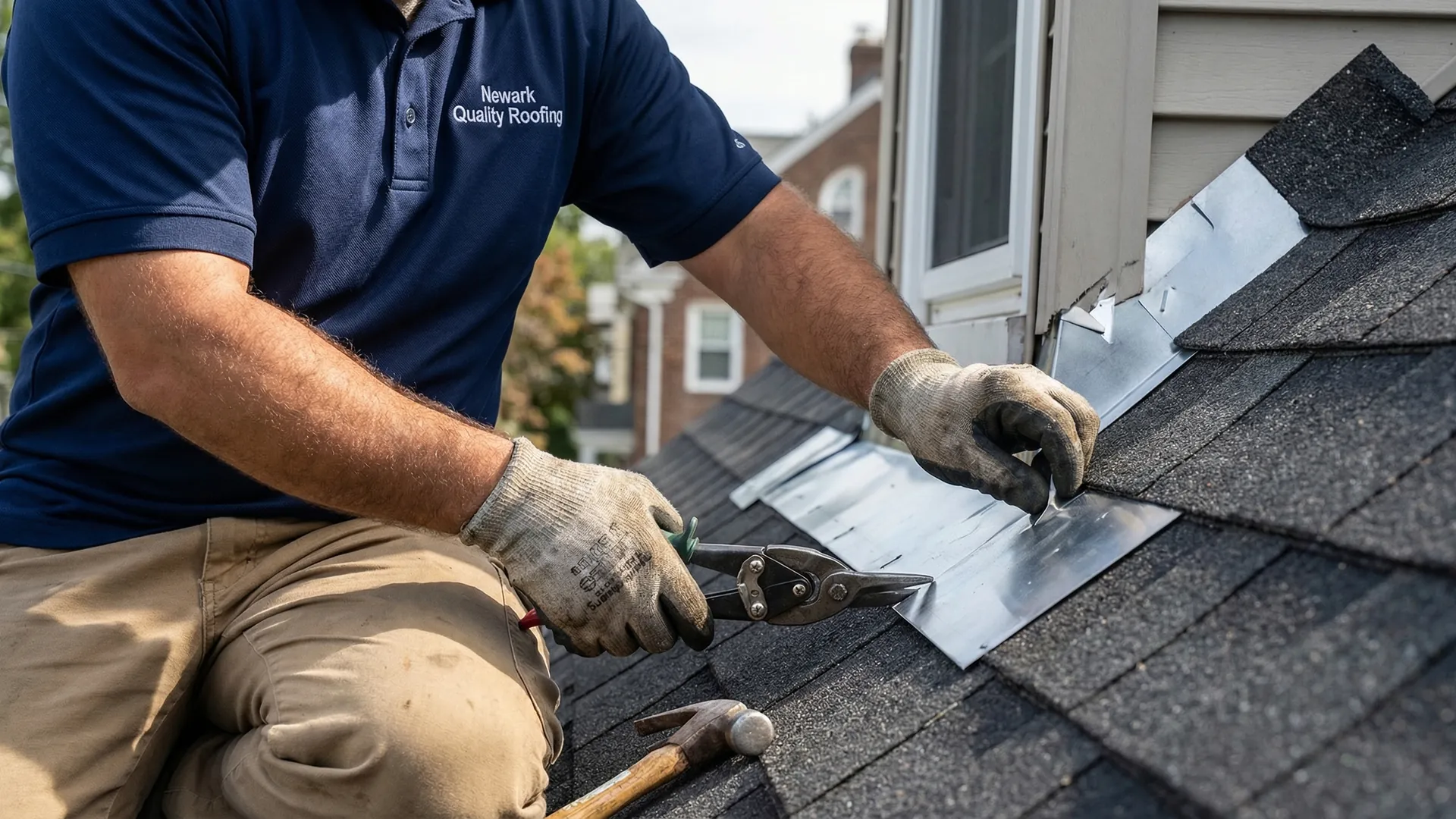
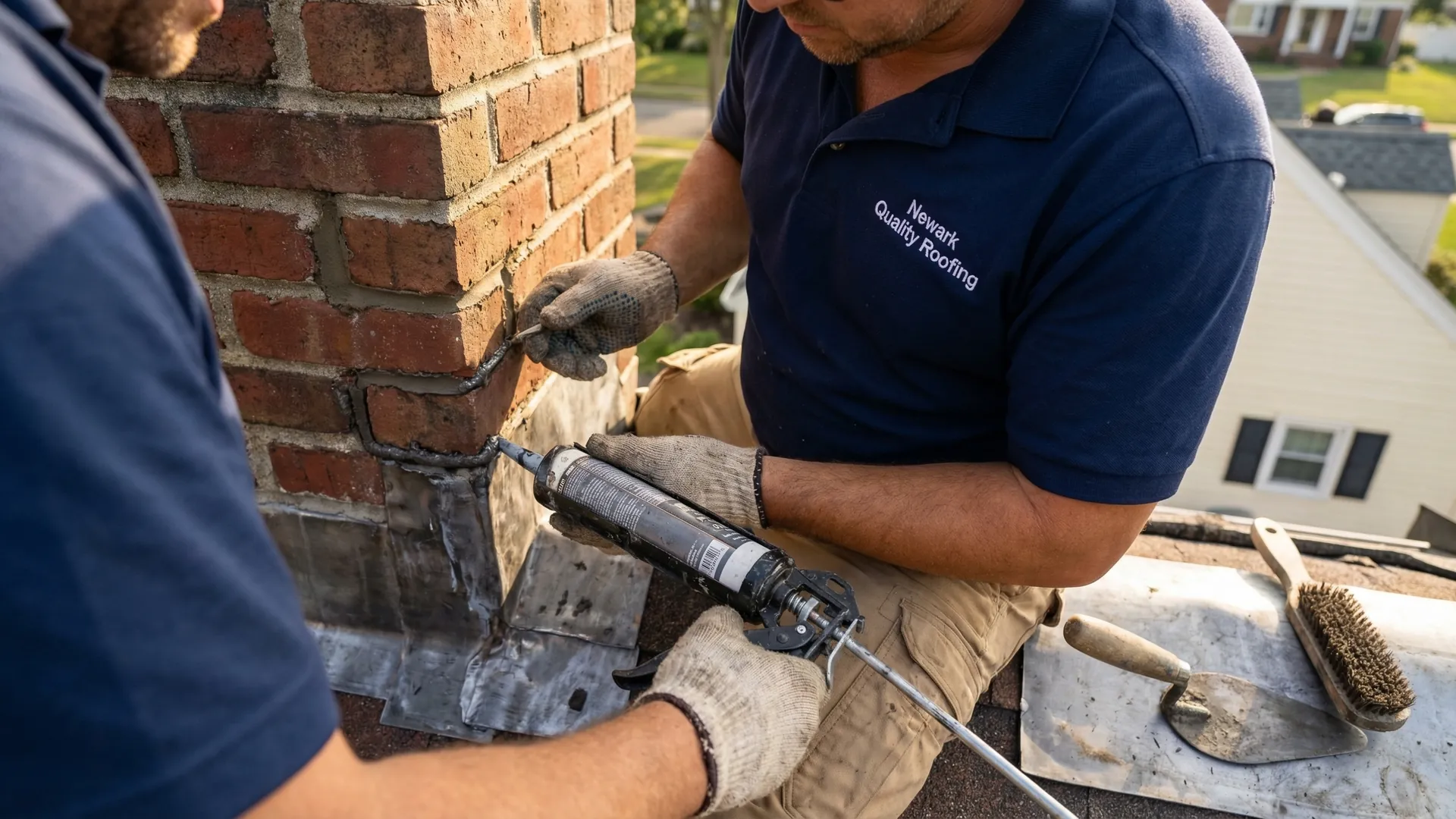
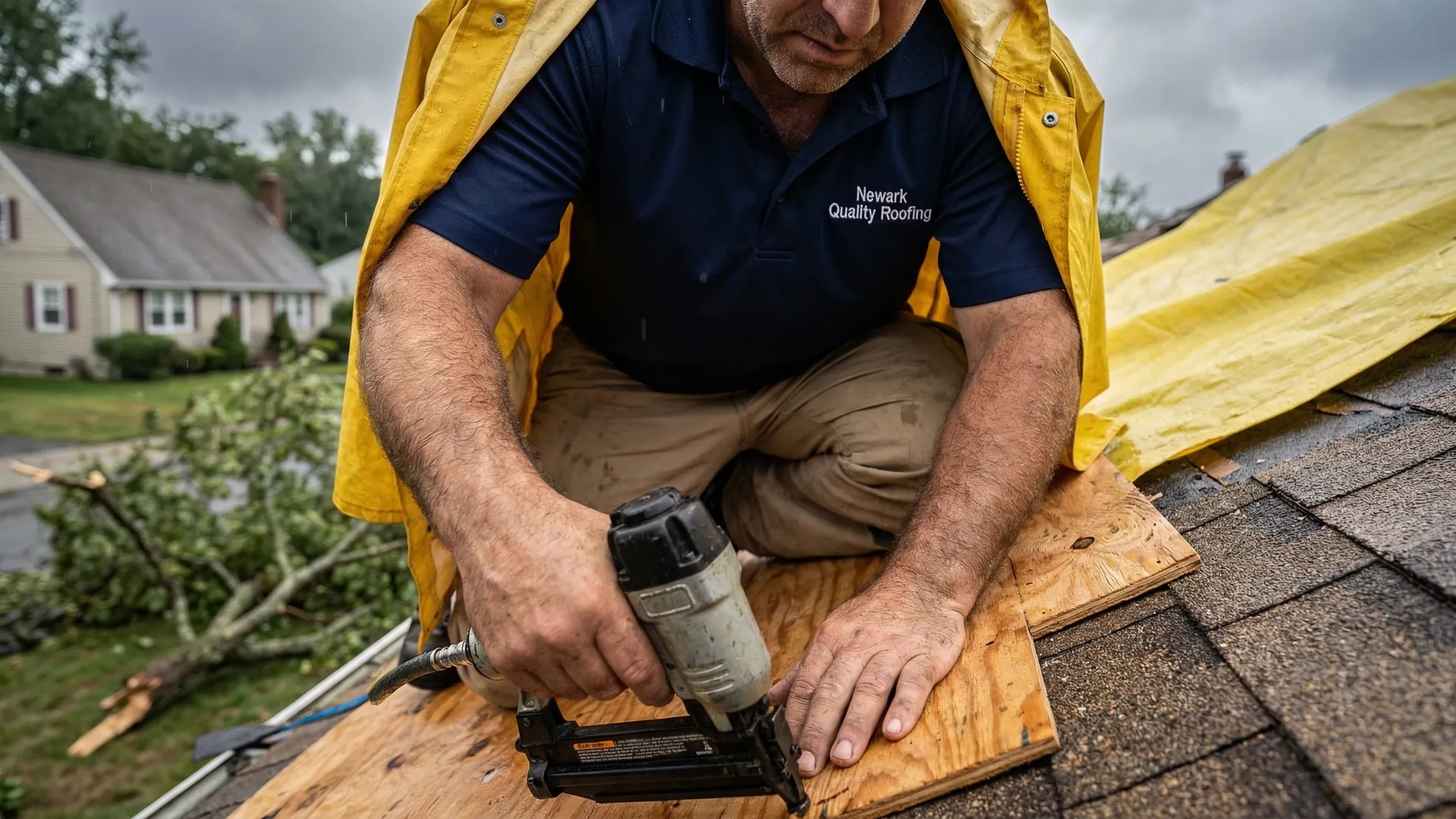
The photographic record is part of every Millburn job file — the failures found, the details rebuilt, and the finished work, photographed before the file closes. Ten photographs from the working life of this service:
Find the Office That Runs Every Millburn Job
Prefer directions in your own maps app? The office is a short run west on Route 24 and Interstate 78: Newark Quality Roofing on Google Maps — get directions to the Newark office at www.google.com
Newark Quality Roofing provides roof repair in Millburn, NJ and across Essex County from the Millburn roof repair page. Call the office on the published line for an inspection.
The office keeps the record at Newark, NJ, US — the Newark base the site publishes — serving Millburn and the rest of Essex County.
Copyright Newark Quality Roofing. This Millburn service record — its photographs, service log, and field notes — is the office’s working record for the page, kept with the written estimates it documents.
Roof Repair Field Notes — Millburn, NJ Crew Records
These are the working notes behind the numbers on this page: what the crews saw on Millburn roofs, what they photographed, and what went into each job file before the office wrote the estimate. A Millburn roof repair file is only as good as its notes.
A Millburn roof inspection starts in the attic, because the roof deck tells the truth the covering hides. The technician reads the ceiling for stains, probes the sheathing for soft spots, and photographs every leak line before the walkthrough moves outside. On the downtown decks the order reverses: the pond map comes first, the seams are probed second, and the drainage system decides what kind of repair is even on the table.
Materials age on different clocks in Millburn, and the note names the clock. Natural slate and clay tile are century materials failing at their fasteners; copper valleys corrode where leaf acids sit; cedar shakes split at their keyways; an asphalt shingle field reads its age in granule loss and curled edges. Roofing materials are named in every estimate — the GAF shingle lines the crews install, the copper stock fabricated for valleys, the seam sealant matched to the membrane — because a repair is only as honest as its materials list.
The flat roof is the downtown system, and it fails its own way. EPDM roofing, TPO, and built-up membranes pond at settled spots, split at seams, and hide their leaks rooms away from where the water enters. A metal roof inverts the problem: a standing seam metal roof outlasts almost everything under it, and its work is detail work — clips, seams, and penetrations. Coating and waterproofing have their place over a sound, dry substrate, and no coating is priced until the moisture readings say the roof insulation beneath is dry.
Ventilation, masonry, and maintenance close the file. Ventilation that moves attic air keeps the deck dry from below, and roof insulation read alongside it explains half the winter leaks in Short Hills. The masonry of the chimney decides whether new flashing holds for decades or until spring — counter-flashing belongs in sound mortar. Preventative maintenance is the standing appointment behind the whole record: repair and maintenance walks twice a year, gutters cleared of canopy debris, skylight kits and vent boots probed, corrosion and rust caught while they are still notes instead of invoices. Millburn sits in Essex County, New Jersey, a short run from the Newark office, and the frequently asked questions in every job file are the same three a roofing contractor hears everywhere: are the roofers registered, is the insurance current, and does the estimate name its materials?