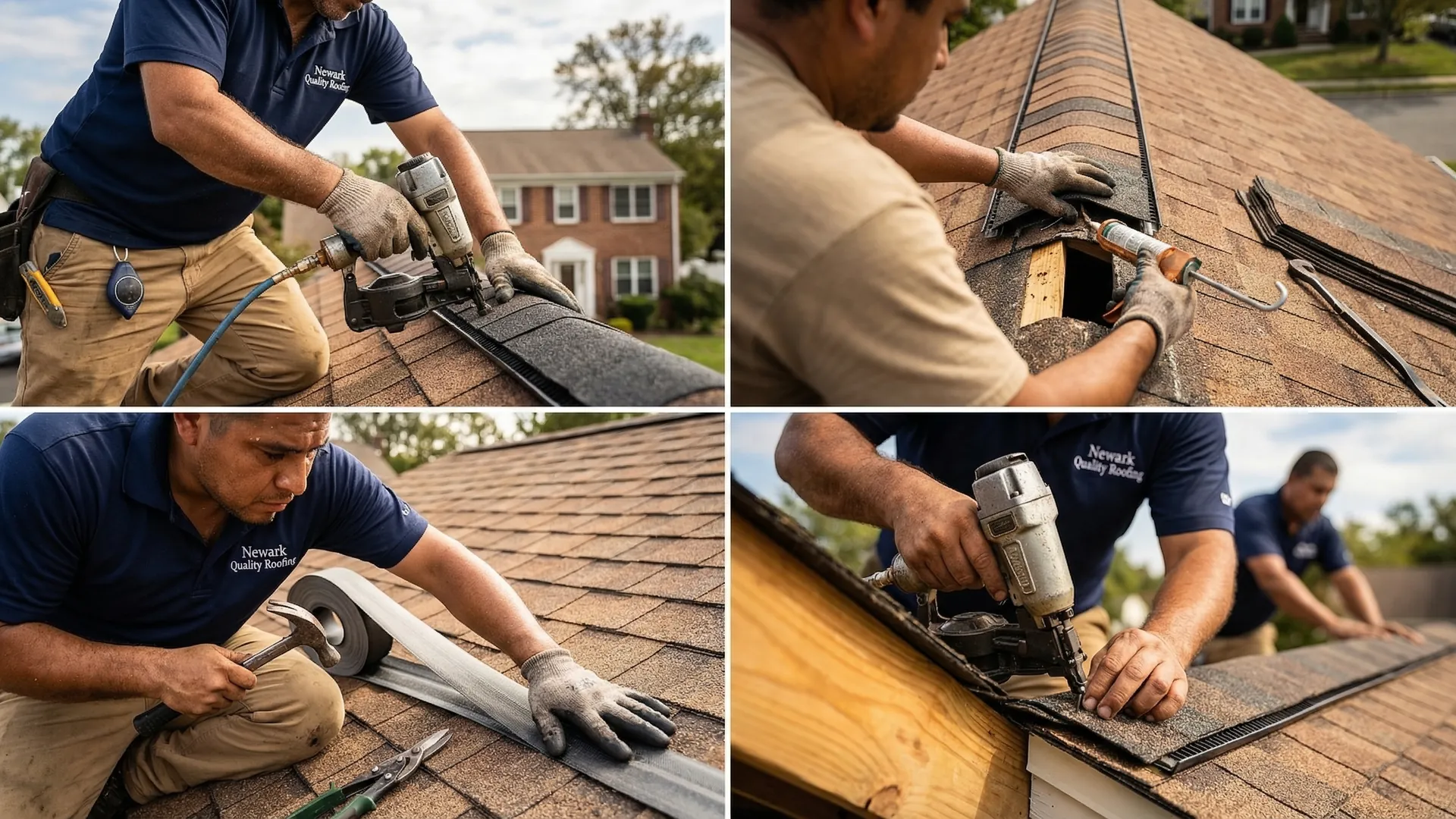
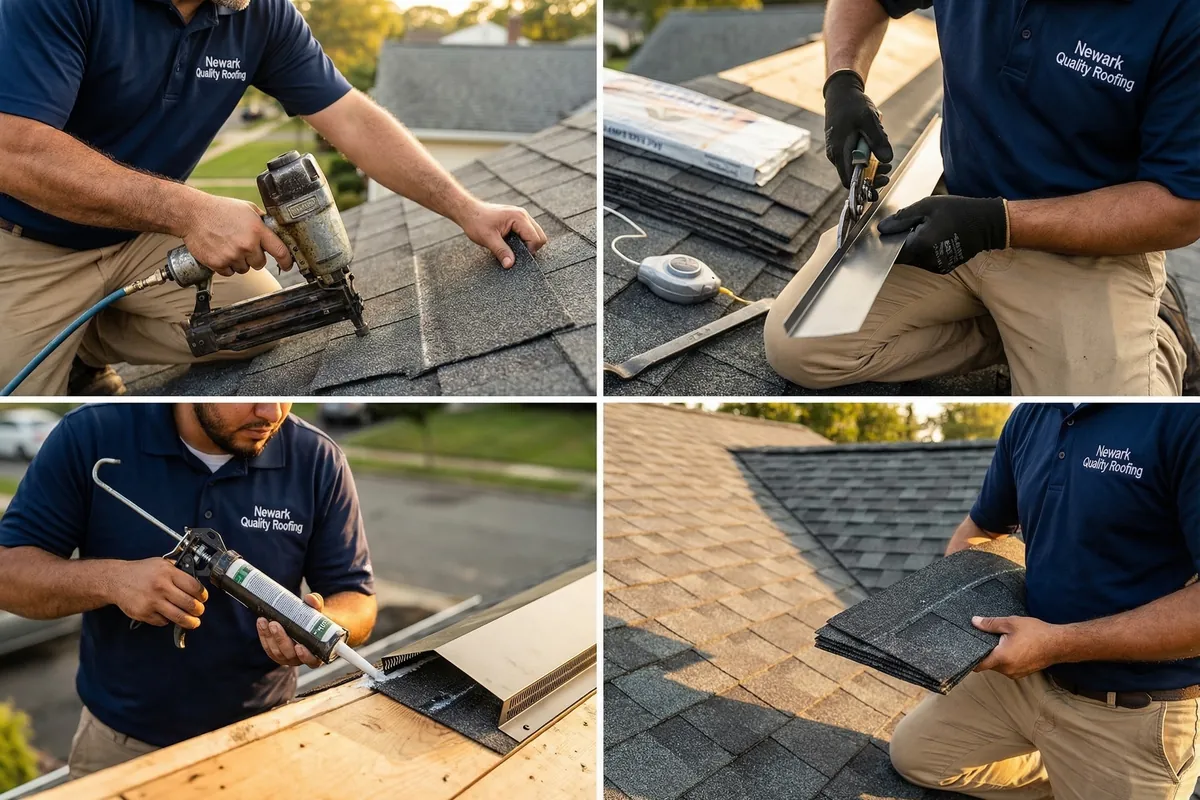
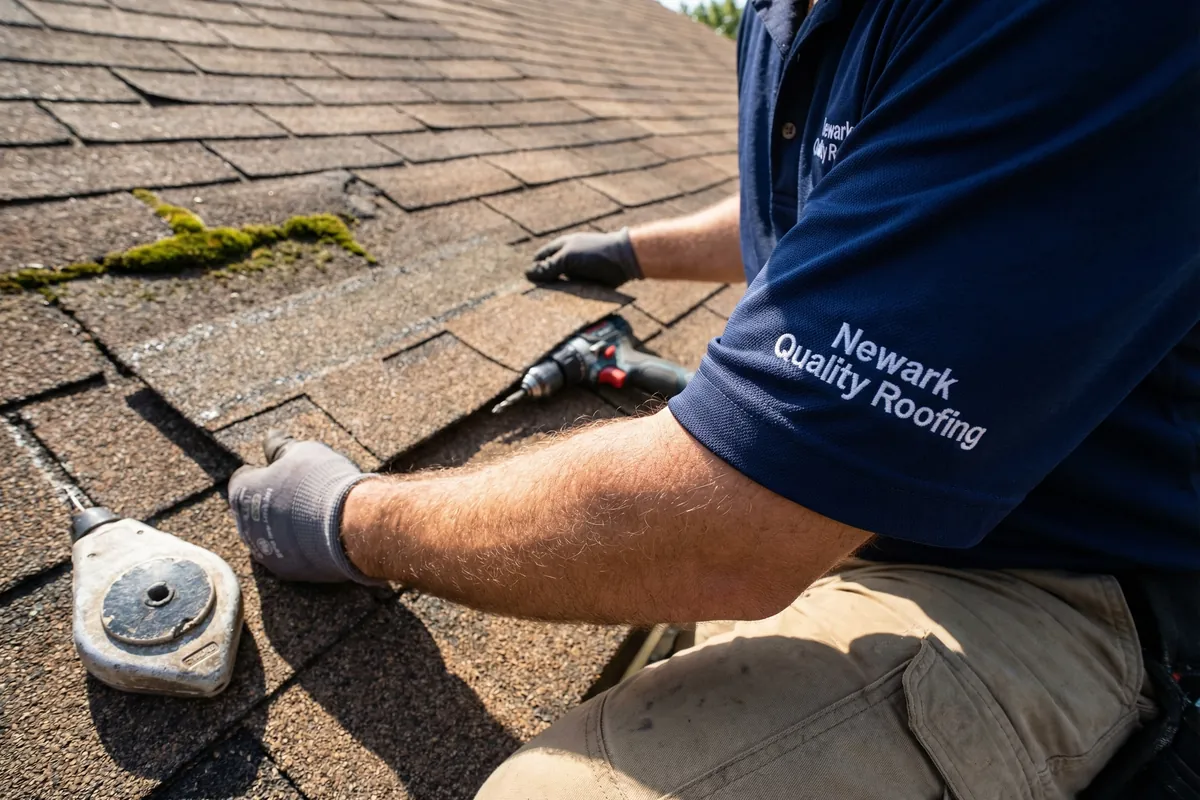
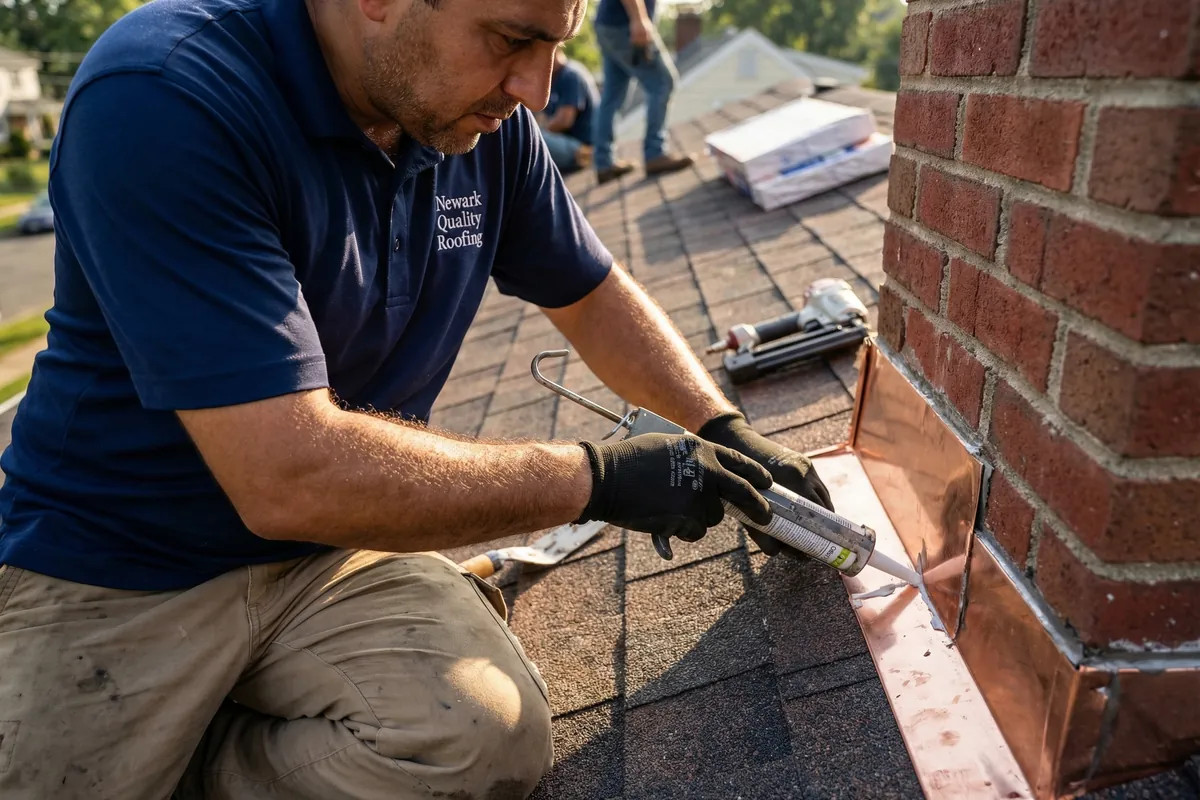
Newark Quality Roofing
Roof repair services in Essex County NJ by registered roofing contractor
Repair & Maintenance

Roof Repair Fairfield, NJ

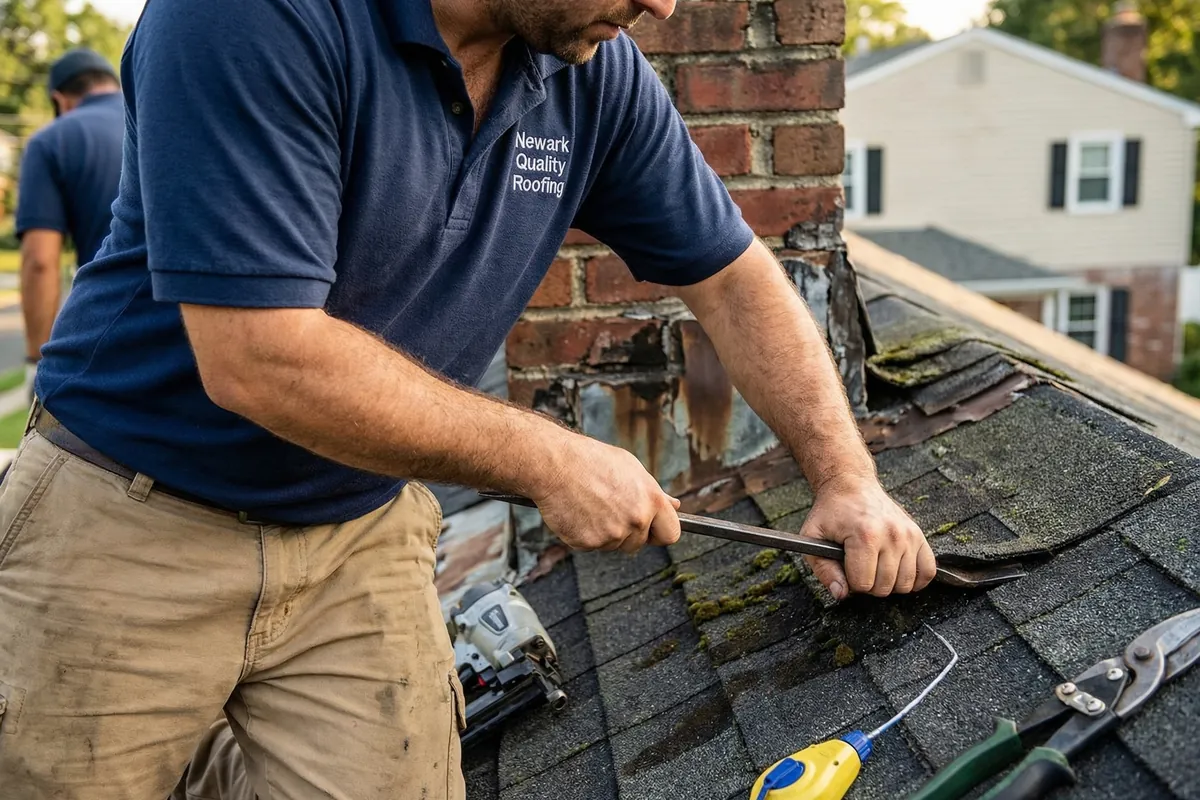
Roof Repair Fairfield, NJ from Newark Quality Roofing includes repairing colonial and split-level leaks, Route 46 and I-80 membrane seams, and storm damage at the failed component.

Licensed NJ ContractorFull Insurance CoverageFree Estimates
Or call us directly:(973) 649-9535

Get Your Free Roofing Estimate

Roof repair contact details
Roof repair and leak repair estimate

100% free, no obligation.

Roof Repair, Defined

Roof repair restores a roof's weatherproof barrier by fixing localized damage — leaks, missing or torn shingles, failed flashing, and cracked seals — without replacing the entire roof. It targets specific failure points to extend the service life of an otherwise sound roof.

Roof Repair Available in Fairfield, NJ

Fairfield repairs divide along the township's two geographies. Residential streets off Hollywood Avenue and Big Piece Road generate shingle, flashing, and valley work on colonials and split-levels, while the Route 46 and I-80 corridor produces membrane seam failures, ponding complaints, and penetration leaks on big-box, office, and warehouse decks. One contractor serving Fairfield has to carry both toolkits, because the same storm weekend generates both call types.

Roof repair services in Essex County NJ by registered roofing contractor

Water here has a longer memory. Fairfield sits in the Passaic River floodplain downstream of the Passaic-Pompton confluence at Two Bridges, and Hurricane Irene in 2011, the remnants of Hurricane Ida in 2021, and Hurricane Floyd in 1999 each drove record flooding. Roofs that took wind-driven rain and debris through those events often carry lifted seams, displaced flashing, and saturated sections that declare themselves as leaks seasons later — the repair inspection reads for storm history, not just today's stain.

Most leaks are detail failures wearing a roof's name. Roughly 90–95% of leaks trace to flashing, an industry estimate attributed to the NRCA: pipe boots, valley metal, chimney and wall flashing, and the membrane terminations on corridor buildings. The shingle or membrane field usually remains serviceable, which is why a correctly diagnosed Fairfield repair lands in the HomeAdvisor typical range of $400–$1,000 instead of escalating to replacement money.

Diagnosis separates the two building stocks. On homes, the path runs attic-first — staining, deck condition, ventilation — then a surface walk of every flashing joint. On corridor flat roofs, seam probing, pond mapping after rain, and penetration inspection lead. Both end the same way: the failed component named, photographed, and priced in a free written estimate before repair begins.

Small repairs protect large interiors. Fairfield's furnished homes and stocked corridor buildings put real value under every roof, and the economics of a timely $400–$1,000 component repair against one season of hidden leaking — decking, insulation, ceilings, inventory — are not close. The inspection report therefore ranks findings by water risk rather than by visibility, so the owner funds the detail most likely to cause the next interior loss. Fairfield's commercial tenants add one operational requirement to corridor repairs: work above occupied space must be scheduled, communicated, and dried-in with discipline. The repair plan names the section, the hours, the interior protection, and the nightly condition, and the property manager receives the photographic closeout for the building file. A membrane seam repaired at noon should be a non-event for the business below by the same evening, and that standard is stated in the proposal rather than hoped for.

Common Roof Repair Problems in Fairfield, NJ

Nor'easter storm hitting NJ residential neighborhood
Ice dam formation on roof edge in NJ winter
Sun-baked shingles showing heat damage in NJ summer
Moss and algae growth on shaded roof in humid NJ climate

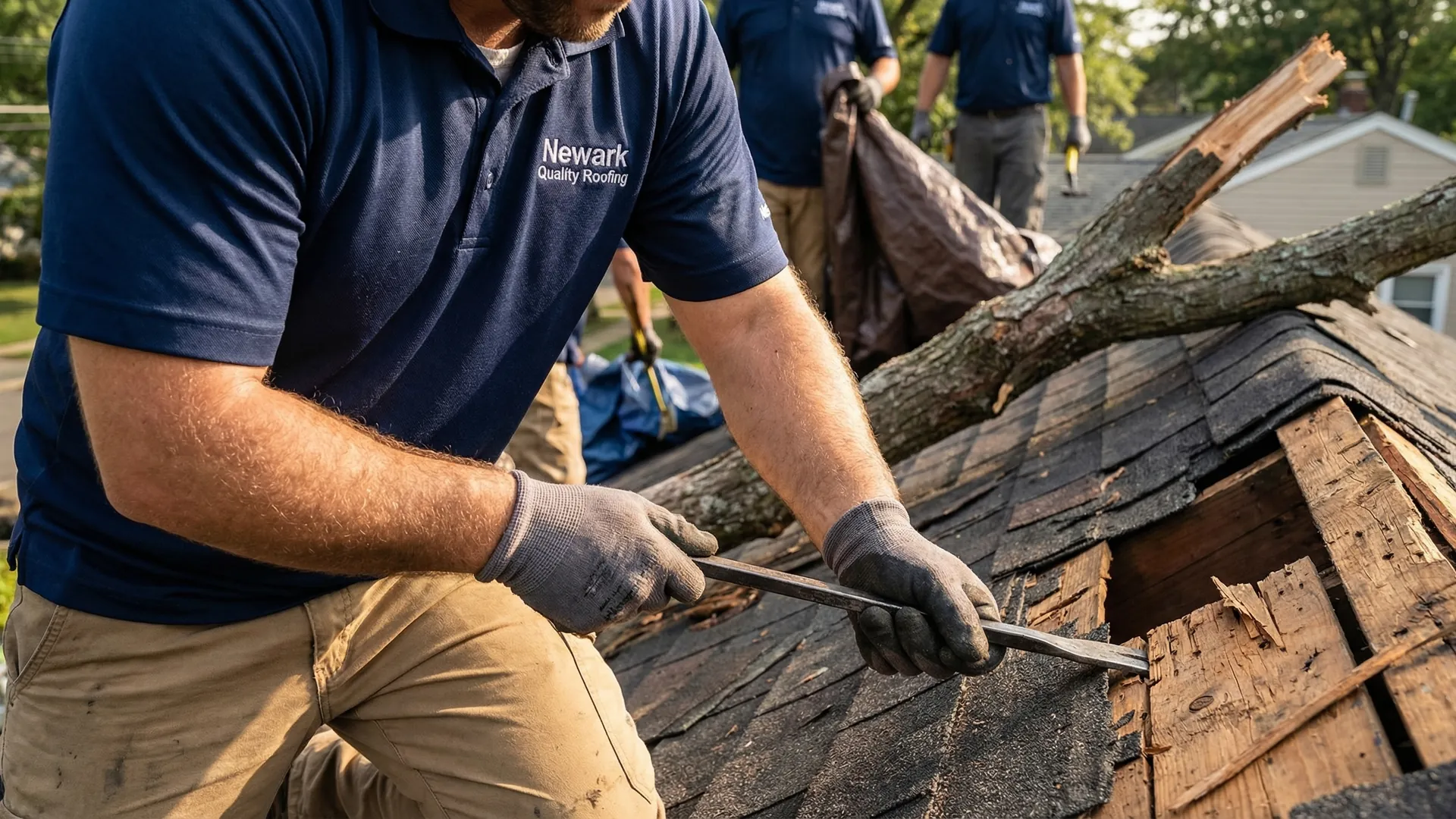
Valley and canopy debris dams on Fairfield's shaded residential streets back water under shingles until the valley metal and adjacent decking suffer. A heavy oak and maple canopy drops leaf load and broken branches into exactly the channels meant to move water fastest; repair clears the dam, inspects the valley lining and deck edges it sat on, and replaces compromised sections rather than sealing over softened wood. The same storm pass that lifts one boot usually tests them all, which is why the inspection prices the set rather than waiting for each to fail on its own schedule.

Membrane seam fatigue on Route 46 and I-80 decks opens where decades of thermal movement and freeze-thaw work the laps; northern New Jersey averages roughly 31.5 inches of snow per year, per NOAA 1991–2020 normals at Newark Liberty (EWR), and meltwater finds every opened seam. Repair probes and reseals seams with manufacturer-compatible systems, and maps any ponding that keeps seams submerged.

Floodplain humidity and past storm displacement compound quietly: raised moisture loads corrode fasteners from beneath while old wind events leave flashing lifted just enough for driven rain. The Fairfield inspection checks both signatures — attic corrosion patterns and perimeter metal condition — so the repair addresses the mechanism, not the last storm's symptom.

Pipe-boot and vent-stack cracking across Fairfield's later-20th-century housing produces the township's most misdiagnosed stains, because a split neoprene boot admits a modest, wind-dependent leak that masquerades as a valley or chimney problem. The repair replaces the boot with a correctly sized flashing — with metal or silicone options where the original rubber failed young — and inspects every other boot on the roof while the ladder is up.

Get your free written estimate for roof repair in Fairfield.

Addressing roof damage early limits interior and structural water damage.

Call us or request a free estimate

Our Process for Roof Repair in Fairfield, NJ

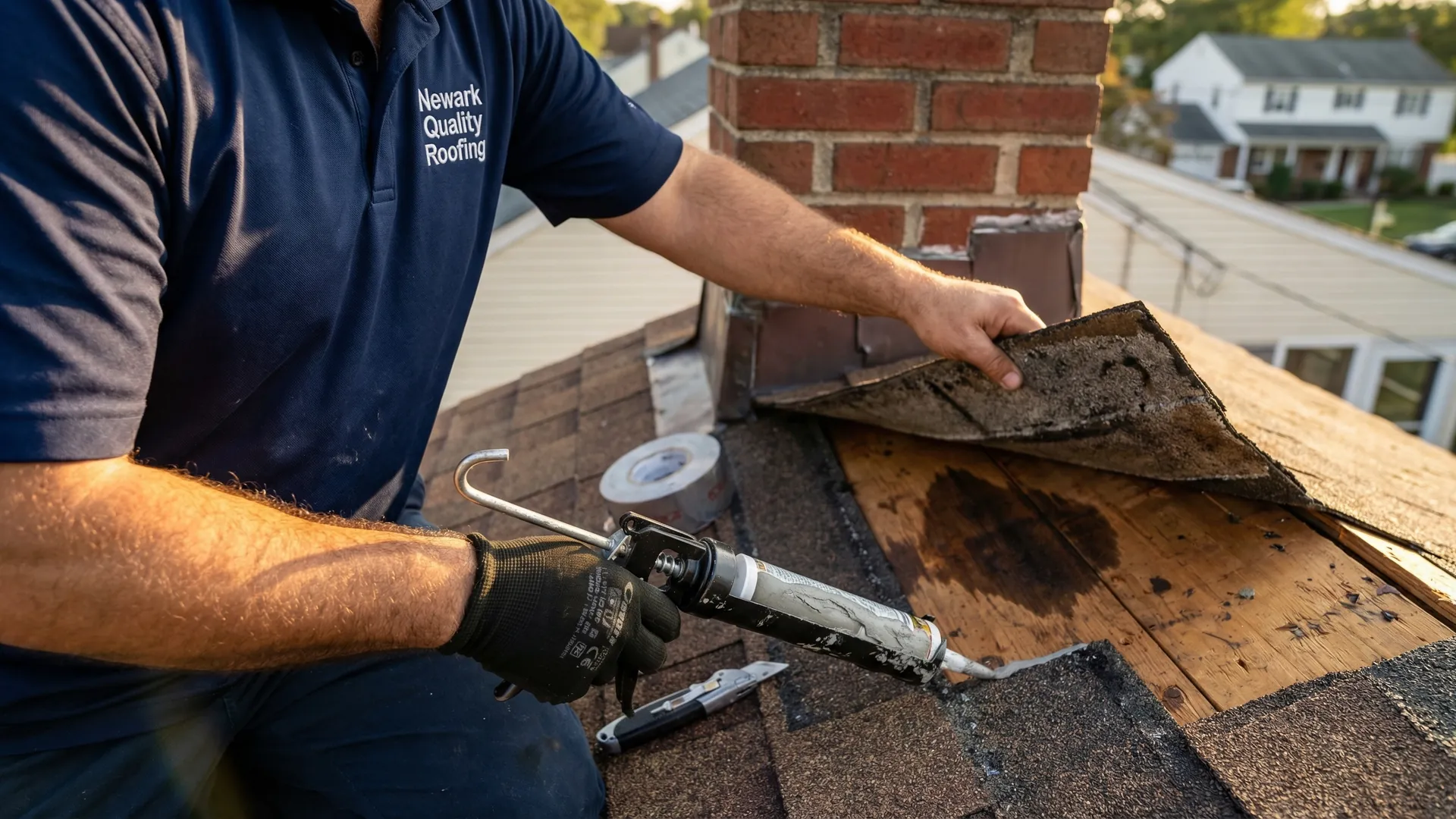
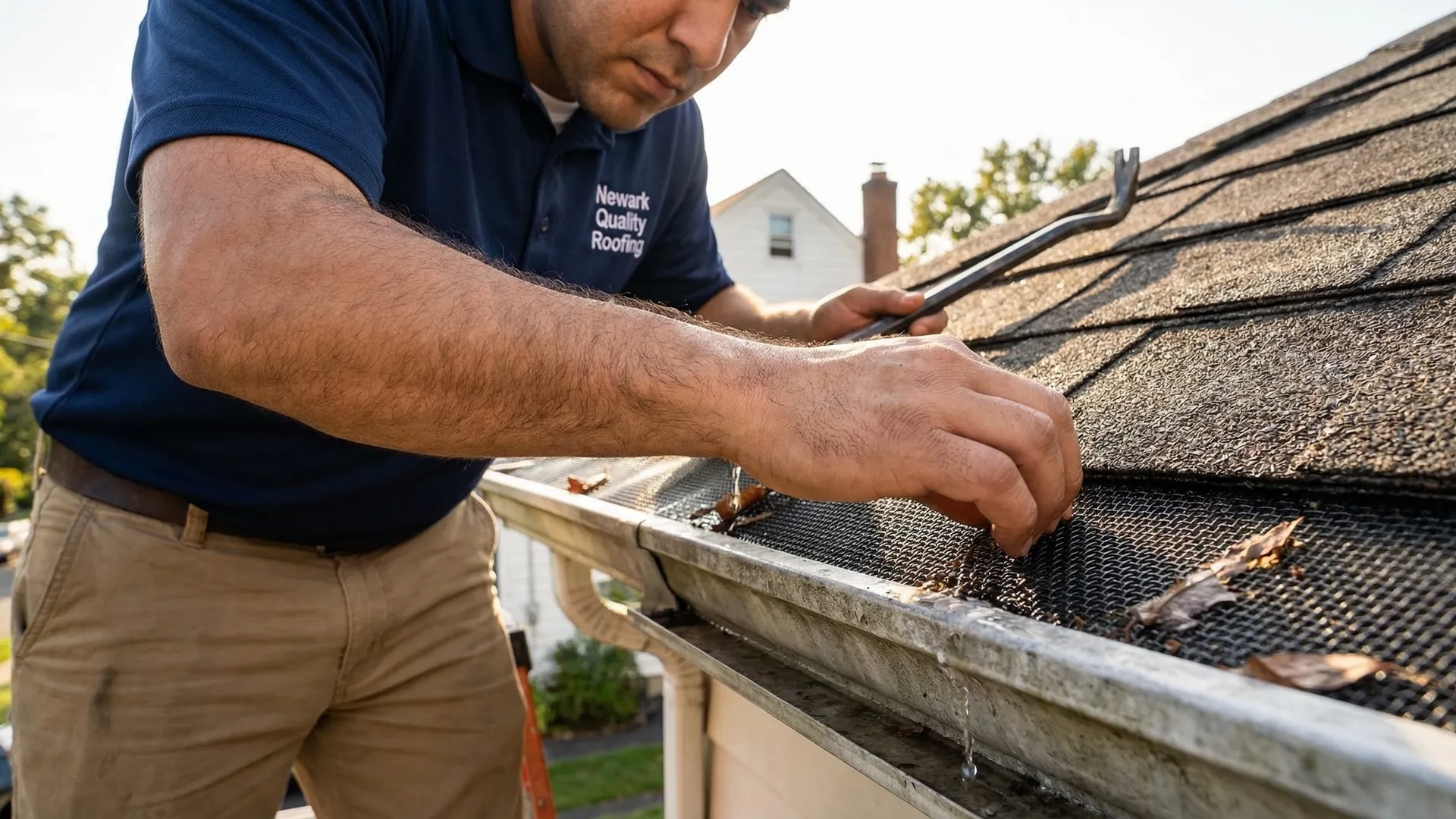
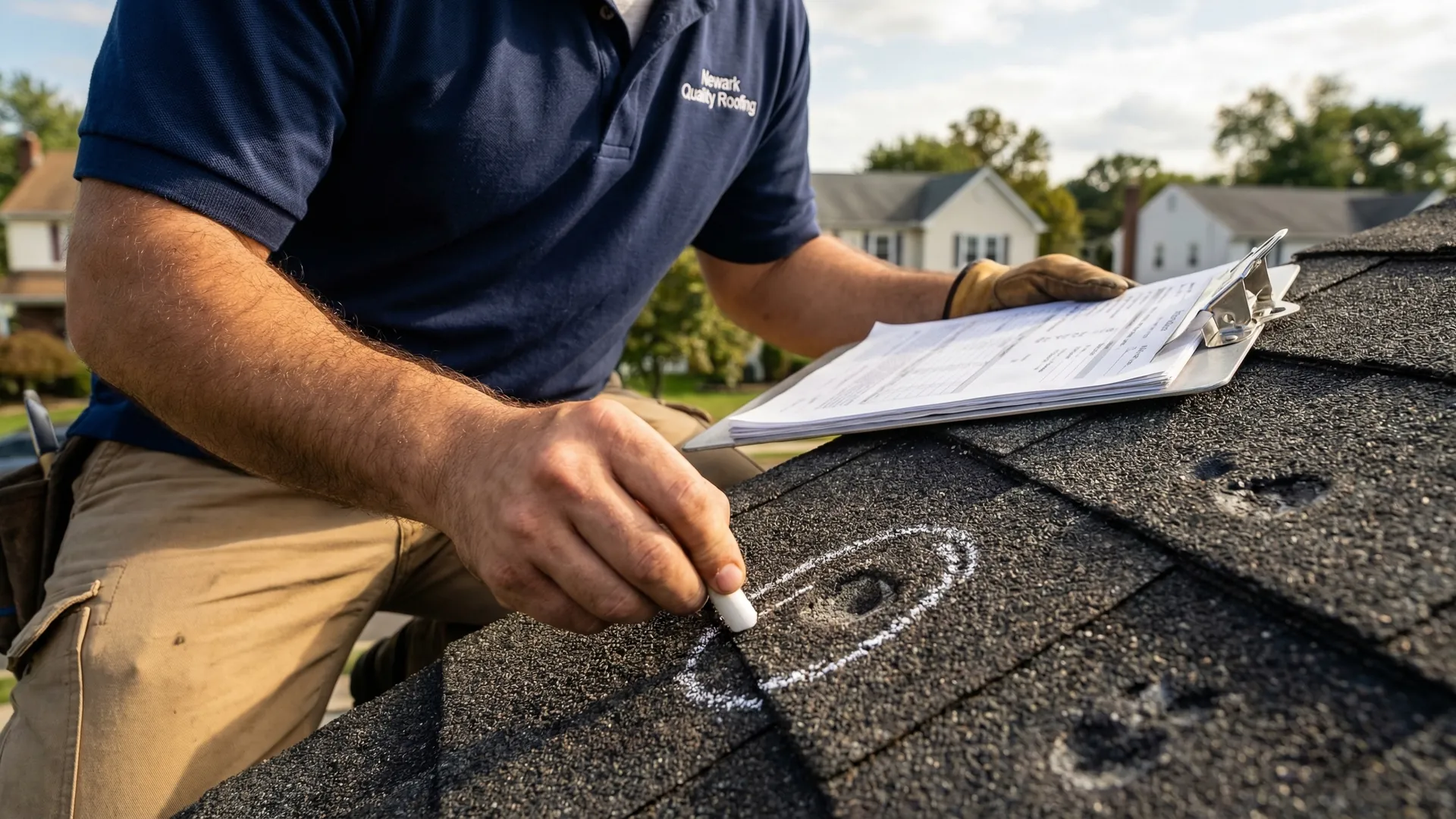
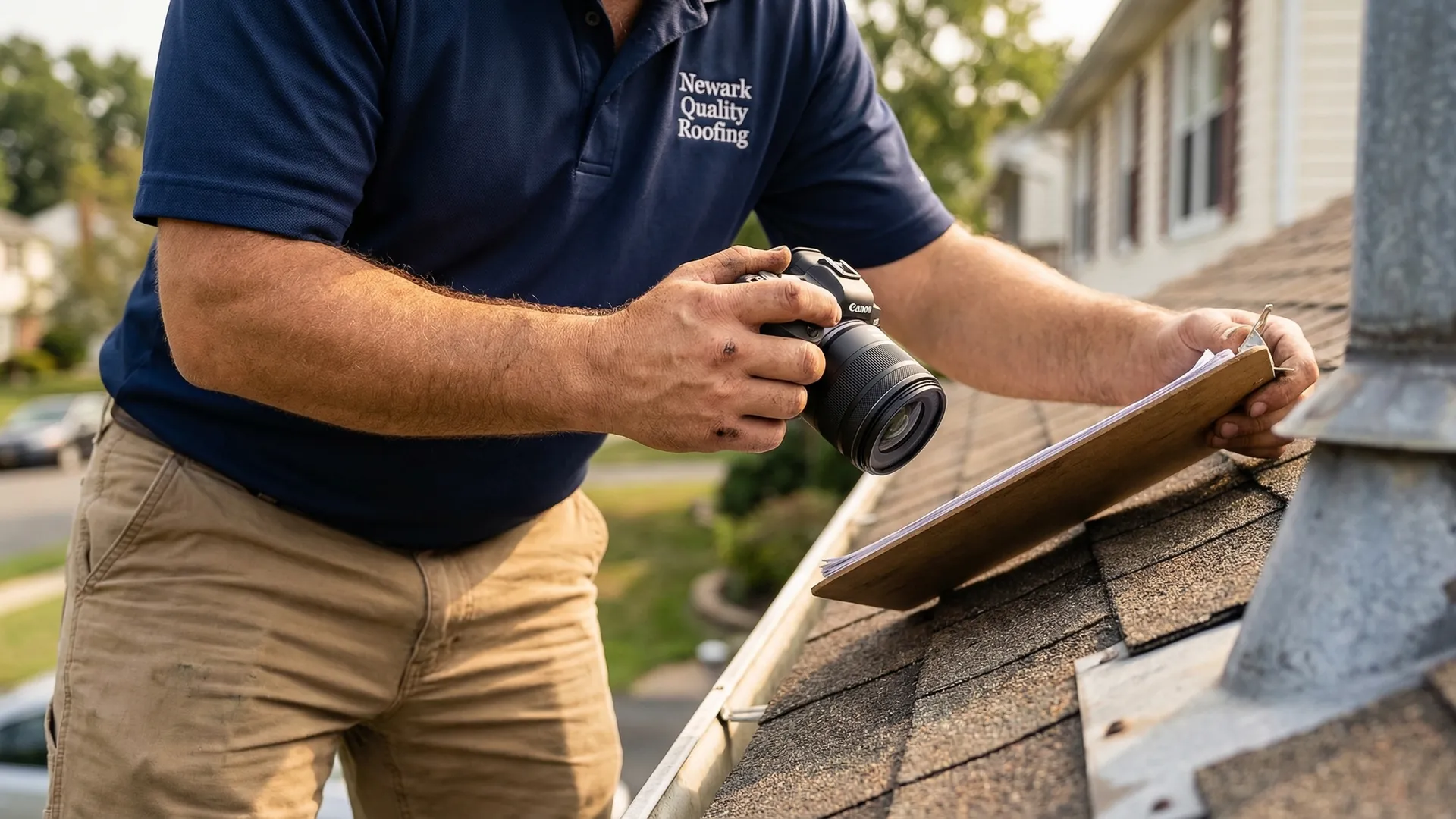
  1. Roofer inspecting roof condition during initial assessment

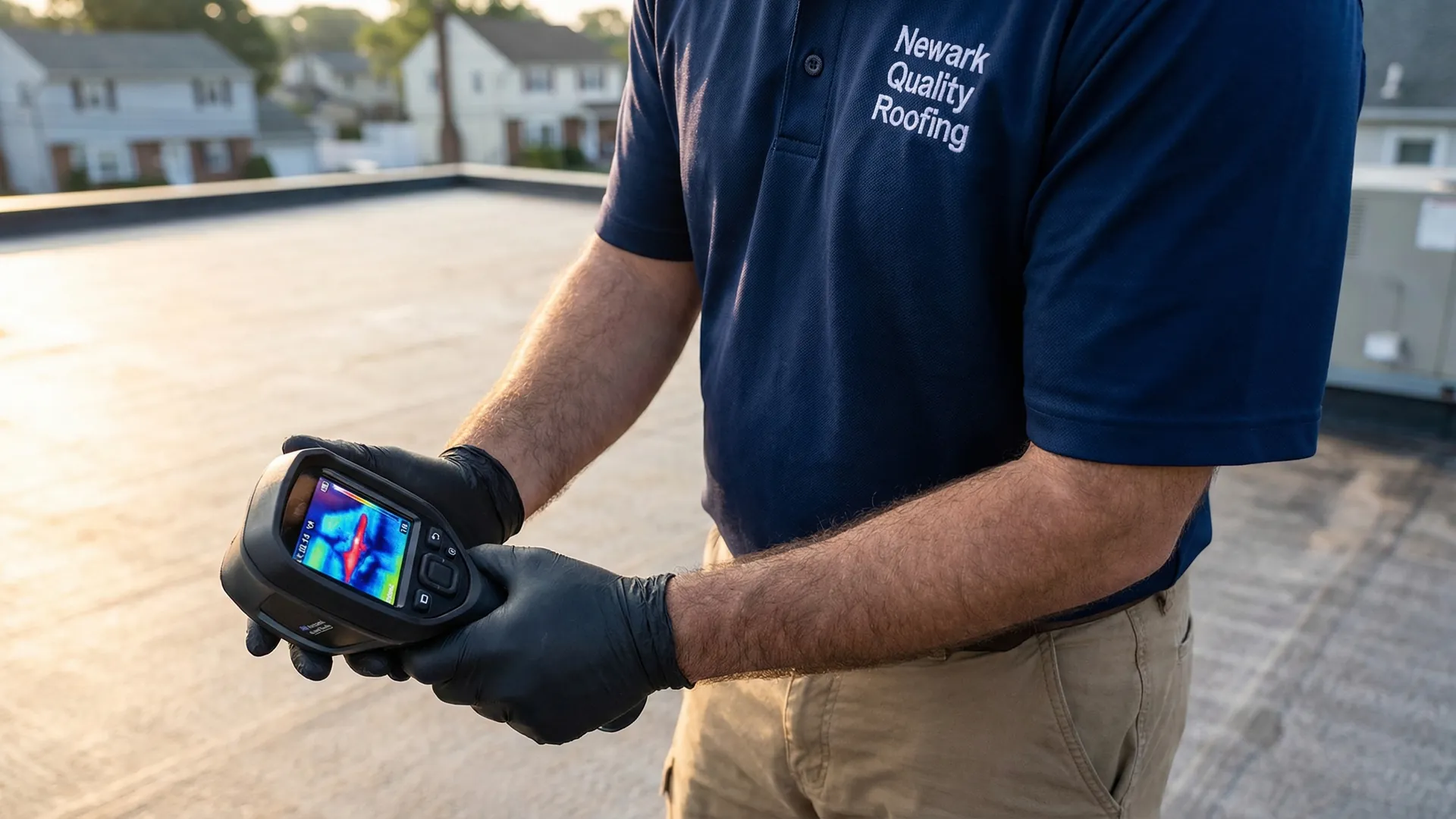
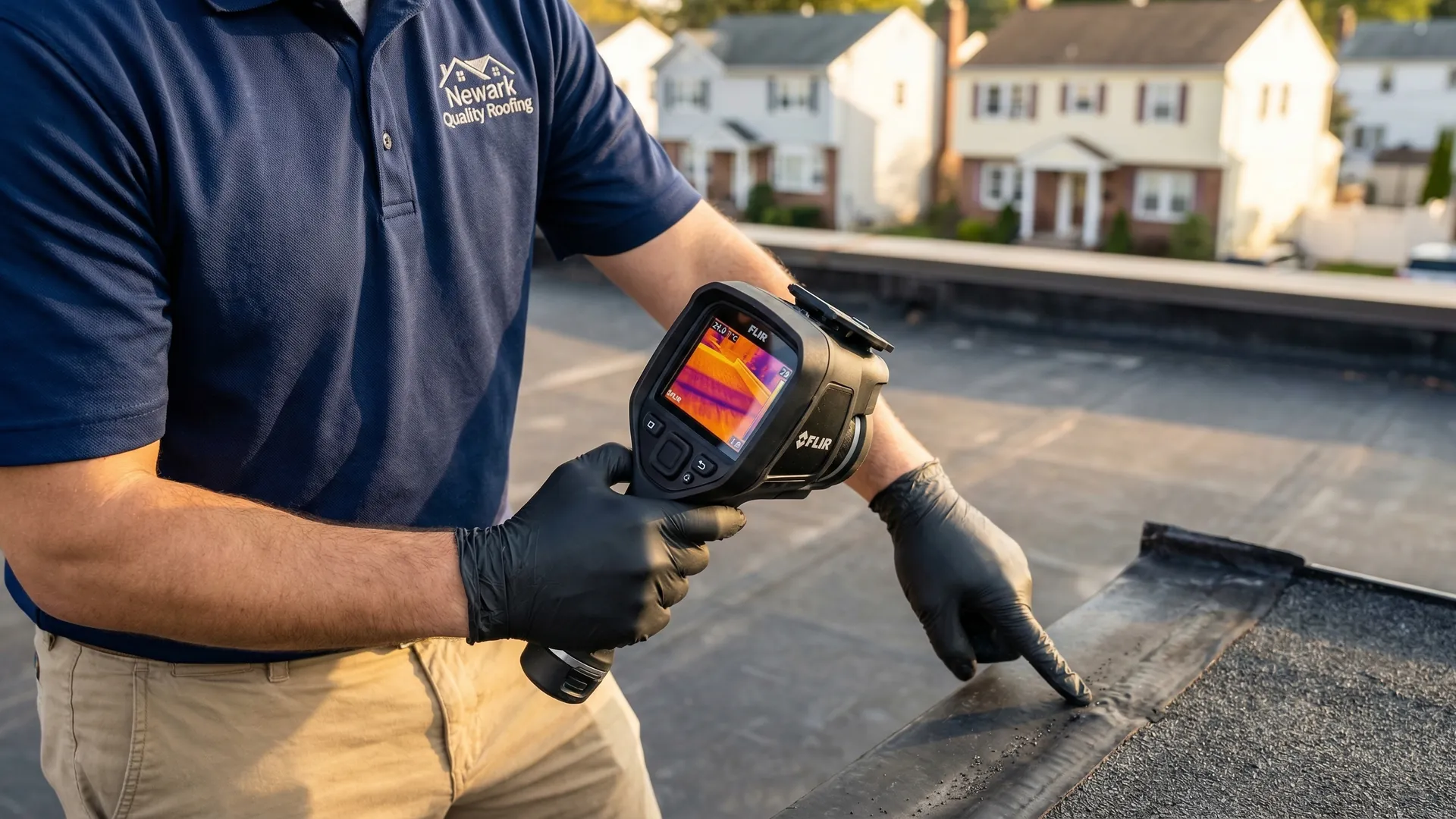
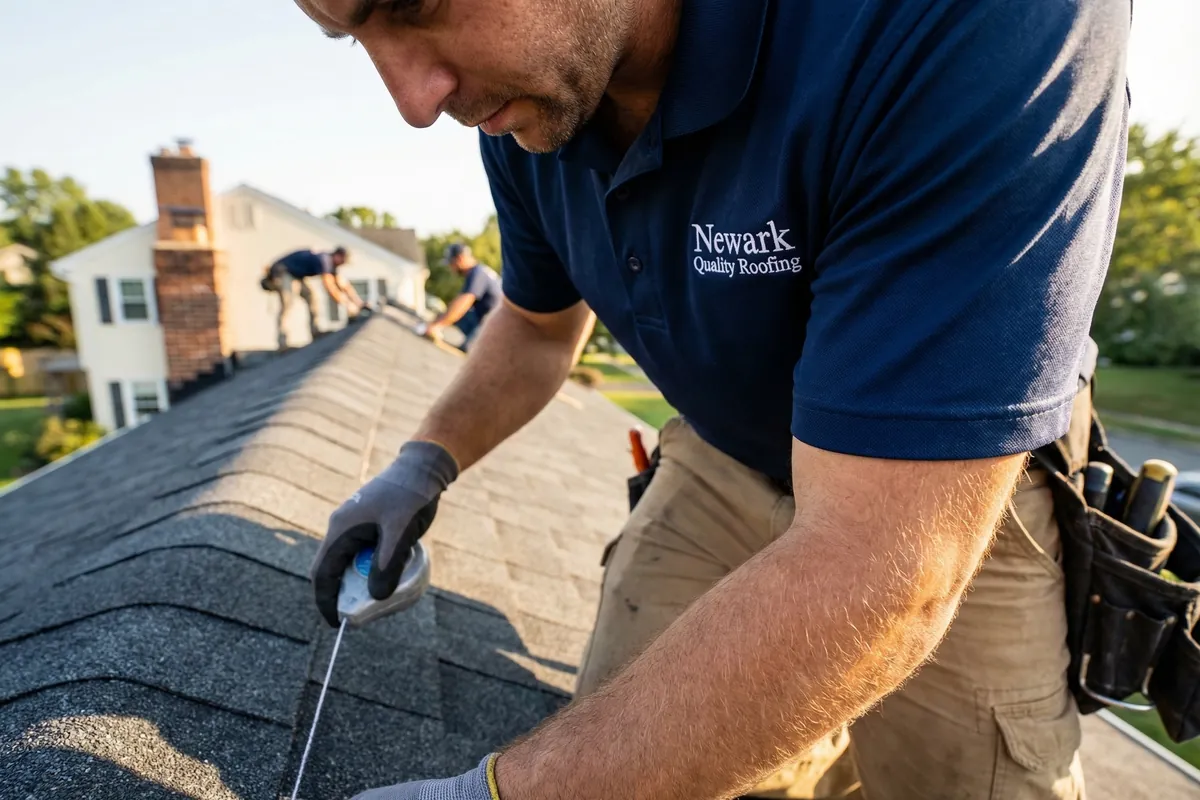
    The inspection stabilizes first, then diagnoses. Active leaks are dried-in immediately; then a Newark Quality Roofing crew traces the moisture path from interior stain through attic evidence to the failed flashing, seam, or penetration, checking every joint along the route. Corridor buildings get seam probing and pond mapping; homes get valley, boot, and transition scrutiny. Photographs record the failed detail before the repair scope is written. That evidence-first approach is also why the repair file is assembled to be forwarded: an adjuster, buyer, or property manager can follow the diagnosis without a site visit.

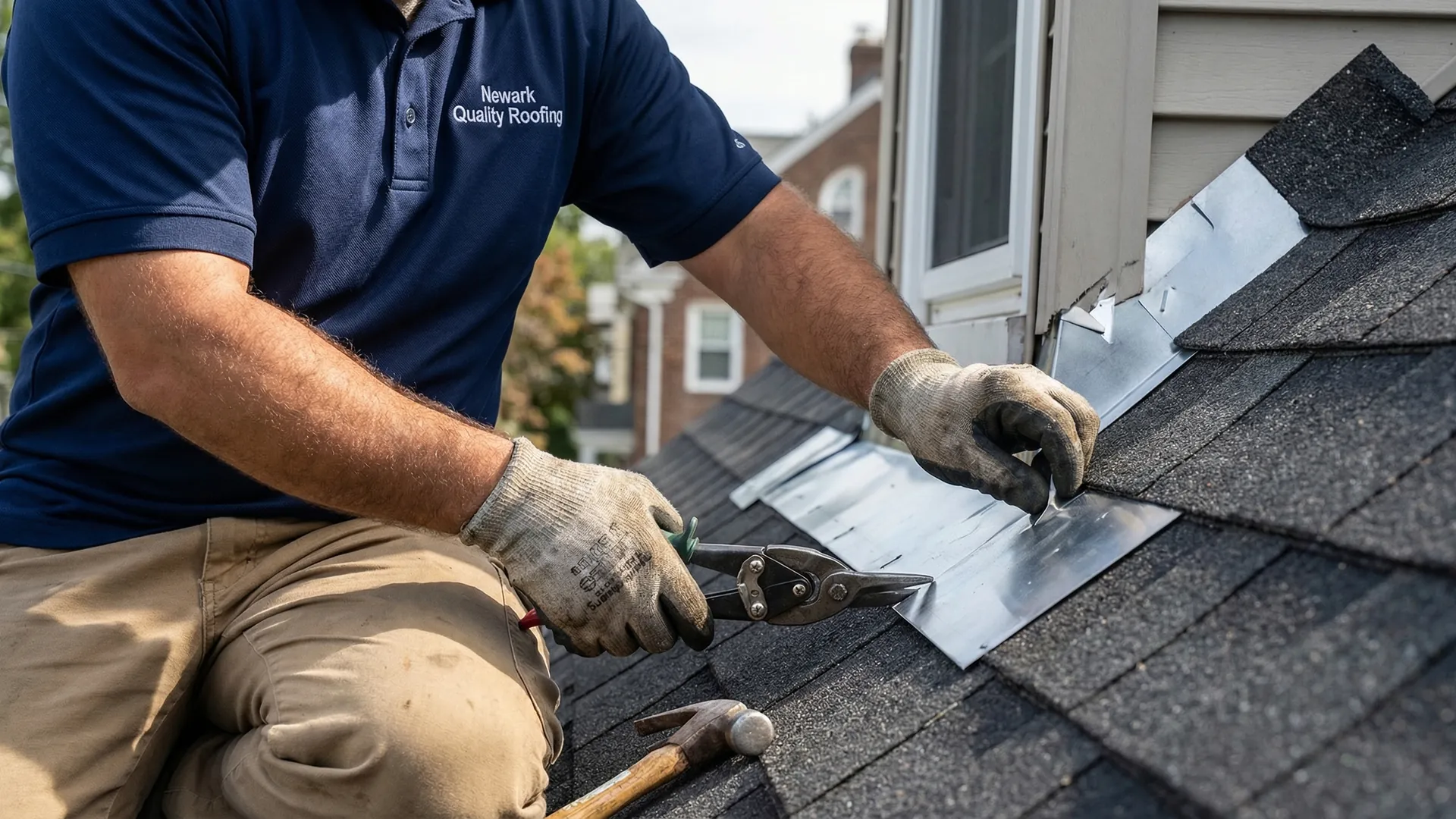
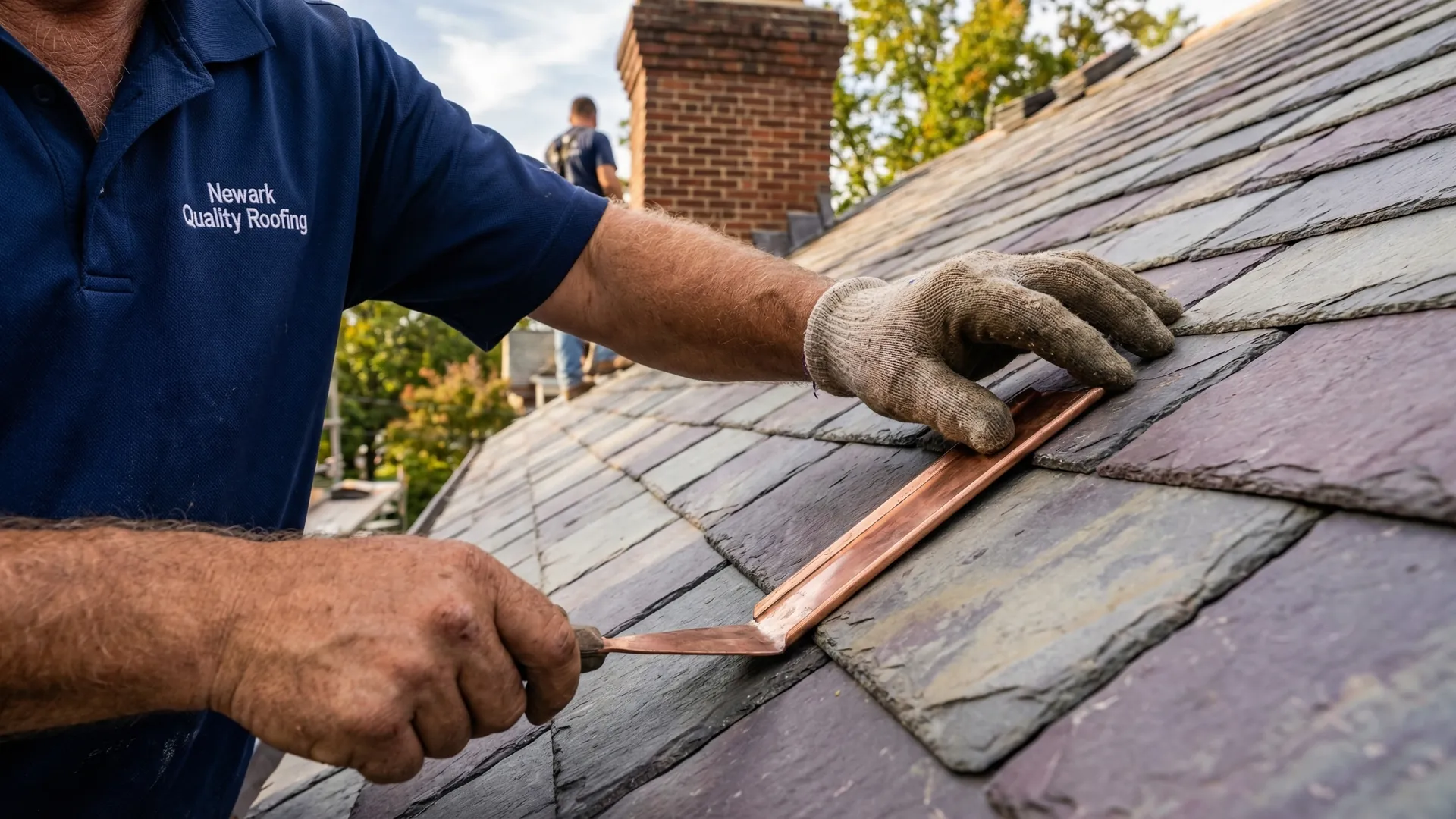
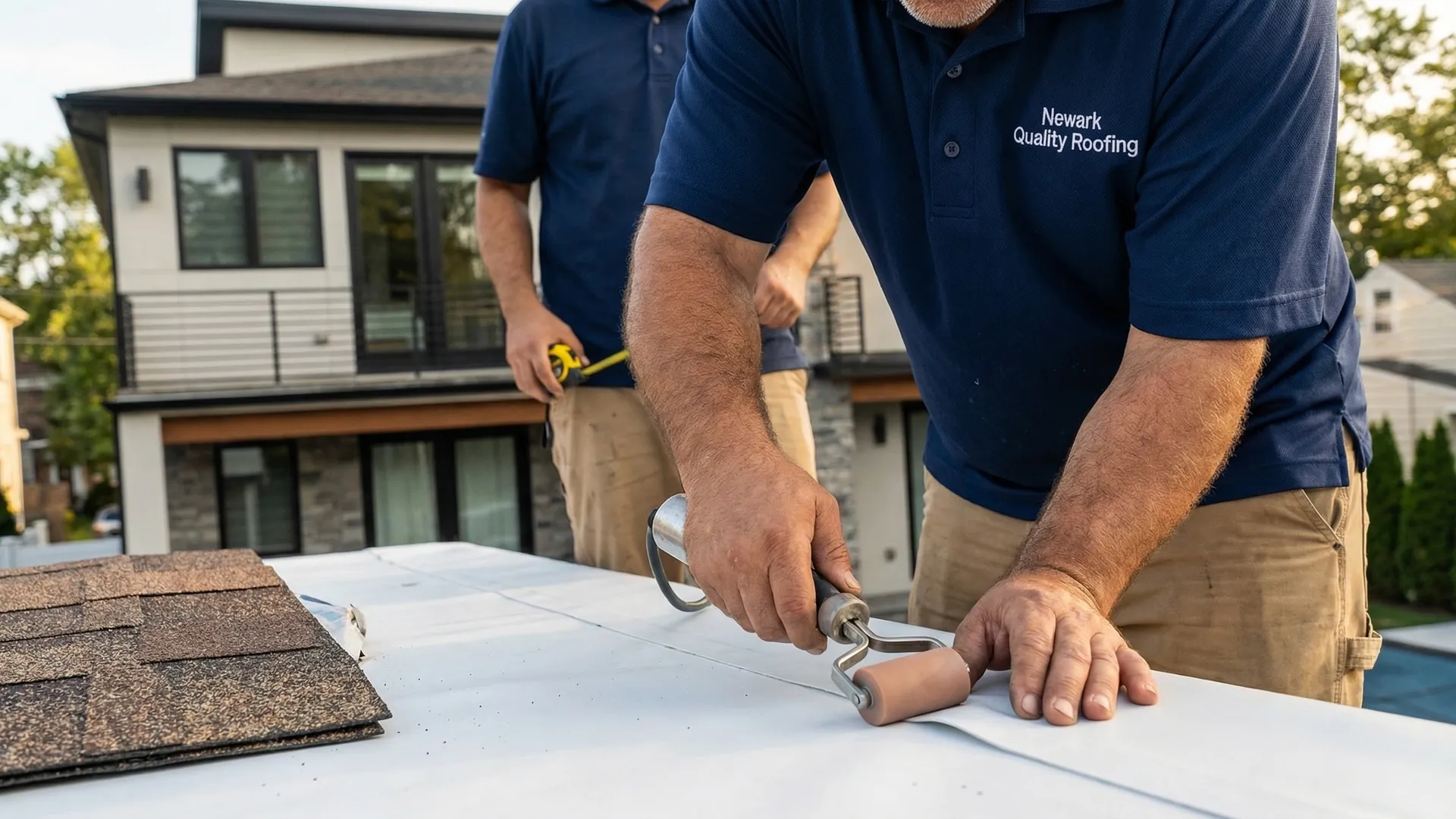
  2. Roofing materials staged for installation at job site

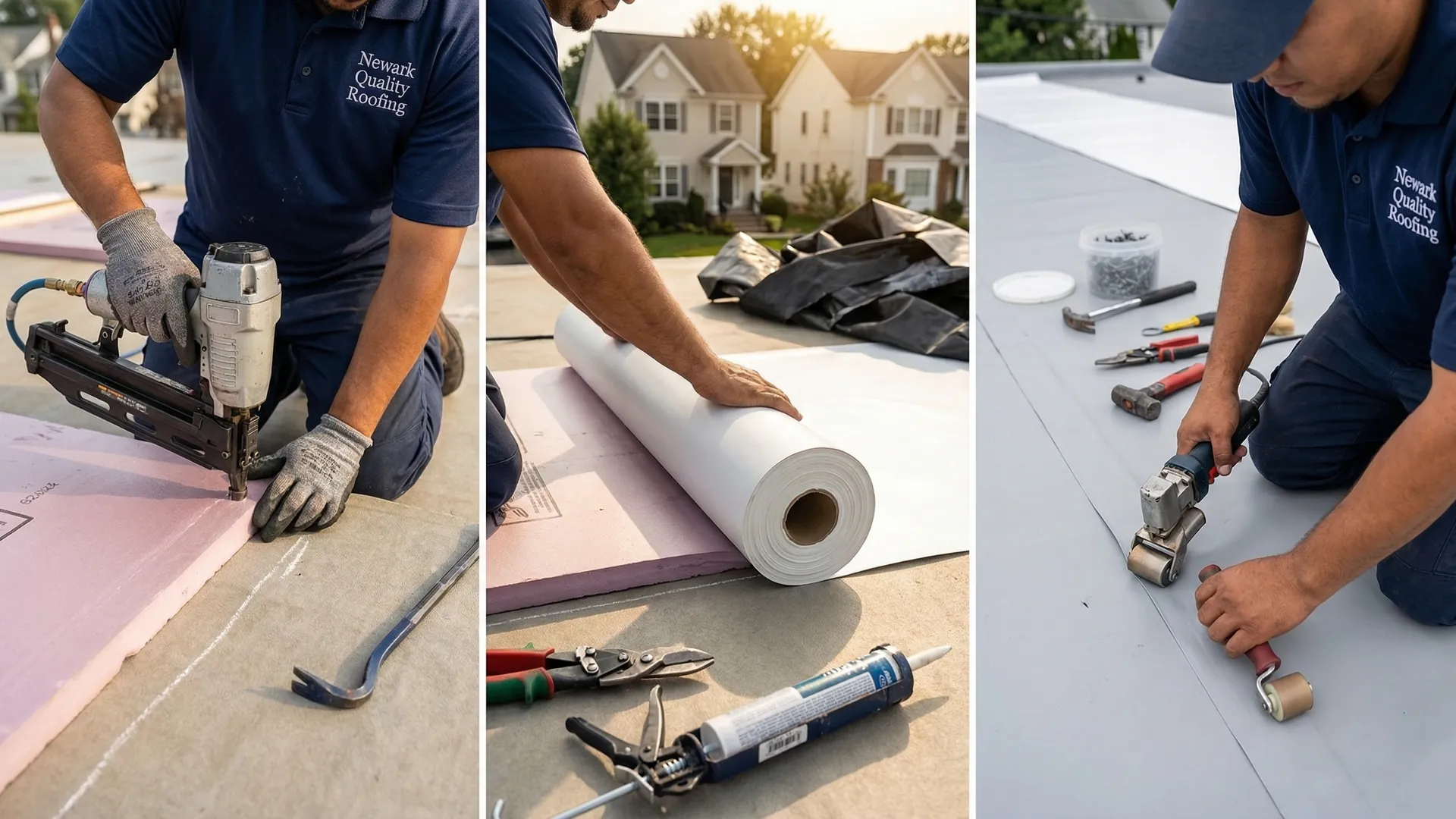
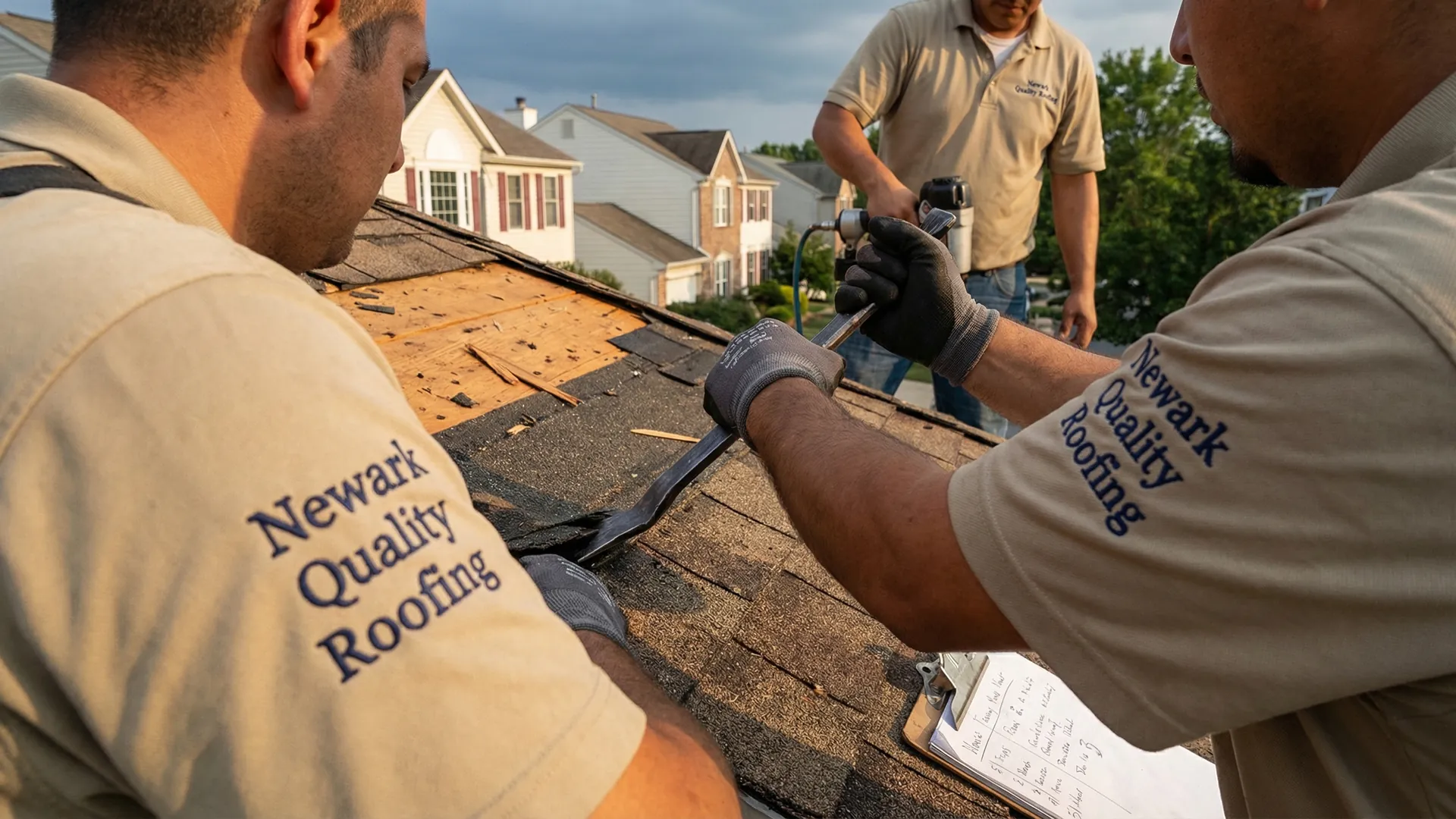
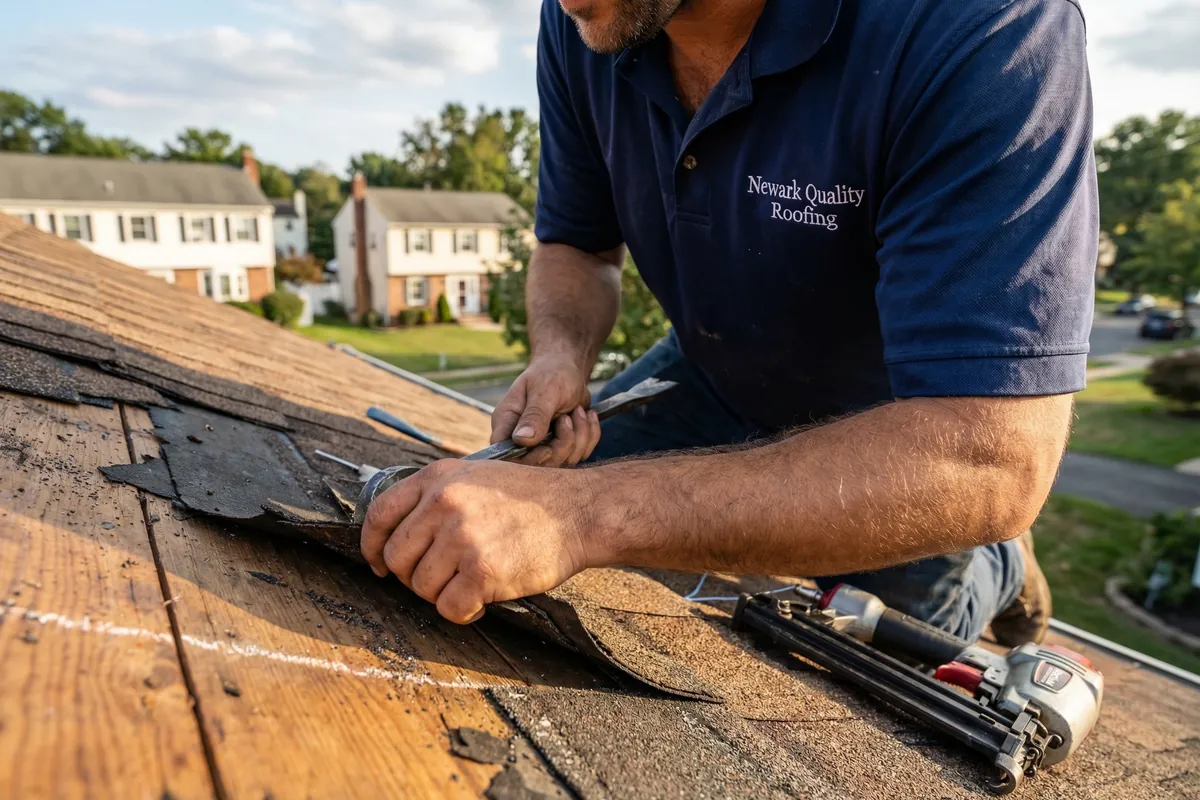
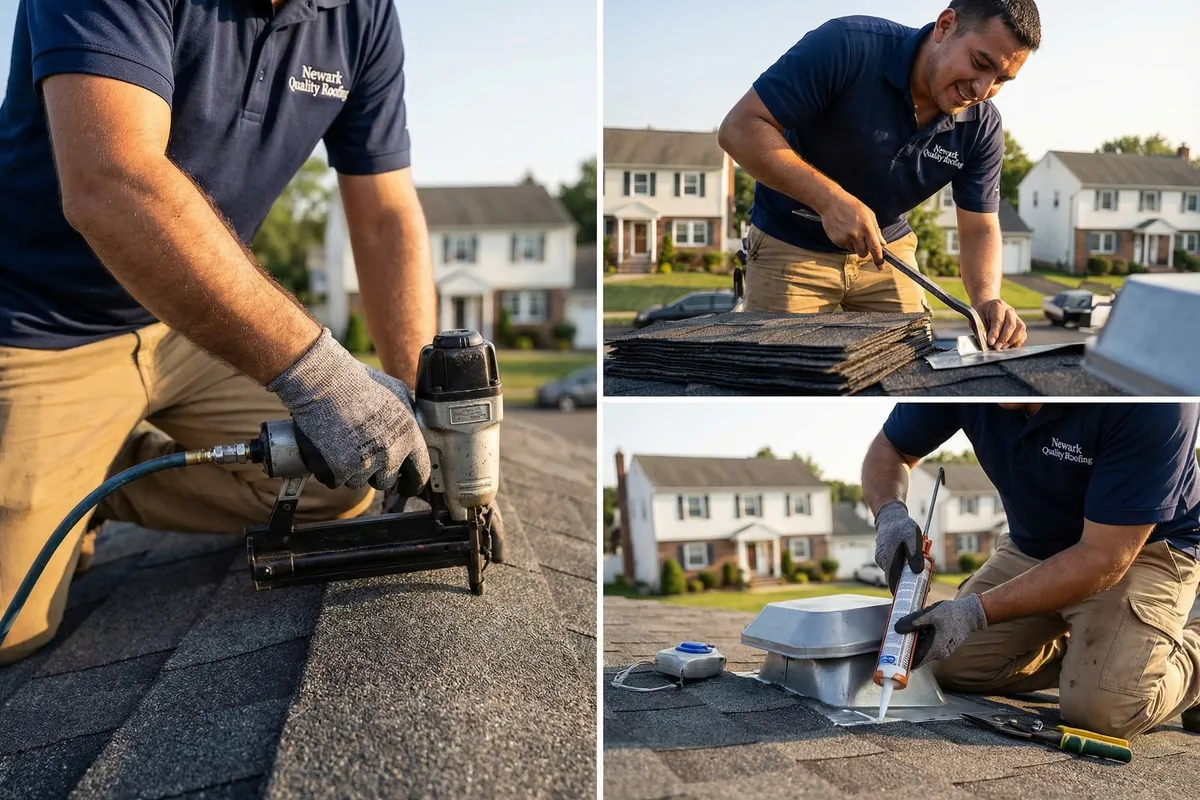
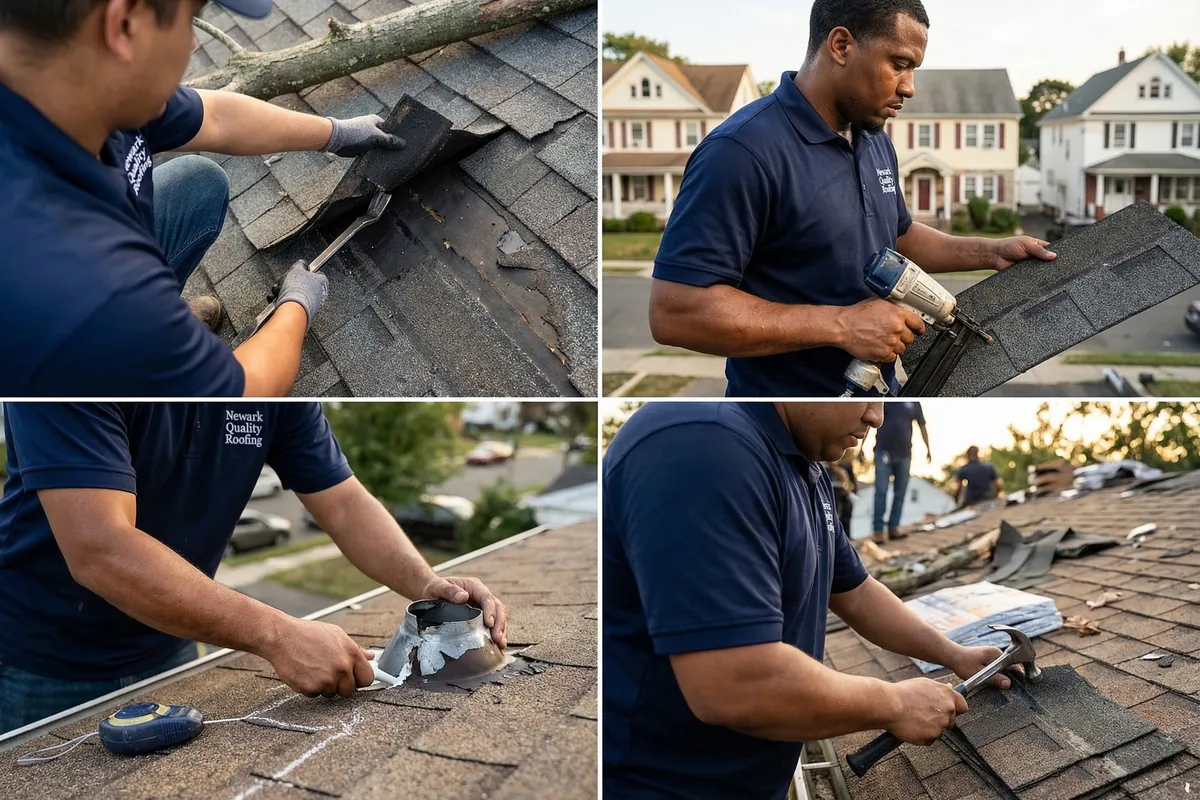
    Repair means rebuilding the component. Flashing is fabricated from corrosion-resistant stock to match the existing system, membrane work uses bonding chemistry compatible with the EPDM, TPO, or modified-bitumen in place so system warranties stay intact, and shingle repairs weave into the field. The work is backed by a written workmanship warranty and priced in advance inside the typical $400–$1,000 band.

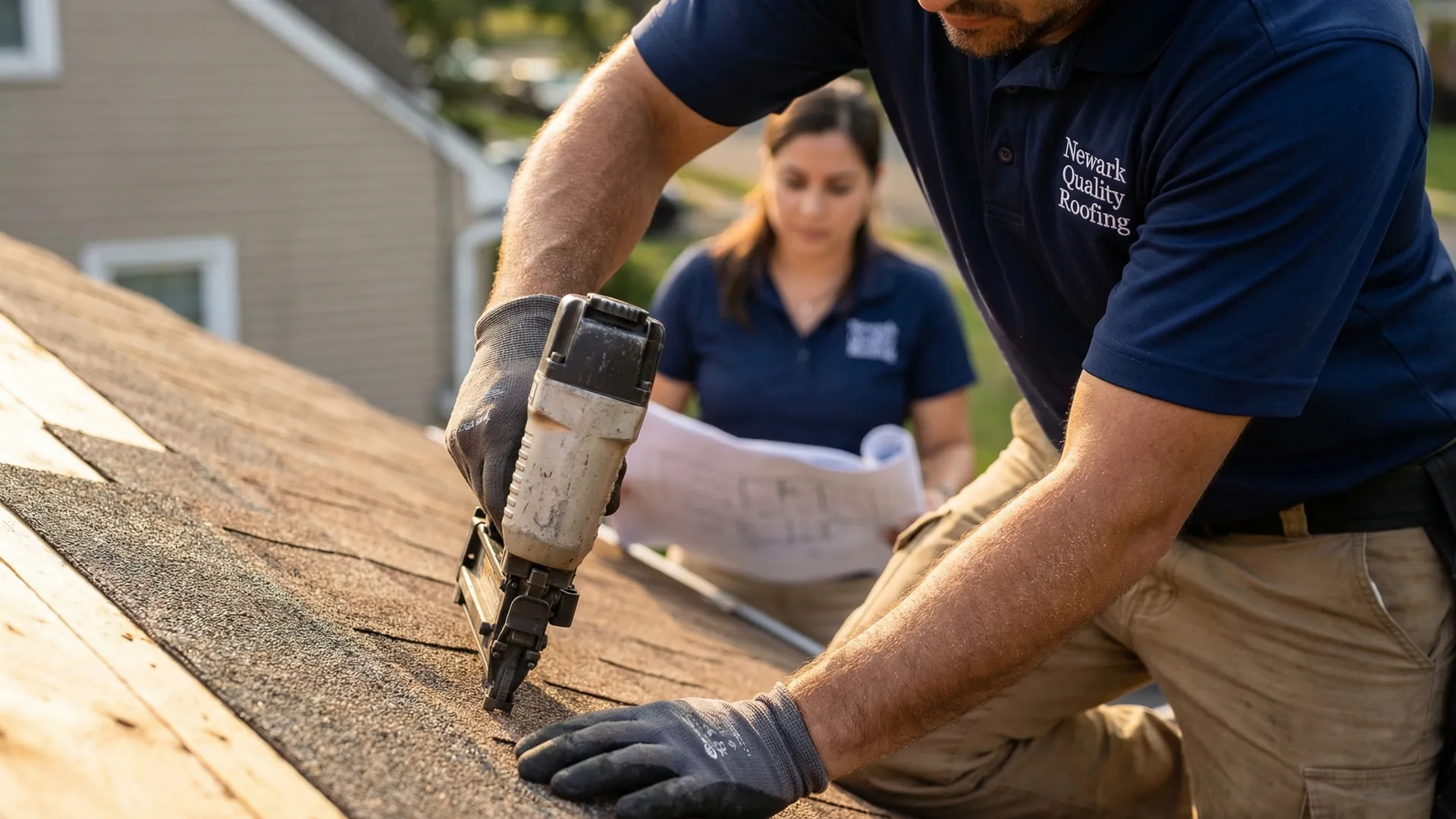
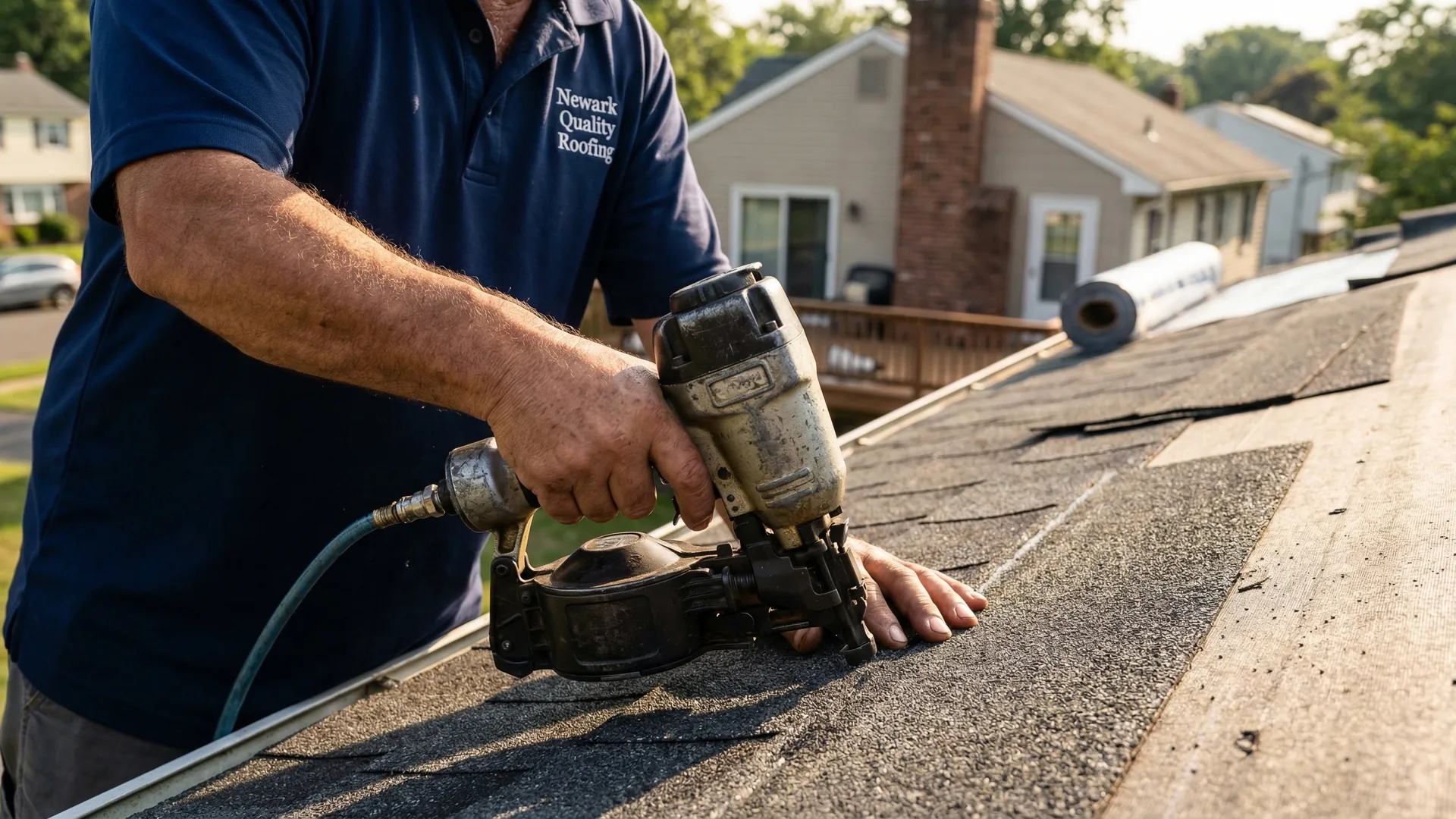
  3. Roofing crew installing new shingles during active work

    Closeout documentation serves three audiences. Timestamped photographs keyed to a roof diagram give the Fairfield homeowner an insurance-ready record, satisfy a Route 46 or I-80 property manager's file requirements, and provide lenders or underwriters a clear condition statement. Where inspection finds the wider roof near end-of-life, that finding is stated in the same record with its evidence, plainly and without sales pressure.

  4. Contractor and homeowner doing final walkthrough of completed roof

    Documentation is assembled for the file you actually keep. Fairfield homeowners receive the roof-diagram-keyed photographs and condition notes in a form insurers and future buyers read easily, and corridor property managers receive section-identified records their capital files can use. Any permit determination for a scope crossing ordinary-maintenance lines under N.J.A.C. 5:23-2.7 is stated in the estimate rather than discovered mid-job. For homeowners, the counterpart discipline is yard-level care: ladders and material staging that respect plantings along Hollywood Avenue and Big Piece Road, debris contained rather than broadcast, and a magnet sweep that leaves the driveway and lawn free of the fasteners a repair inevitably scatters. The finished repair is judged by the ceiling that stays dry, certainly — but also by a property that shows no trace a crew was ever working above it.

Roof Repair Costs in Fairfield, NJ

$400–$1,000

Typical NJ leak-repair range per HomeAdvisor; final cost depends on roof size, pitch, material, and access. Newark Quality Roofing provides a free written estimate.

(973) 649-9535Free estimate — no obligation

Why Choose Newark Quality Roofing for Roof Repair in Fairfield, NJ

  • Specialized roof repair experience in Fairfield — we know the local building stock, codes, and common issues specific to Fairfield homes and businesses.
  • A registered New Jersey Home Improvement Contractor, fully insured for roof repair work throughout Essex County.
  • Transparent, written estimates for every roof repair project — no hidden fees and no pressure to commit.
  • A local Fairfield crew familiar with the area's permitting and property-access challenges.
Explore the Full Service and Location Pages

FAQs About This Roofing Service

Storm debris dented our Fairfield roof along Big Piece Road but nothing leaks yet — should it be repaired now?
Inspected now, at minimum. Impact and branch damage that has not yet leaked often has cracked shingle mats, displaced flashing, or bruised membrane that admits water on the next driven rain rather than the last one. The inspection photographs and probes the damaged zone and distinguishes cosmetic marks from fractures that need repair while the area is small. Addressing a compromised detail inside the typical repair range is materially cheaper than the decking and interior work a season of quiet leaking produces. That evidence-first approach is also why the repair file is assembled to be forwarded: an adjuster, buyer, or property manager can follow the diagnosis without a site visit.
Why does the same seam on our Route 46 warehouse roof leak again after two patch jobs?
Because the seam is probably the symptom, not the cause. Recurring seam failure usually means ponded water is sitting on the lap, thermal movement is working a seam that was patched rigid, or the insulation beneath has saturated and is flexing the membrane. The diagnostic probes the seam, maps the pond, and checks substrate condition before proposing anything. If the substrate is sound, a properly prepared manufacturer-compatible seam repair ends the cycle; if saturation is driving it, the written scope says so and prices the section correction. That evidence-first approach is also why the repair file is assembled to be forwarded: an adjuster, buyer, or property manager can follow the diagnosis without a site visit.
Can a Fairfield repair be done in winter, or do we tarp it until spring?
Most can. Shingle and flashing repairs proceed through winter with cold-weather handling — materials warmed, sealant strips hand-sealed where temperatures prevent self-sealing — and membrane seam work follows its adhesive temperature windows. Emergency dry-in happens immediately regardless of season. What winter changes is scheduling around weather windows, not whether the repair is possible; the estimate states any temperature-dependent steps so a January leak does not become a March ceiling replacement by default. That evidence-first approach is also why the repair file is assembled to be forwarded: an adjuster, buyer, or property manager can follow the diagnosis without a site visit.
Our Fairfield home took water in Ida's flooding — could the roof repairs we need now trace back to that?
Plausibly, yes. Wind-driven rain in events like Ida in 2021, Irene in 2011, and Floyd in 1999 lifts flashing edges, drives water under laps, and leaves saturated sections that corrode fasteners quietly for years before a stain appears. The inspection reads for those signatures — lifted perimeter metal, corrosion patterns in the attic, displaced seams on corridor decks — and documents storm-consistent damage in the photographic record, which is also the form an insurer wants if a claim conversation follows. That evidence-first approach is also why the repair file is assembled to be forwarded: an adjuster, buyer, or property manager can follow the diagnosis without a site visit.
What makes a Fairfield repair stop being a repair and become a partial replacement conversation?
Distribution of failure. One failed valley, boot, or seam on a sound field is a repair. Granule loss across slopes, multiple prior repair layers, curling or brittle shingles, or decking soft in several zones means each new $400–$1,000 ticket buys less time than the last. The inspection presents slope-by-slope or section-by-section evidence and prices the proportionate scope; where replacement is the honest answer, the repair estimate still stands for any detail needing immediate dry-in, so the decision is never forced by an active leak. That evidence-first approach is also why the repair file is assembled to be forwarded: an adjuster, buyer, or property manager can follow the diagnosis without a site visit.
A branch punctured our Fairfield roof near Hollywood Avenue and more rain is coming tonight — what happens first?
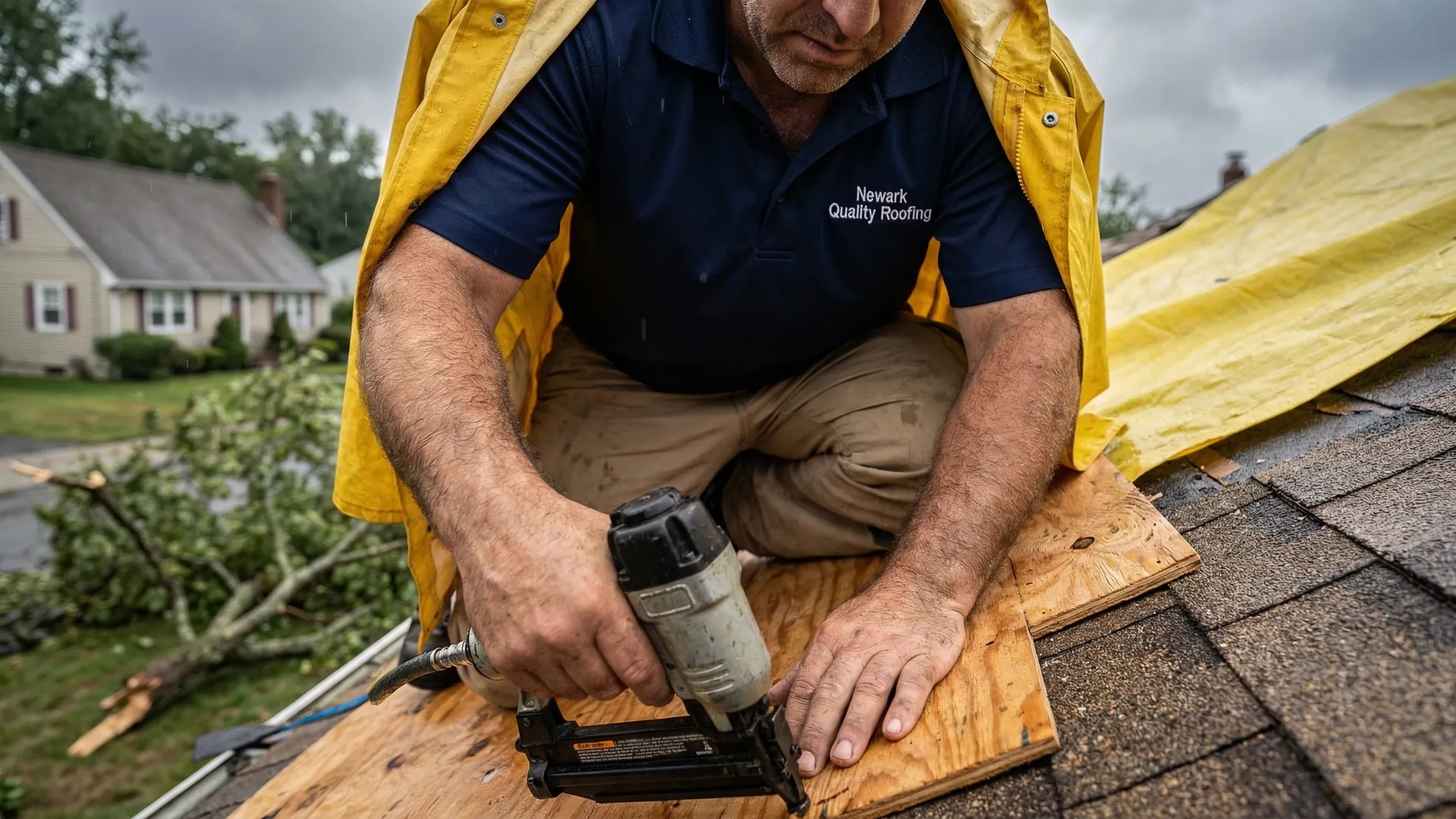
Dry-in first, diagnosis second, paperwork third — in that order. The crew stabilizes the puncture with a temporary weather-tight cover the same visit, then inspects the deck and surrounding field for the fractures radiating from an impact that a quick patch would miss. The permanent repair is scoped and priced in writing, executed to match the existing system, and photographed for your records. If storm damage supports an insurance conversation, the documentation is already in the format adjusters work from.
Roof Repair in Fairfield, NJ — Extended Guide, Photo Record, and Field Notes

This is the complete record behind the Fairfield page: the repair work the crews run out of the Newark office for a township that splits its roofs between the single-family streets off Big Piece Road and Hollywood Avenue and the warehouse decks along the Route 46 corridor. Fairfield NJ roofs fail in two dialects — the pitched shingle and slate work of the residential grid, and the membrane seams of the commercial roofs — and the record below covers both: the questions Fairfield owners ask first, the siding and flashing details where the wall meets the roofline, the service log, the photographs each job leaves behind, and the field notes the estimates are written from.

Roof Repair in Fairfield NJ: The Questions Owners Ask Before They Ask for a Price

These are the page’s own frequently asked questions, set out in full — the same six questions the Fairfield FAQ answers, each with its answer written as the office gives it. They are the questions a Fairfield homeowner or a Route 46 property manager actually asks before anyone talks about price, and the answers are the ones the inspection is built to defend.

Storm debris dented our Fairfield roof along Big Piece Road but nothing leaks yet — should it be repaired now?

Inspected now, at minimum. Impact and branch damage that has not yet leaked often means cracked shingle mats, displaced flashing, or bruised membrane that admits water on the next driven rain rather than the last one. The inspection photographs and probes the damaged zone and separates cosmetic marks from fractures that need repair while the area is small. A compromised detail fixed inside the typical repair range costs materially less than the decking and interior work a season of quiet leaking produces.

Why does the same seam on our Route 46 warehouse roof leak again after two patch jobs?

Because the seam is usually the symptom, not the cause. Recurring seam failure means ponded water sitting on the lap, thermal movement working a seam that was patched rigid, or insulation beneath that has saturated and is flexing the membrane. The diagnostic probes the seam, maps the pond, and checks the substrate before proposing anything: if the substrate is sound, a properly prepared, manufacturer-compatible seam repair ends the cycle; if saturation is driving it, the written scope says so and prices the section correction.

Can a Fairfield repair be done in winter, or do we tarp it until spring?

Most can. Shingle and flashing repairs proceed through winter with cold-weather handling — materials warmed, sealant strips hand-sealed where temperatures prevent self-sealing — and membrane seam work follows its adhesive temperature windows. Emergency dry-in happens immediately regardless of season. What winter changes is scheduling around weather windows, not whether the repair is possible, and the estimate states any temperature-dependent steps, so a January leak does not become a March ceiling replacement by default.

Our Fairfield home took water in Ida’s flooding — could the roof repairs we need now trace back to that?

Plausibly, yes. Wind-driven rain in events like Ida in 2021, Irene in 2011, and Floyd in 1999 lifts flashing edges, drives water under laps, and leaves saturated sections that corrode fasteners quietly for years before a stain appears. The inspection reads for those signatures — lifted perimeter metal, corrosion patterns in the attic, displaced seams on corridor decks — and documents storm-consistent damage in the photographic record, which is also the form an insurer wants if a claim conversation follows.

What makes a Fairfield repair stop being a repair and become a partial replacement conversation?

Distribution of failure. One failed valley, boot, or seam on a sound field is a repair. Granule loss across slopes, multiple prior repair layers, curling or brittle shingles, or decking soft in several zones mean each new repair ticket buys less time than the last. The inspection presents slope-by-slope evidence and prices the proportionate scope; where replacement is the honest answer, the repair estimate still stands for any detail needing immediate dry-in, so the decision is never forced by an active leak.

A branch punctured our Fairfield roof near Hollywood Avenue and more rain is coming tonight — what happens first?

Dry-in first, diagnosis second, paperwork third — in that order. The crew stabilizes the puncture with a temporary weather-tight cover on the same visit, then inspects the deck and the surrounding field for the fractures radiating from an impact that a quick patch would miss. The permanent repair is scoped and priced in writing, executed to match the existing system, and photographed for the file. If storm damage supports an insurance conversation, the documentation is already in the format adjusters work from.

Siding in Fairfield NJ: Where the Wall Meets the Roofline

More Fairfield leaks are born at the wall line than in the middle of any roof field. Siding is the wall’s weather skin, and where siding meets the roof — at dormer cheeks, chimney chases, and the rake walls of the township’s split-levels — the step flashing has to be woven behind the siding course by course. When siding is replaced without the flashing being touched, or the flashing is sealed over instead of woven, water runs behind the siding and shows itself inside, a room away from the joint that failed. The crews read the siding on every Fairfield inspection for exactly that reason.

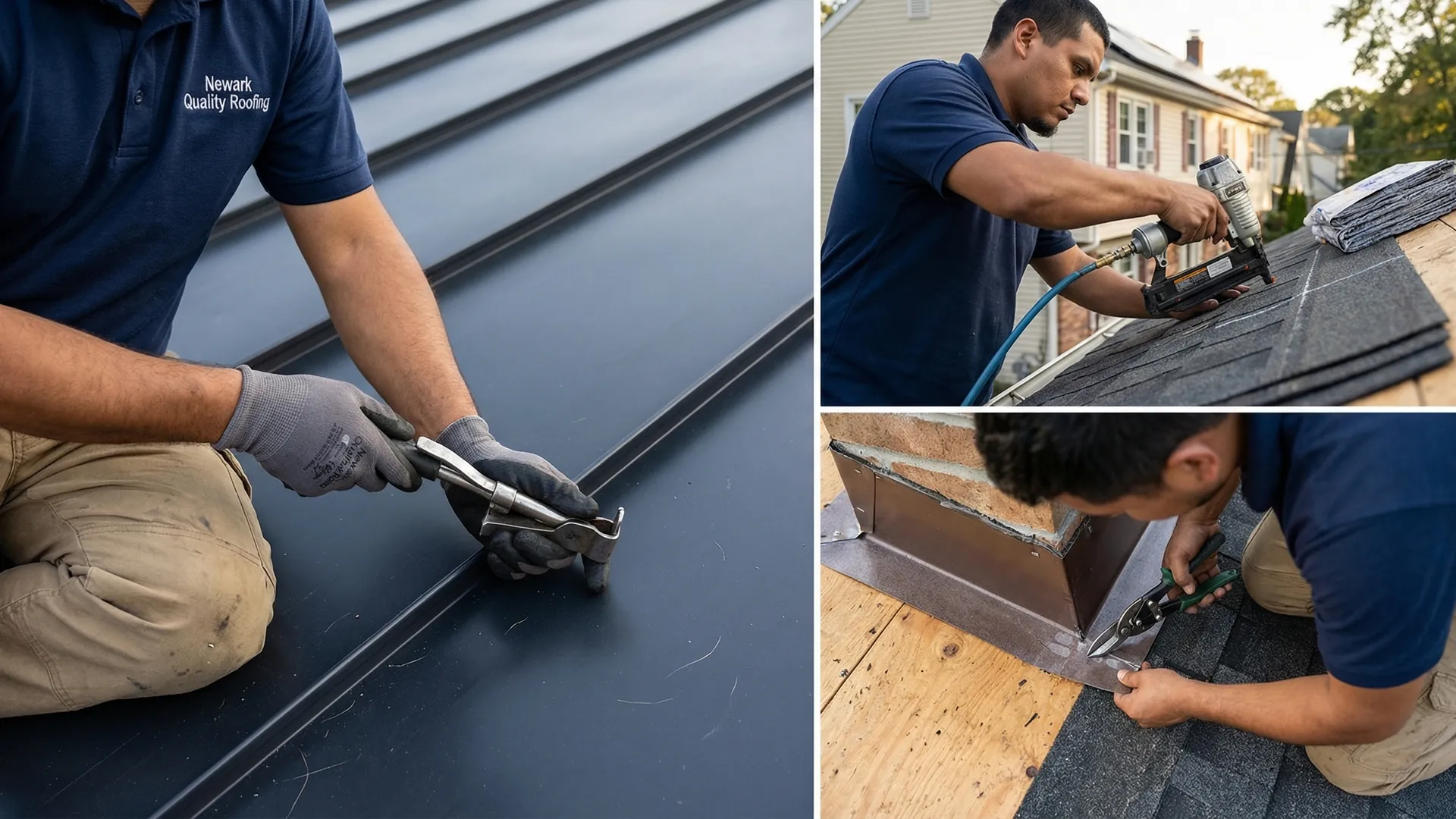
Flashing Repair, Chimney Flashing, and Roof Deck Repairs

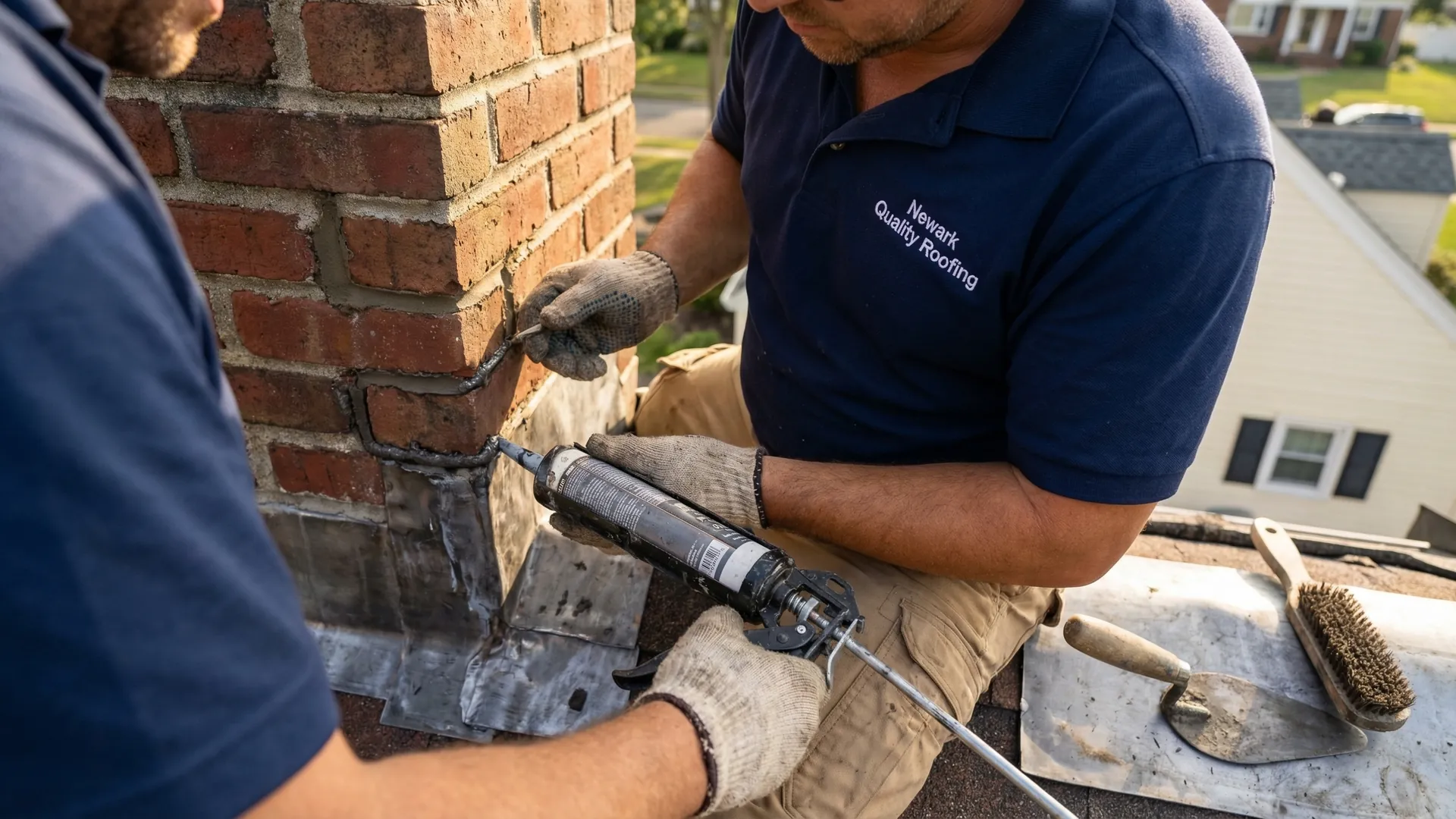
The flashing repair at a wall line is a sequence, not a smear. The siding courses above the joint come off in order, the failed step flashing is replaced piece by piece up the slope, the counter-flashing is cut back into the chimney masonry, and the siding goes back over the new metal in the right order. Caulking over the old joint is the repair that fails by spring; the record photographs each layer before the siding closes it, and the roof deck repairs underneath are photographed the same way.

Siding, Gutter, and Slate Roof Leak Repair

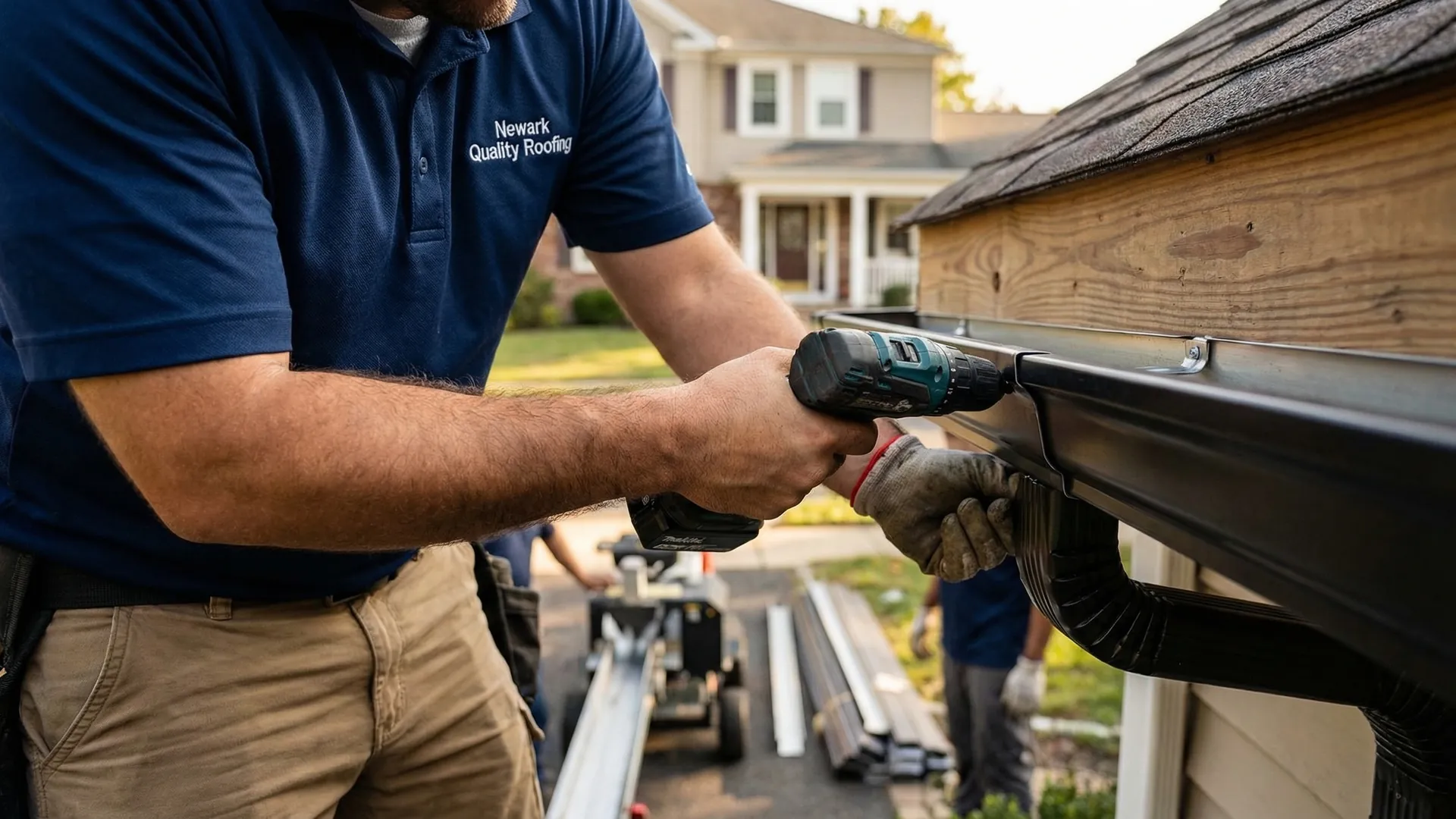
Gutter work and siding work meet at the eave. A gutter that overflows washes the siding below it, rots the fascia behind it, and drives water at the rake flashing — and on Fairfield’s older slate sections, a leak at the eave is as likely to be a gutter failure as a slate failure. The inspection reads the gutter line, the siding below it, and the slate together, because repairing one while missing the others is how the same ceiling stain comes back a season later.

The service log is the working shape of a Fairfield season — one entry per job file: the street, the failure found, and what the repair closed. Fairfield NJ work runs from the Newark office, and every entry below closes against the written estimate it produced.

Log, Big Piece Road: a Fairfield NJ roof repair on a storm-dented shingle field — mats probed, two cracked courses replaced, and the flashing at the dormer cheek resealed and photographed.

Log, Route 46 corridor: a warehouse seam on its third failure — pond mapped, saturated insulation cut out, seam rebuilt with a manufacturer-compatible system; the roof repairs were written against the section, not the symptom.

Log, Hollywood Avenue: a branch puncture dried in the same evening — deck inspected for radiating fractures, permanent repair matched to the existing shingle system and filed with photographs.

Log, Clinton Road: siding at a rake wall opened to find step flashing sealed over instead of woven — flashing rebuilt in order, siding closed back, and the interior stain line marked for the painter.

Log, Two Bridges Road: a river-side house with Ida-era corrosion in the attic — lifted perimeter metal renewed, fasteners replaced, and the storm file documented for the insurer.

Log, Fairfield Road: a Fairfield NJ roof repair where the leak was the gutter — run re-pitched, fascia carpentry renewed, and the siding below the eave dried and checked before closing.

Log, Plymouth Street: winter work — shingle and flashing repairs hand-sealed in a cold snap, a membrane seam scheduled inside its adhesive window, both dates in the file.

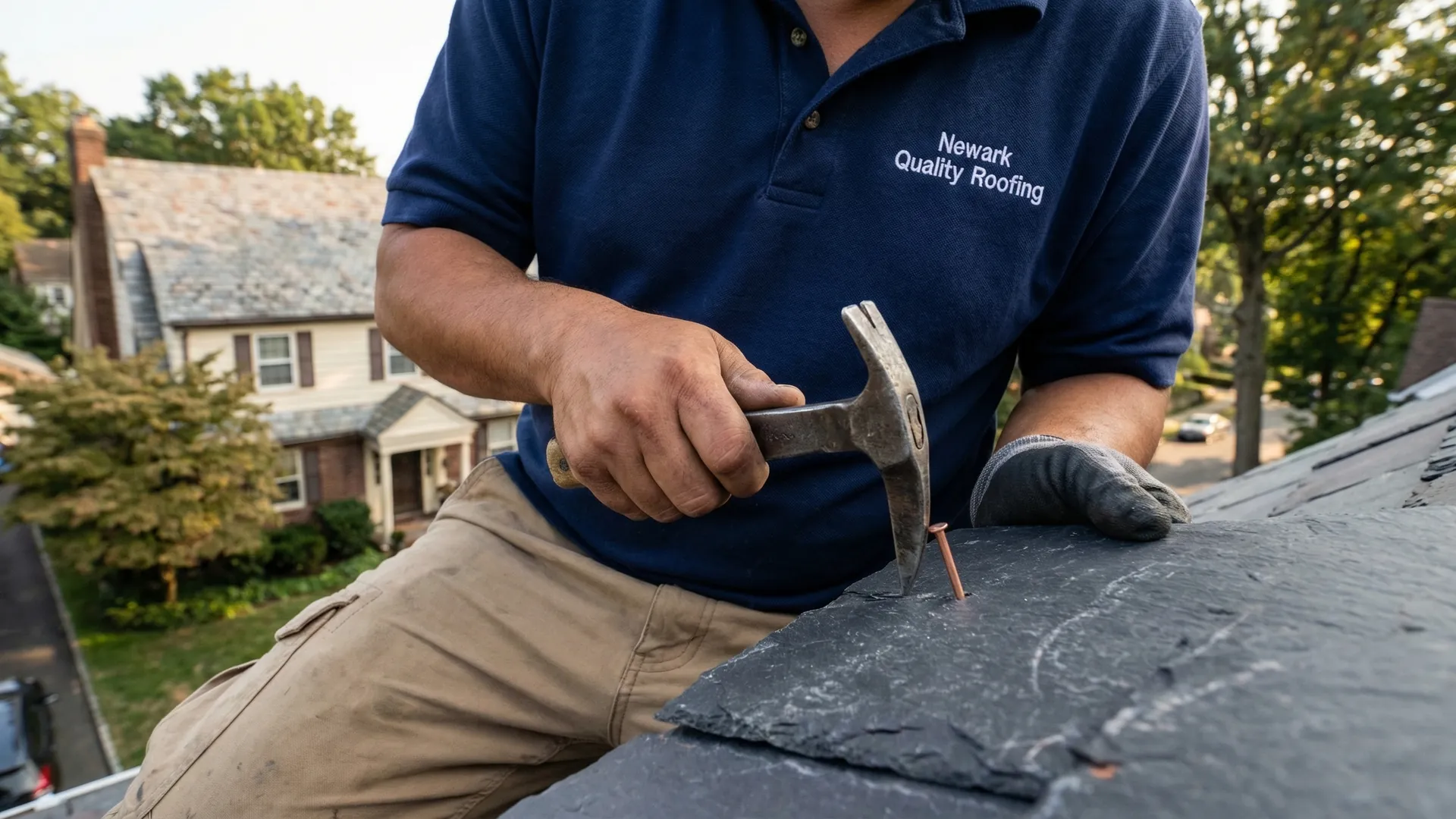
Log, Horseneck Road: a slate section above a siding-clad dormer — single stones replaced, copper flashing renewed, and the siding at the cheek re-woven over the new step flashing.

The photographic record is part of every Fairfield NJ job file — the failures found, the details rebuilt, and the finished work, photographed before the file closes. Thirty-four photographs from the working life of this service:

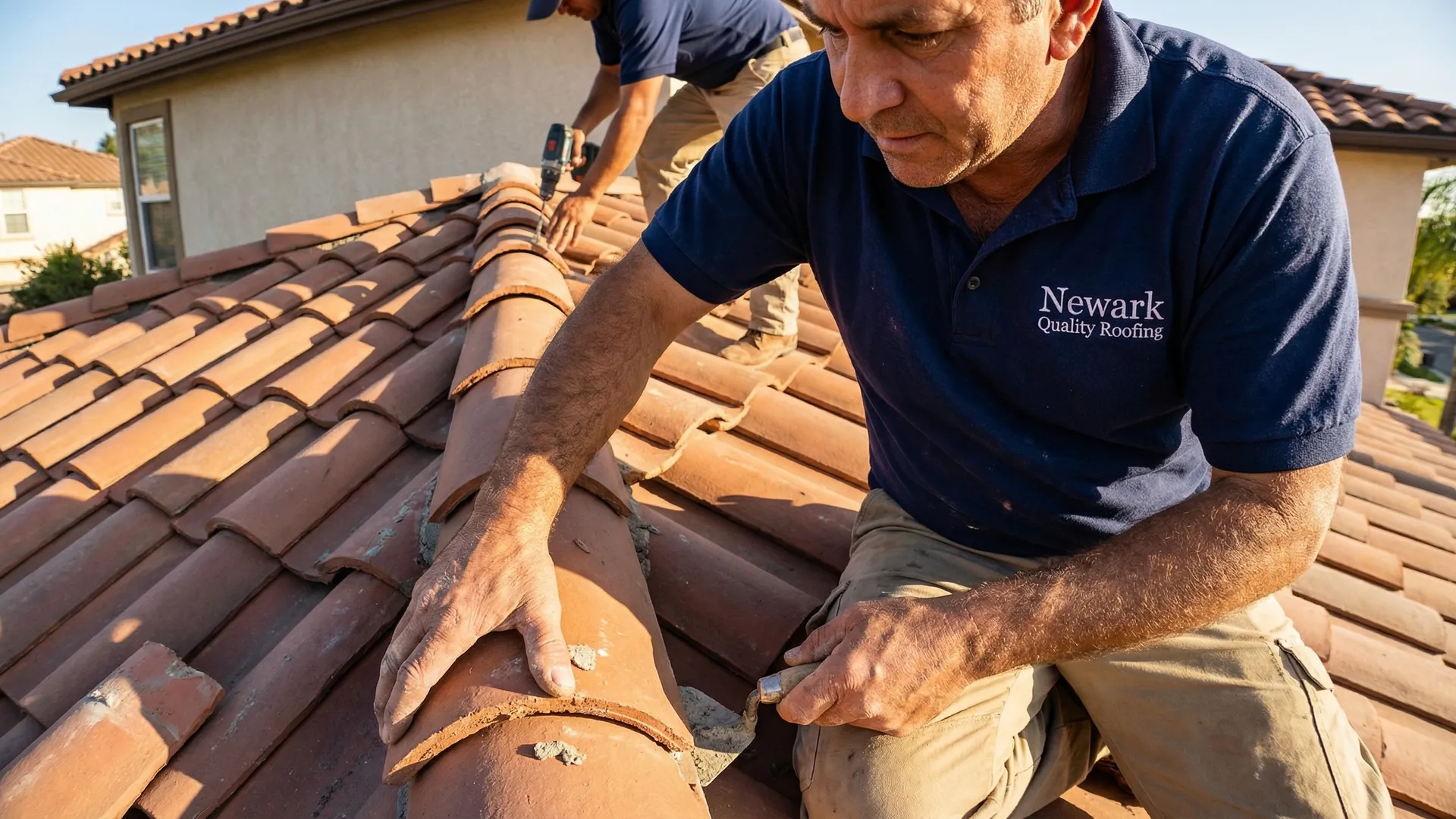
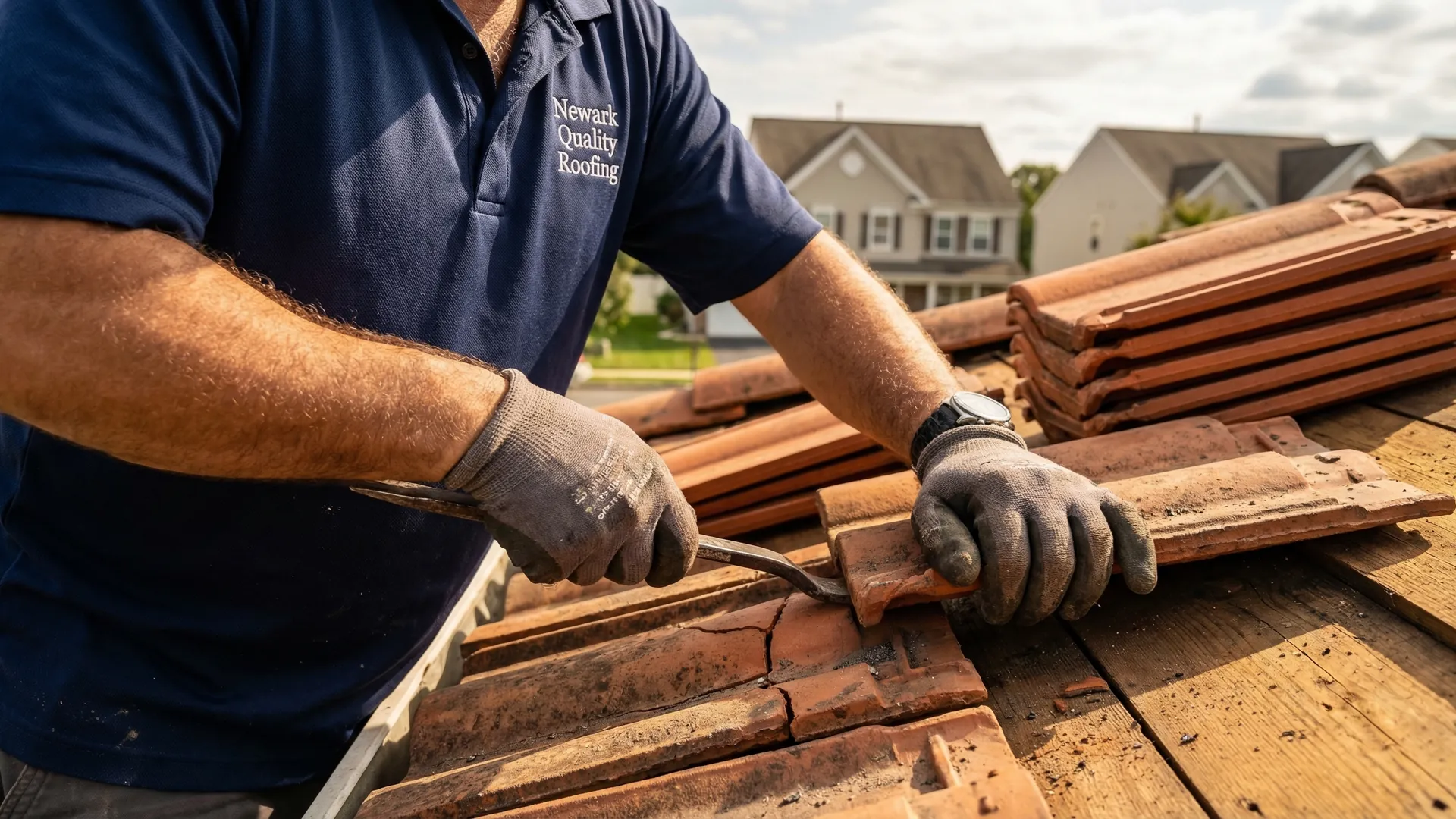
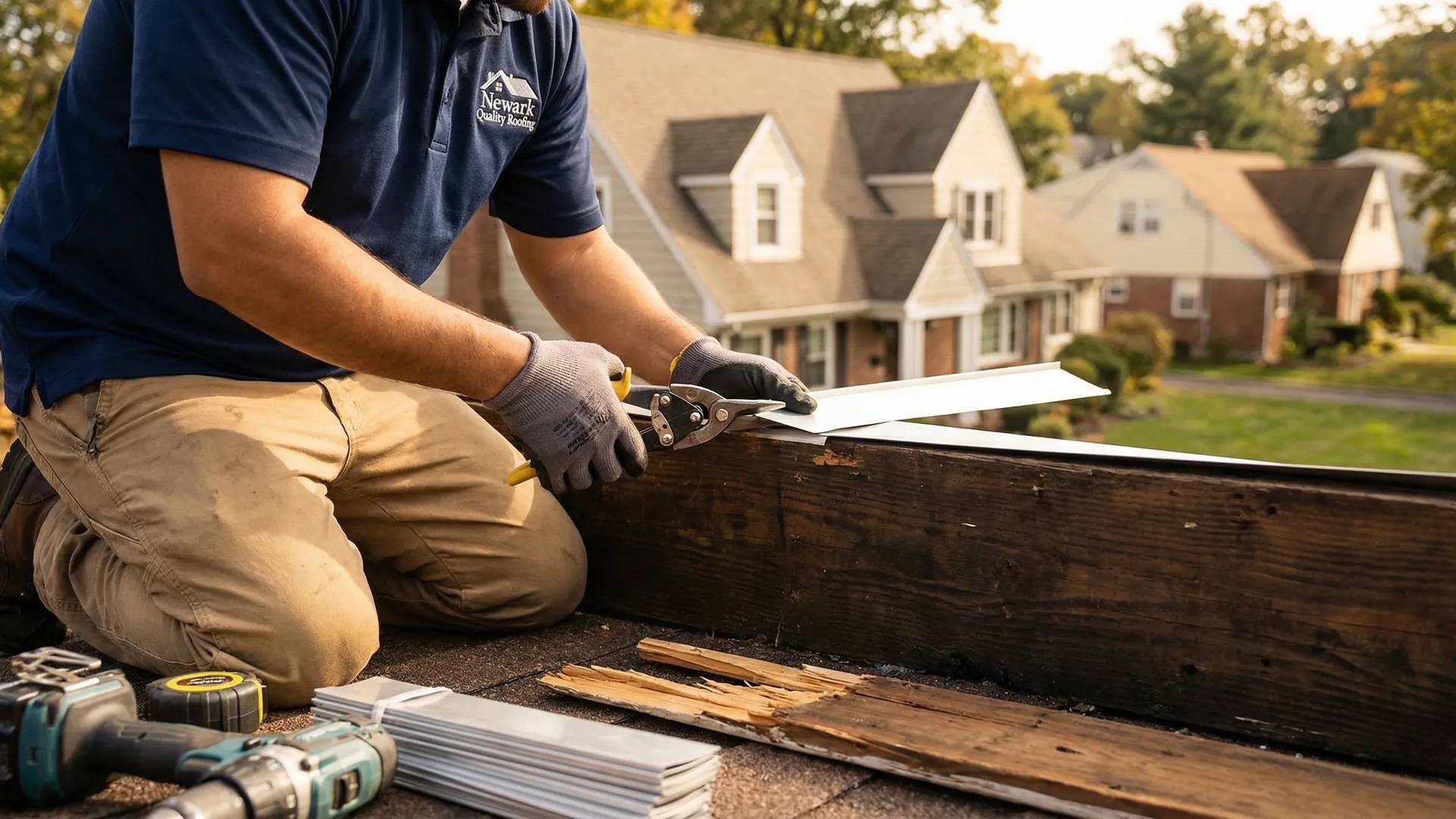
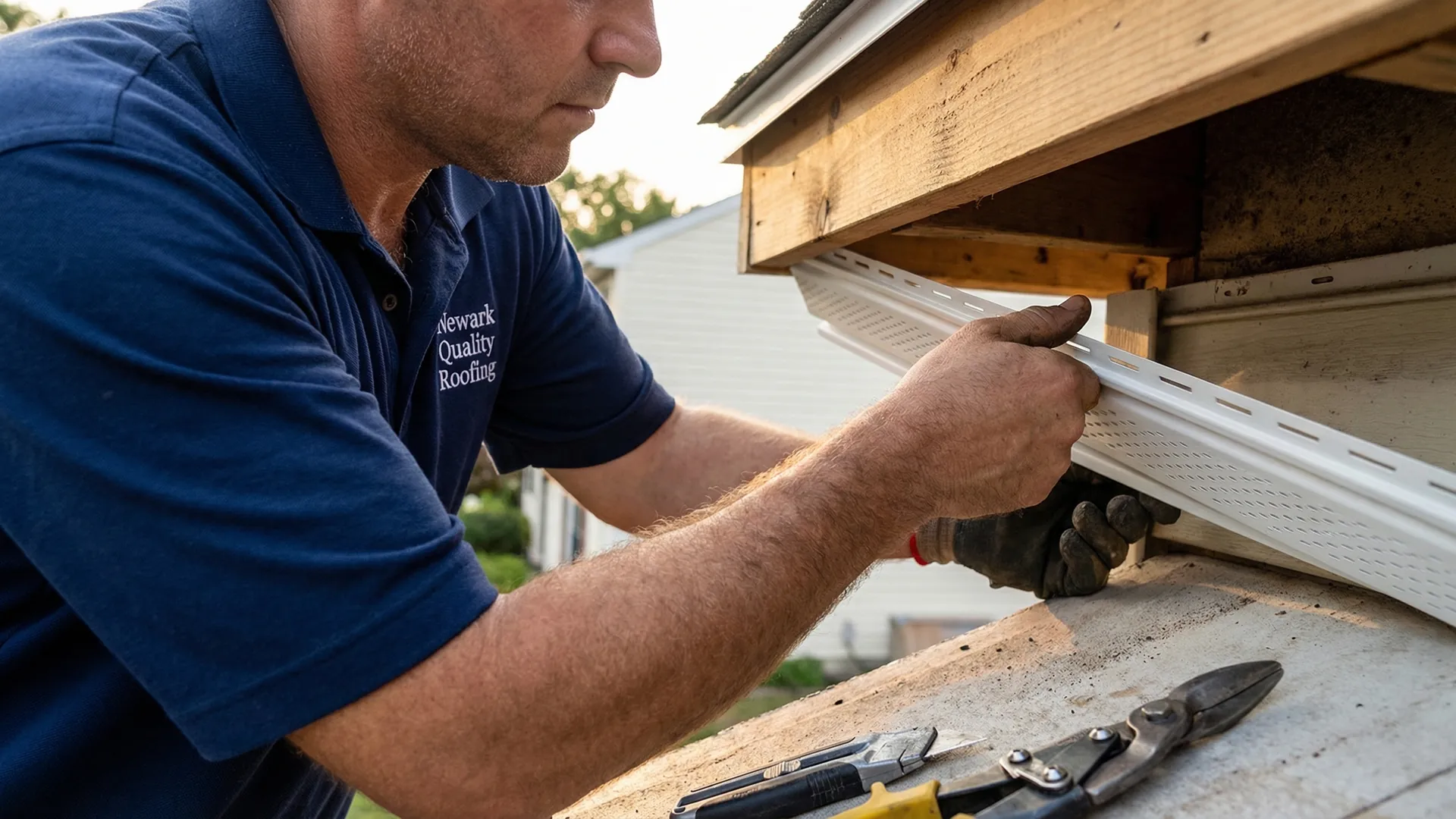
Roof repair Fairfield NJ — crew repairing a shingle field on a pitched roofRoof leak repair Fairfield NJ — leak traced through the attic deck to a failed flashing jointRoof repair in Fairfield NJ — step flashing woven behind the siding at a wall lineFairfield NJ roof repair — chimney flashing repair with counter-flashing cut into the mortar jointRoof repair Fairfield NJ — asphalt shingle courses blended into a weathered fieldFairfield NJ roof repair — shingle replacement section renewed over sound deckingSlate roof repair Fairfield NJ — replacement slate matched to the original roofRoof repair Fairfield NJ — slate section renewed with copper valley metalFlat roof repair Fairfield NJ — membrane seam resealed on a Route 46 warehouseRoof repair Fairfield — flat roof section renewed over a corridor warehouse deckMetal roofing repair Fairfield NJ — standing seam detail on a porch roofRoof repairs Fairfield NJ — metal roof section renewed at the parapetGutter repair Fairfield NJ — gutter run re-pitched to stop eave roof leaksRoof repair Fairfield NJ — gutter guard fitted under the first shingle courseEmergency roof repair Fairfield NJ — crew securing a storm opening before the permanent repairStorm damage roof repair Fairfield NJ — wind-lifted shingles documented after the stormRoof repair Fairfield NJ — storm-opened section rebuilt over new deckingRoof repair Fairfield NJ — hail marks documented for the insurance fileRoof inspection Fairfield NJ — inspector reading the deck and flashing before the estimateRoof leak repair Fairfield — infrared scan tracing a leak path through the roof deckRoof repair Fairfield NJ — thermal imaging inspection of a warehouse roof at duskTile roof repair Fairfield NJ — tile section renewed over new underlayment and flashingFairfield NJ roof repair — tile roof section renewed above a dormerRoof repair Fairfield NJ — fascia, siding line, and drip edge rebuilt at the eaveRoof repair in Fairfield NJ — soffit and siding junction rebuilt along the eaveRoofing repair Fairfield — ridge ventilation detail above the atticRoof repair Fairfield NJ — aged roof after renewal, ridge to eaveRoof repair Fairfield NJ — aged roof before renewal, granule loss across the fieldRoof leak repair Fairfield NJ — leak-damaged section after repairRoof repair Fairfield NJ — leak-damaged section before repairRoof repair Fairfield NJ — residential shingle field after course renewalRoof repairs Fairfield NJ — residential shingle field before course renewalStorm damage roof repair Fairfield NJ — renewed field after the storm repairsRoof repair Fairfield NJ — storm-damaged field before the repairs began

Every Fairfield job is run out of the Newark office and kept on the same record: the estimate in writing, the materials by name, the photographs filed. A homeowner or property manager checking the paperwork behind this page can start with the manufacturers whose systems the crews install and the trade association whose guidance the copy cites:

Newark Quality Roofing provides roof repair in Fairfield, NJ and across Essex County from the Fairfield roof repair page. Write to info@newarkqualityroofing.com, or call the office on the published line for an inspection.

The office keeps the record at Newark, NJ, US — the Newark base the site publishes — serving Fairfield and the rest of Essex County.

Copyright Newark Quality Roofing. This Fairfield service record — its photographs, service log, and field notes — is the office’s working record for the page, kept with the written estimates it documents.

Roof Repair Field Notes — Fairfield, NJ Crew Records

These are the working notes behind the numbers on this page: what the crews saw on Fairfield roofs, what they photographed, and what went into each job file before the office wrote the estimate. A Fairfield roof repair file is only as good as its notes.

A Fairfield roof inspection starts below the roof, because the roof deck and the ceiling tell the truth the shingles hide. The inspector reads the ceiling for stains, checks the attic deck for soft spots, and photographs every leak line before anyone climbs outside. In the warehouse buildings along Route 46 that order reverses — the deck is read from a lift, the ponding map comes first, and leak detection is a grid exercise before it is a repair. Either way, the inspection is the file’s first document.

Most Fairfield leaks trace to flashing, not to the field. Chimney flashing, valley flashing, and the flashing at every roof-to-wall joint work harder than any other detail and fail first. A vent boot cracked at year twelve lets in more water than a whole slope of tired shingles, and corrosion at the fasteners — rust working quietly under the laps since the Ida rains — is the note that decides whether a detail is repaired or rebuilt.

The asphalt shingle is Fairfield’s default pitched material, and its age reads plainly: granule loss in the gutters, curled edges on the south slope, an asphalt shingle that snaps instead of folding. A shingle roof that still folds has repair years in it; the roof ridge is where the crew confirms it, because the ridge caps weather first and lie last. Shingles are a system with a date on it, and the note says the date out loud.

A slate roof plays by different rules. The slate on Fairfield’s oldest houses is usually older than the wiring, and its repairs are surgical — single stones, copper valleys, patience. The masonry of the chimney decides half the job: flashing cut into a sound mortar joint holds for decades, and flashing smeared over a failing one holds until spring. Slate is a permanent material with temporary flashing, which is the opposite of how an asphalt roof ages.

The flat roof is the corridor’s system, and it fails its own way. EPDM roofing, TPO, PVC, and built-up bitumen all pond at settled deck spots, split at seams, and hide their leaks far from where the water enters. The note for every flat roof call records where the water stands twenty-four hours after rain, what the seam sealant has already been asked to do, and what the drainage system was supposed to carry — because that map is the repair plan.

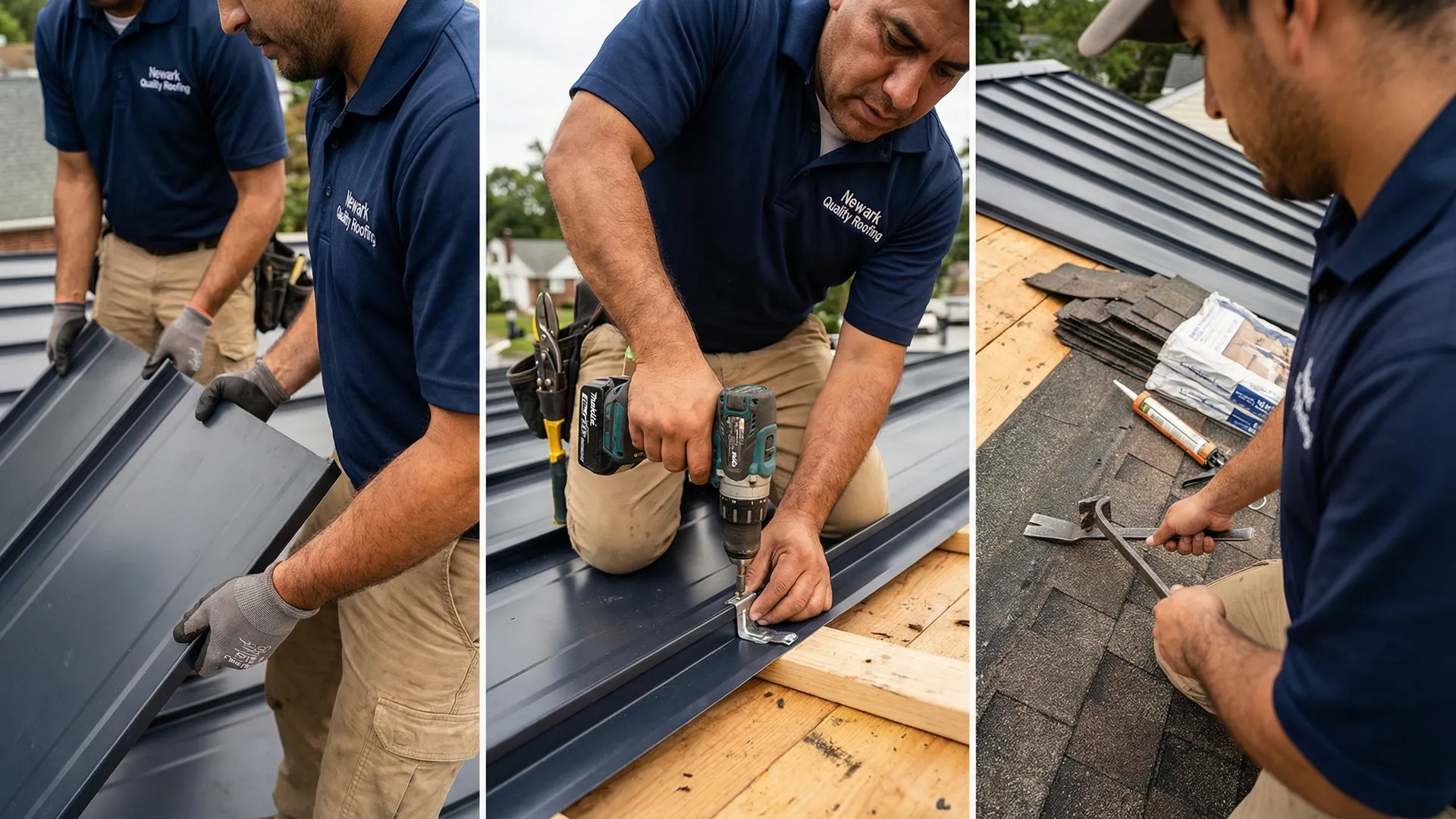
Metal changes the arithmetic. A metal roof outlasts its fasteners, and a standing seam metal roof outlasts almost everything under it; metal roofing work in Fairfield is mostly detail work — clips, seams, snow guards, and the penetrations. The metal itself is rarely the failure. The note names the detail that failed and leaves the field alone, which is the environmentally sound repair as well as the honest one.

Coating and waterproofing have their place, and the file says where it is. A silicone or elastomeric coating over a sound, dry substrate buys real years; the same coating over saturated insulation is a lid on a wet sponge. Roof insulation condition is probed before any coating is priced, and the waterproofing note records the moisture readings, not an opinion. A coating is a maintenance tool, not a resurrection.

Gutters are half of every roof system in Fairfield, whether the owner counts them or not. A gutter that overflows in every storm washes the siding below it and rots the fascia behind it, and the gutter line is photographed on every inspection because the water’s path explains the roof’s damage. The drainage system is read as one system — gutters, leaders, and grade — because a new gutter over a bad outfall is decoration.

Siding is the wall’s half of the roof system, and Fairfield’s siding stock is old enough to prove it. Siding closed over unflashed step flashing lets water behind the wall for years; the repair opens the siding course, sets the flashing in order, and closes the siding back. The caulking at a window head above a roof line gets the same reading — caulk is a seal, not a structure, and the file treats it that way.

Ventilation is the quiet half of roof life. Ventilation systems that move attic air keep the deck dry from below; a sealed attic cooks the shingles from underneath and grows the moisture that reads as a roof leak in January. Roof insulation and ventilation are inspected together, photographed together, and written together — the two notes are one note, and the Fairfield file keeps them that way.

Preventative maintenance is where Fairfield’s property managers live. Repair and maintenance on a schedule — seams probed twice a year, drains cleared, details photographed against last season’s set — costs a fraction of one interior flood. Inspections are the product as much as the repairs are; a warehouse roof with a maintenance file is an asset with a paper trail, and the trail is what gets forwarded.

Fairfield sits in Essex County at the county’s western edge, a few minutes from the Newark office, under the flight paths of the county airport and along the Passaic River that has flooded it in every named storm. The crews run Fairfield NJ work out of Newark, New Jersey — the same crews, the same GAF-documented roofing materials, the same written estimate. A roofing contractor’s file is his reputation in a town that reads paperwork; roofers are remembered here for the winters, and the record is the business.

The frequently asked questions in a Fairfield job file are the same three on every job: is the roofing contractor registered, is the insurance certificate current, and does the estimate name its materials? Roofing contractors who answer all three in writing before the work begins are the ones whose roofs get inspected once. Residential roofing in Fairfield divides by street — the pitched stock of the residential grid, the tile details on the older colonials, the skylight retrofits of the seventies — and each type fails its own way. The note names the type before it names the fix.

Schedule Roof Repair in Fairfield, NJ

Get your free roof repair estimate in Fairfield today — no obligation, no pressure. Newark Quality Roofing serves homeowners and businesses across Essex County, New Jersey.

Get Your Free Roofing Estimate

Roof repair contact details
Roof repair and leak repair estimate

100% free, no obligation.